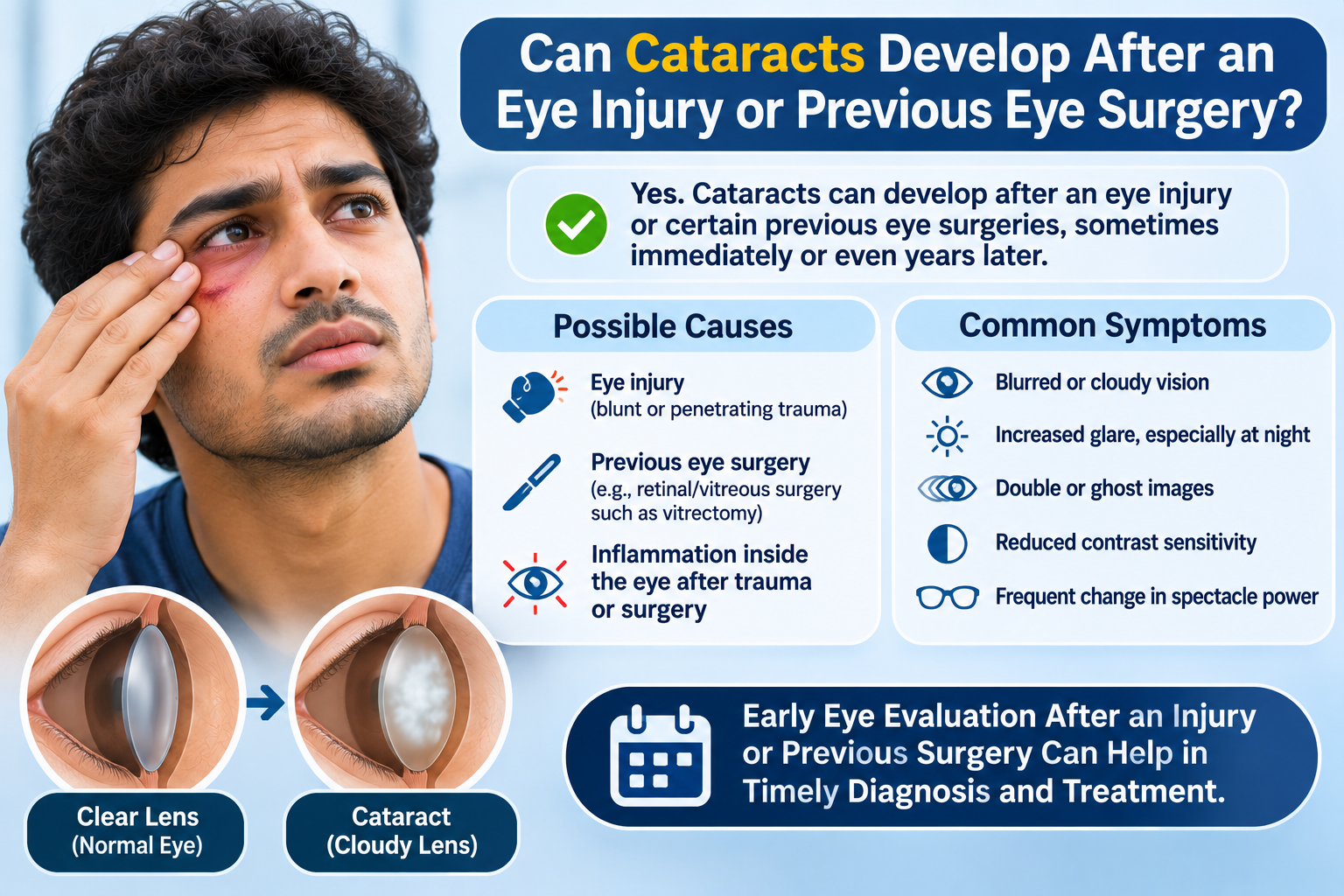
Can an old eye injury or previous surgery cause cataracts? Yes. Cataracts can develop after an eye injury or certain previous eye surgeries. Blunt trauma, penetrating injuries and procedures such as vitrectomy may damage the natural lens or accelerate clouding. A cataract can appear immediately after an injury or develop months or even years later. …

Can an old eye injury or previous surgery cause cataracts?
Yes. Cataracts can develop after an eye injury or certain previous eye surgeries. Blunt trauma, penetrating injuries and procedures such as vitrectomy may damage the natural lens or accelerate clouding. A cataract can appear immediately after an injury or develop months or even years later.
Patients researching Cataract after eye injury Bangalore may be surprised when blurred vision develops long after an apparently healed injury.
At Kiran Eye Hospital, JP Nagar, Bengaluru, Dr. Kiran Kumar K and the ophthalmology team assess previous eye injuries, surgical history and lens changes before recommending treatment.
How can an eye injury cause a cataract?
The eye’s natural lens is normally transparent and focuses light onto the retina.
A strong impact can damage lens fibres, the protective lens capsule or the supporting structures surrounding the lens.
This damage may disturb the lens’s transparency, producing a traumatic cataract.
Common causes include sports-related injuries, falls, road accidents, workplace injuries and accidental contact with sharp objects.
Not every eye injury leads to cataract formation.
The risk depends on the force and location of the injury, whether the eye was penetrated and which internal structures were affected.
Why can a cataract appear years after an accident?
One confusing aspect of traumatic cataracts is their delayed development.
A patient may recover from an injury and experience reasonably clear vision for several years.
However, microscopic damage to lens fibres can gradually progress, eventually causing visible clouding.
Other injuries may damage the lens capsule and produce rapid cataract formation.
The time between injury and cataract development therefore varies considerably.
A history of eye trauma remains relevant even when the incident happened during childhood.
Tell your ophthalmologist about previous injuries, particularly if vision has become gradually blurred in one eye.
What symptoms suggest a traumatic cataract?
Traumatic cataracts may produce symptoms similar to age-related cataracts.
Possible changes include:
- Blurred or cloudy vision.
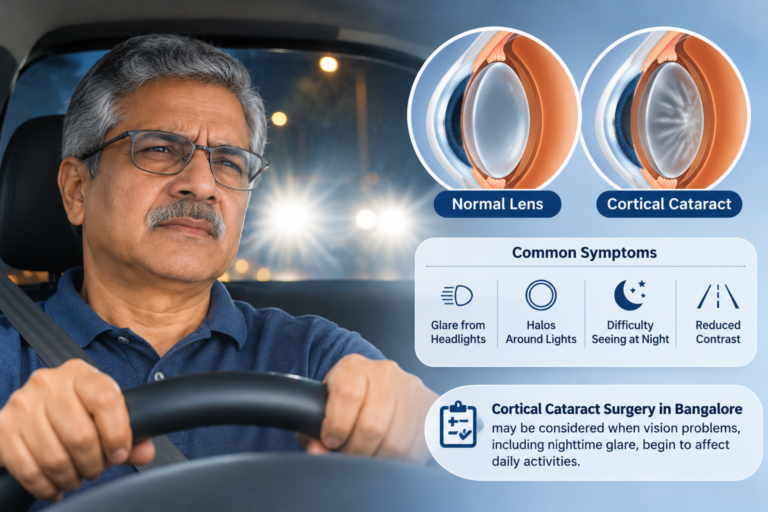
- Increased glare from bright lights.
- Difficulty seeing at night.
- Double or ghost-like images in one eye.
- Reduced contrast sensitivity.
- Changes in spectacle prescription.
Some traumatic cataracts have a distinctive star-shaped or rosette appearance during examination.
However, an unusual cataract pattern cannot always establish the cause.
Eye injuries can also damage the cornea, retina, iris or optic nerve, producing symptoms that resemble cataracts.
A comprehensive examination is necessary.
Can cataracts develop after retinal or vitreous surgery?
Yes. Cataract development is a recognised consequence of certain retinal procedures, particularly vitrectomy.
Vitrectomy involves removing the vitreous gel from inside the eye to treat conditions such as retinal detachment, macular holes or other retinal disorders.
After surgery, changes in the eye’s internal environment may accelerate clouding of the natural lens.
Nuclear sclerotic cataracts are particularly common after vitrectomy.
The risk varies according to age, previous lens changes and the type of retinal procedure performed.
A cataract developing after retinal surgery does not automatically mean the earlier operation was performed incorrectly.
Does every previous eye surgery increase cataract risk?
No. The risk depends on the procedure and the structures involved.
Operations performed inside the eye may affect the natural lens through surgical manipulation, inflammation or other changes.
Certain glaucoma procedures and treatments for intraocular inflammation may also influence cataract development.
In contrast, LASIK and PRK primarily reshape the cornea rather than operating on the natural lens.
These procedures are not generally considered causes of traumatic cataracts.
However, any previous eye surgery should be disclosed because it may influence future examinations, intraocular lens calculations or treatment planning.
Which tests identify cataracts after an eye injury?
The ophthalmologist first reviews the injury, previous treatment and the timeline of visual symptoms.
Visual acuity testing: Measures how clearly each eye sees.
Slit-lamp examination: Evaluates the lens for clouding, capsule damage or abnormal positioning.
Eye pressure measurement: Helps identify glaucoma or pressure-related complications.
Dilated retinal examination: Checks for retinal damage or other conditions affecting vision.
OCT or B-scan ultrasound: May be recommended when retinal assessment is required or the cataract obstructs the view.
Biometry: Measures the eye for artificial lens selection when cataract surgery is planned.
Additional imaging may be necessary if an old injury affected the lens-supporting structures.
Is cataract surgery more complicated after an eye injury?
Sometimes. Traumatic cataract surgery may require additional planning compared with an uncomplicated age-related cataract.
An injury can weaken the fibres that support the lens or damage its capsule.
This may influence how the cloudy lens is removed and where an artificial intraocular lens can be positioned.
Patients who previously underwent retinal surgery may also require specialised assessment.
The surgeon considers corneal health, retinal function, lens stability and other existing abnormalities.
Not every traumatic cataract requires immediate surgery.
Treatment timing depends on visual impairment, inflammation, lens stability and the presence of urgent complications.
Will cataract surgery restore the vision I had before the injury?
Cataract surgery removes the cloudy lens and generally replaces it with an artificial intraocular lens.
Vision may improve when lens clouding is the main cause of reduced sight.
However, an earlier injury may have permanently affected the retina, cornea or optic nerve.
These additional problems can limit postoperative vision.
The ophthalmologist should explain realistic expectations before surgery rather than promising complete visual restoration.
Patients can learn more about the hospital’s cataract surgery services.
When should I seek medical attention after an eye injury?
Any significant eye injury warrants prompt medical evaluation, even when vision initially appears normal.
Seek emergency eye care for sudden vision loss, severe pain, bleeding, a penetrating injury, new flashes, numerous floaters or a dark shadow across vision.
Do not rub or apply pressure to an injured eye.
Patients with previous injuries should also arrange an examination if they develop gradual blurring, glare or changes in spectacle power.
Where can I discuss traumatic cataract treatment in Bangalore?
Patients seeking evaluation for Cataract after eye injury Bangalore can consult Kiran Eye Hospital, Vishnu Towers, ITI Layout, 1st Phase, JP Nagar, Bengaluru.
Dr. Kiran Kumar K, Medical Director and Chief Surgeon, holds MBBS, MD (AIIMS, New Delhi), DNB, FAICO (Cornea), FAICO (Refractive Surgery) and MNAMS qualifications.
His documented expertise includes cataract, corneal and refractive surgery.
An examination with Dr. Kiran Kumar K or the ophthalmology team can help identify whether an earlier injury or procedure contributed to lens clouding and which treatment pathway is appropriate.
Frequently Asked Questions About Cataracts After Eye Injury
1. Can a cataract develop several years after an eye injury?
Yes. Some traumatic cataracts develop immediately, while others appear months or years after the original injury. Previous eye trauma should be mentioned during an ophthalmic examination.
2. Can a minor injury to the eye cause a cataract?
Not every minor injury causes cataracts. However, certain impacts can damage the natural lens. Persistent blurred vision, glare or other visual changes after an injury require examination.
3. Is cataract formation common after vitrectomy surgery?
Cataract development is a recognised consequence of vitrectomy, particularly in adults with their natural lens still present. Risk varies with age, retinal condition and other clinical factors.
4. Is traumatic cataract surgery different from regular cataract surgery?
It can be. Previous trauma may damage the lens capsule or supporting structures, requiring additional surgical planning. The approach depends on the extent of injury and overall eye health.
5. Can cataract surgery completely restore vision after an eye injury?
Cataract surgery may improve vision when lens clouding is responsible for visual impairment. However, existing damage to the retina, cornea or optic nerve may limit improvement. Complete visual restoration cannot be guaranteed.
Book a Consultation
It’s easy and free!