Can I safely travel by airplane shortly after LASIK surgery? Yes. Flying after uncomplicated LASIK surgery is generally possible because normal aircraft cabin pressure changes do not usually interfere with the procedure. However, travelling immediately after surgery may be inconvenient because of temporary dry eyes, blurred vision and the need for early postoperative examinations. Patients …

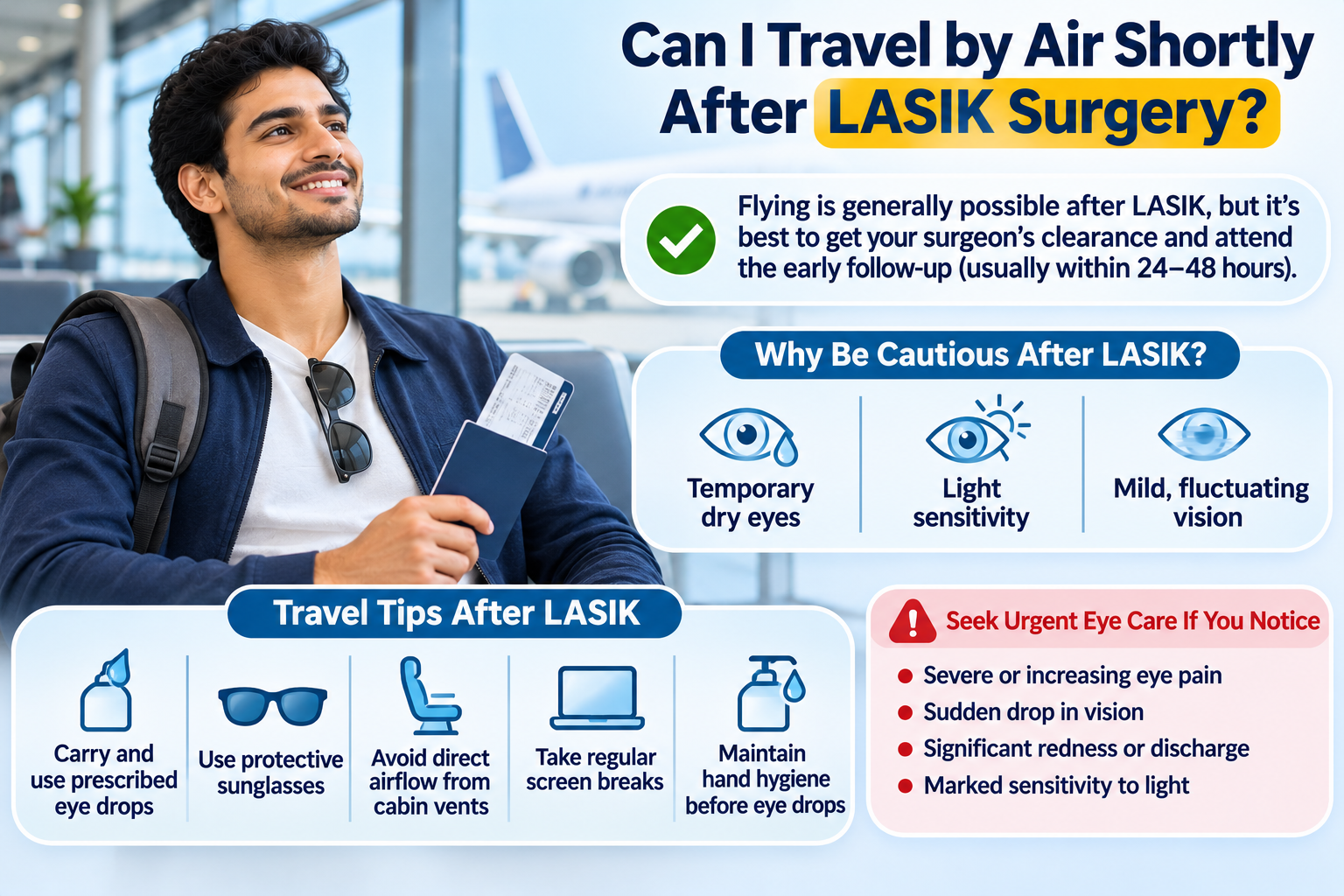
Can I safely travel by airplane shortly after LASIK surgery?
Yes. Flying after uncomplicated LASIK surgery is generally possible because normal aircraft cabin pressure changes do not usually interfere with the procedure. However, travelling immediately after surgery may be inconvenient because of temporary dry eyes, blurred vision and the need for early postoperative examinations.
Patients researching LASIK Surgery Recovery Time Bangalore should consider more than just whether they can board a flight. Their eye surgeon must confirm that recovery is progressing appropriately.
At Kiran Eye Hospital, JP Nagar, Bengaluru, Dr. Kiran Kumar K and the ophthalmology team assess healing and advise patients about suitable travel plans.
Why might my doctor recommend delaying a flight after LASIK?
LASIK involves creating a thin corneal flap and reshaping the underlying tissue with a laser.
The flap is repositioned after treatment and begins healing without stitches.
Although many patients notice visual improvement relatively quickly, the eye remains sensitive during early recovery.
Temporary dryness, watering, irritation, glare and fluctuating vision are common concerns.
Travelling immediately may make it harder to rest, use medications consistently or attend scheduled examinations.
The main issue is therefore not necessarily the flight itself, but whether adequate postoperative care will be available.
Can I fly the day after LASIK surgery?
Some patients may be medically fit to fly shortly after an uncomplicated procedure.
However, most patients need an early postoperative examination, commonly within 24–48 hours after LASIK.
During this visit, the ophthalmologist checks vision, examines the corneal flap and looks for inflammation or other concerns.
Travelling before this assessment may delay the identification of complications.
A patient planning a next-day flight should discuss the schedule with the surgeon before undergoing treatment.
There is no universal waiting period applicable to every LASIK patient.
Does airplane cabin pressure affect LASIK healing?
Normal commercial airline cabin pressure changes are not generally considered a major concern after routine LASIK.
LASIK primarily involves the cornea, and the procedure does not normally leave a gas bubble inside the eye.
This differs from certain retinal and corneal surgeries in which an intraocular gas bubble can expand during air travel and cause dangerous increases in eye pressure.
Nevertheless, patients who have undergone additional eye procedures or experienced surgical complications may require different precautions.
Always tell your ophthalmologist about your complete surgical history before flying.
Why do my eyes feel dry during air travel after LASIK?
Aircraft cabins typically have low humidity, which can increase tear evaporation.
LASIK may also temporarily affect corneal nerves and tear film function.
Together, these factors can contribute to:
- Burning or stinging sensations.
- Gritty or foreign-body sensation.
- Excessive watering.
- Fluctuating blurred vision.
- Light sensitivity.
- Discomfort during prolonged screen use.
Symptoms may become more noticeable during longer flights.
Prescribed lubricating eye drops can help manage dryness, but patients should follow their ophthalmologist’s instructions regarding frequency and formulation.
What precautions should I take while flying after LASIK?
Patients considering Traveling after LASIK surgery should prepare for the journey carefully.
Carry prescribed eye drops: Keep medications in your hand luggage so they remain accessible during the flight.
Avoid rubbing your eyes: Rubbing can interfere with flap healing and may increase irritation.
Limit direct air exposure: Avoid positioning overhead air vents directly towards your face.
Take screen breaks: Prolonged reading or mobile phone use may worsen dryness.
Maintain hand hygiene: Wash or sanitise your hands before administering eye drops.
Use protective eyewear: Follow the surgeon’s recommendations regarding sunglasses or protective shields.
Patients should also check airline security requirements for carrying liquid medications.
Can I take a long international flight soon after LASIK?
Long-distance flights may be possible after the ophthalmologist confirms satisfactory healing.
However, extended journeys introduce additional practical concerns.
A patient may spend several hours in dry cabin air, experience disturbed sleep or find it difficult to follow medication schedules across time zones.
International travel may also place the patient far from the original surgical team.
Before departure, discuss how postoperative examinations will be arranged and where to seek care if symptoms develop.
For non-essential travel, allowing adequate time for the initial follow-up and early healing is often preferable.
Can I travel if my vision is still blurry after LASIK?
Mild haziness and fluctuating vision may occur during early recovery.
However, the surgeon should determine whether the symptoms are consistent with expected healing.
Patients should not assume that all postoperative blurring is harmless.
If vision remains significantly reduced, becomes progressively worse or is accompanied by increasing pain, travel may need to be postponed.
Do not drive to the airport until your vision meets the necessary driving requirements and your doctor has cleared you.
Which examinations help determine whether I am ready to travel?
Before travel, the ophthalmologist may perform a postoperative assessment that includes:
Visual acuity testing: Measures how clearly each eye sees after treatment.
Slit-lamp examination: Checks the corneal surface, flap position and healing.
Tear film assessment: Identifies significant dryness or ocular surface irritation.
Eye pressure measurement: May be performed when clinically indicated.
Additional investigations may be necessary if symptoms or examination findings suggest complications.
Patients should continue their scheduled follow-up examinations even when vision feels comfortable.
When should I avoid flying and seek urgent eye care?
Seek urgent ophthalmic assessment if you experience:
- Severe or increasing eye pain.
- Sudden deterioration in vision.
- Significant redness or discharge.
- Marked sensitivity to light.
- New flashes, numerous floaters or a dark shadow across vision.
These symptoms may indicate complications that require prompt examination.
If symptoms develop shortly before departure, contact the treating ophthalmologist rather than proceeding with the journey.
If they begin while travelling, seek urgent eye care at your destination.
Where can I discuss flying after LASIK surgery in Bangalore?
Patients seeking guidance about LASIK Surgery Recovery Time Bangalore can undergo postoperative evaluation at Kiran Eye Hospital, Vishnu Towers, ITI Layout, 1st Phase, JP Nagar, Bengaluru.
Dr. Kiran Kumar K, Medical Director and Chief Surgeon, holds MBBS, MD (AIIMS, New Delhi), DNB, FAICO (Cornea), FAICO (Refractive Surgery) and MNAMS qualifications. His documented expertise includes LASIK, PRK, SMILE and corneal surgery.
A consultation with Dr. Kiran Kumar K or the ophthalmology team can help patients understand their recovery progress, travel precautions and whether flying is appropriate.
Additional information is available on the hospital’s LASIK surgery service page.
Frequently Asked Questions About Flying After LASIK
1. Can I travel by airplane 24 hours after LASIK surgery?
Some patients may be able to fly after uncomplicated LASIK, but an early postoperative examination is usually recommended within 24–48 hours. Obtain clearance from your ophthalmologist before travelling.
2. Will airplane cabin pressure damage my eyes after LASIK?
Normal cabin pressure changes are not generally considered harmful after routine LASIK. However, patients who have undergone other eye procedures or experienced complications may require different precautions.
3. Can flying make dry eyes worse after LASIK surgery?
Yes. Low cabin humidity can increase tear evaporation and worsen postoperative dryness. Use prescribed lubricating eye drops and avoid direct airflow towards your face.
4. Should I postpone an international flight after LASIK?
It may be advisable to delay non-essential international travel until the initial postoperative examination confirms satisfactory healing. The decision depends on your symptoms, recovery and access to follow-up care.
5. Can I use my prescribed LASIK eye drops during a flight?
Yes. Patients should continue prescribed eye drops according to their ophthalmologist’s instructions. Carry medications in hand luggage and maintain hand hygiene when administering them.
Book a Consultation
It’s easy and free!