What should I avoid before my LASIK surgery appointment? Before LASIK surgery, patients are generally advised to avoid eye makeup, facial creams, perfumes and contact lenses according to their surgeon's instructions. They should also report eye infections, unusual irritation, medication changes and other health concerns before the procedure. Patients planning LASIK Surgery Preparation Bangalore should …

What should I avoid before my LASIK surgery appointment?
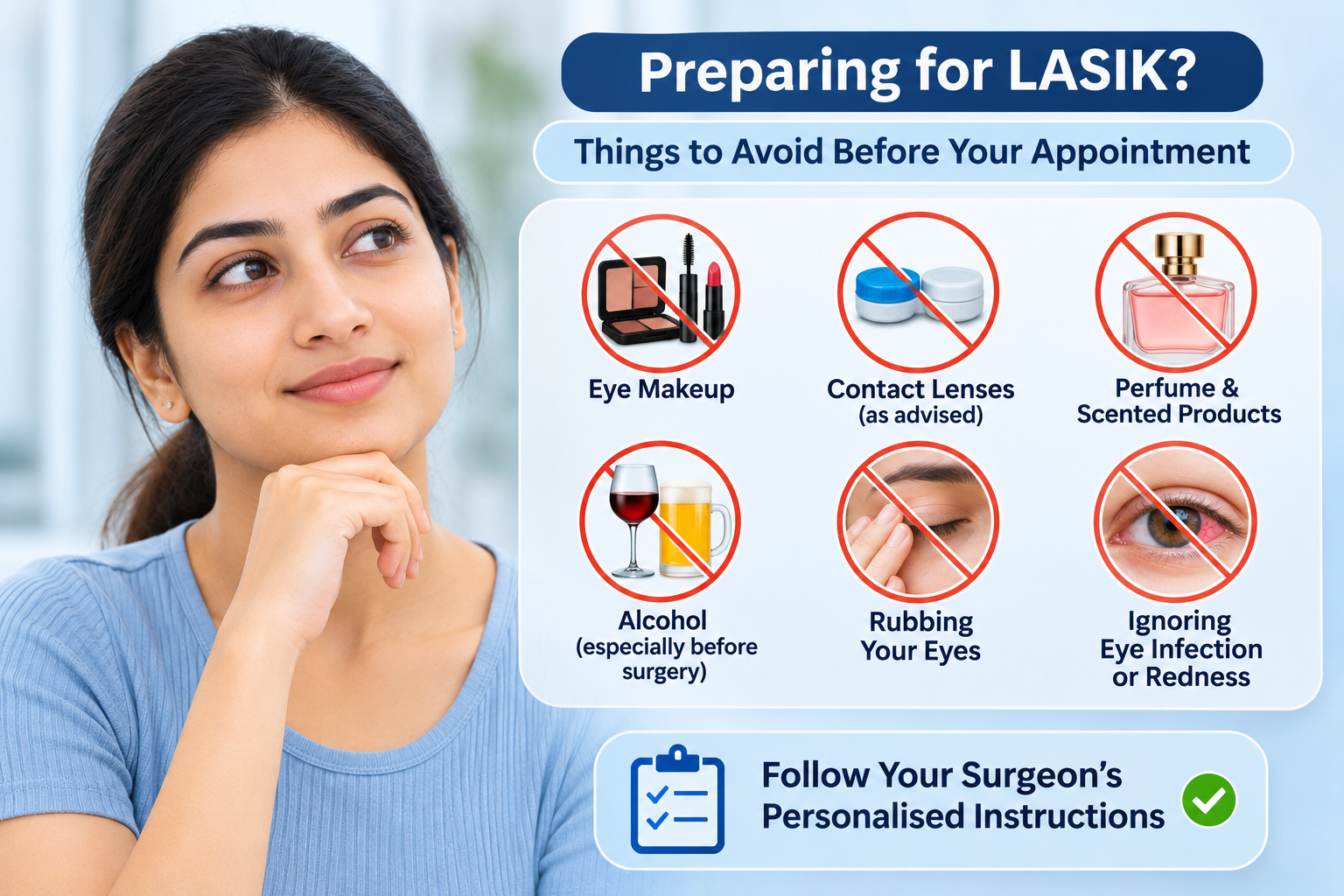
Before LASIK surgery, patients are generally advised to avoid eye makeup, facial creams, perfumes and contact lenses according to their surgeon’s instructions. They should also report eye infections, unusual irritation, medication changes and other health concerns before the procedure.
Patients planning LASIK Surgery Preparation Bangalore should understand that following preoperative instructions helps support accurate eye measurements and reduce avoidable complications.
At Kiran Eye Hospital, JP Nagar, Bengaluru, Dr. Kiran Kumar K and the ophthalmology team assess eye health and explain the precautions needed before laser vision correction.
Why should I avoid eye makeup before LASIK surgery?
Eye makeup can leave tiny particles around the eyelashes and eyelids.
Mascara, eyeliner, eyeshadow and cosmetic residue may increase contamination concerns during surgery.
Patients are commonly advised to avoid eye makeup for at least the day before treatment, although some clinics recommend a longer period.
It is also important to remove existing makeup carefully without irritating the eyes.
Avoid applying false eyelashes, lash adhesives or cosmetic products near the eye unless your surgeon specifically permits them.
Following the hospital’s instructions is more important than relying on general recommendations.
Can I use moisturiser, perfume or hair spray on surgery day?
Perfumes, scented lotions, creams, hair sprays and similar products are generally avoided immediately before LASIK.
Some contain particles or volatile ingredients that may interfere with the surgical environment or irritate the ocular surface.
On the day of surgery, arrive with a clean face and avoid applying unnecessary cosmetic products.
Choose comfortable clothing that does not shed excessive fibres around the face.
If you are unsure whether a particular skincare product is acceptable, contact the surgical team beforehand.
Should I stop wearing contact lenses before LASIK?
Yes. Contact lenses can temporarily alter corneal curvature, which may affect measurements used for laser treatment.
The recommended discontinuation period depends on the lens type and individual corneal findings.
Soft contact lenses may require a shorter break than rigid gas-permeable lenses.
Some patients need repeat measurements to confirm that their cornea has returned to a stable shape.
Use spectacles during the prescribed contact lens-free period.
Do not assume that removing contact lenses only on the morning of surgery is sufficient.
The ophthalmologist should provide personalised instructions before the appointment.
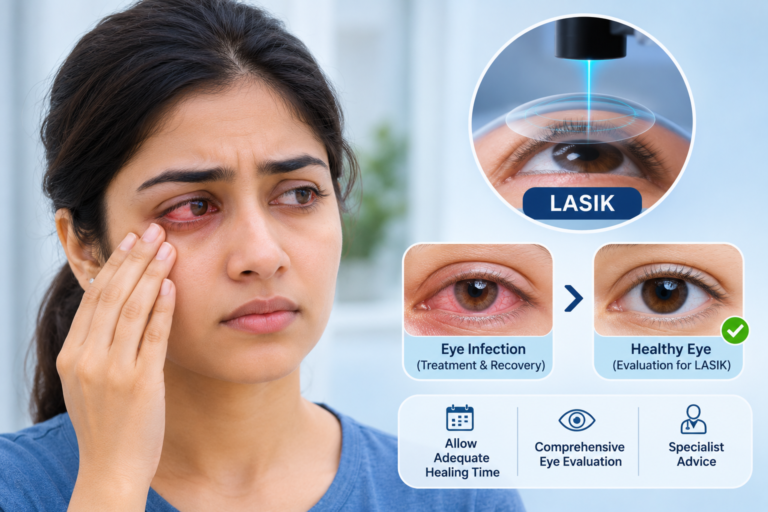
What if I develop redness or an eye infection before surgery?
LASIK is an elective procedure and should not be performed when an active eye infection or significant inflammation is present.
Symptoms that require attention include:
- Persistent eye redness.
- Yellow or sticky discharge.
- Increasing watering or irritation.
- Pain or marked light sensitivity.
- Sudden blurred vision.
These symptoms may be associated with conjunctivitis, keratitis, dry eye disease or other conditions.
An ophthalmologist may recommend treatment and postponement until the ocular surface has recovered.
Do not use leftover antibiotic or steroid eye drops without medical advice.
Can I drink alcohol or coffee before my LASIK appointment?
Patients should avoid arriving for surgery intoxicated or affected by recreational drugs.
Heavy alcohol consumption before surgery may interfere with hydration, comfort and the ability to follow instructions.
There is no universal rule requiring every LASIK patient to stop caffeine completely.
However, excessive caffeine may worsen nervousness or restlessness in some people.
Follow the clinic’s instructions regarding food and drinks.
LASIK is usually performed with topical anaesthetic eye drops, so routine fasting is not always required.
However, fasting instructions may differ if additional medication or sedation is planned.
Should I stop taking my regular medicines before LASIK?
Do not discontinue prescribed medication without medical advice.
Tell the ophthalmologist about all medications, including tablets, inhalers, eye drops, supplements and treatments for chronic medical conditions.
Some medicines may affect tear production, ocular surface health or healing.
Patients should also disclose pregnancy, breastfeeding, diabetes, autoimmune conditions and previous eye surgery.
If medicated eye drops have been prescribed specifically for LASIK preparation, use them according to the surgeon’s instructions.
Avoid starting new eye medications or changing prescribed doses independently.
Should I avoid rubbing my eyes before the procedure?
Yes. Repeated eye rubbing can irritate the ocular surface and may worsen existing inflammation.
If your eyes feel itchy or dry, inform the ophthalmologist rather than rubbing them repeatedly.
Persistent itching may indicate allergic eye disease, while burning and fluctuating vision may occur with dry eyes.
These conditions may require treatment before LASIK.
Good eyelid hygiene can also be important, particularly for patients with blepharitis or debris around the eyelashes.
Any cleaning method should follow the clinician’s recommendations to avoid accidental irritation.
Which tests should be completed before LASIK surgery?
A comprehensive eye examination is necessary before confirming eligibility.
Refraction testing: Measures spectacle power and prescription stability.
Corneal topography and tomography: Assess corneal shape and detect structural irregularities.
Pachymetry: Measures corneal thickness.
Tear film assessment: Identifies dry eye problems that may affect treatment.
Slit-lamp examination: Checks the cornea, lens and surrounding eye structures.
Retinal examination: Helps identify retinal conditions, especially in patients with high myopia.
These investigations allow the surgeon to determine whether LASIK is appropriate or whether another treatment should be considered.
What should I avoid planning immediately after LASIK?
Avoid arranging to drive yourself home.
Vision may be temporarily blurred, and medication used during the procedure can affect alertness.
Arrange for a responsible adult to accompany you or provide transport.
It is also sensible to avoid scheduling important work meetings, long travel or strenuous activities immediately after surgery.
Follow the surgeon’s instructions about screens, swimming, exercise and eye protection.
Patients should understand that recovery varies, and clearer vision does not always mean complete healing.
What if my eyes are not suitable for LASIK?
LASIK may be postponed or avoided when examination findings indicate an increased risk of complications.
Possible concerns include unstable spectacle power, inadequate corneal thickness, irregular corneal shape or significant dry eye disease.
Depending on the diagnosis, the ophthalmologist may recommend spectacles, contact lenses or another refractive procedure.
Patients can review Kiran Eye Hospital’s LASIK surgery, PRK surgery and SMILE surgery services.
No single refractive procedure is suitable for everyone.
When should I seek medical attention before my scheduled LASIK?
Contact the hospital promptly if you develop new redness, discharge, persistent irritation or unexpected changes in vision before the scheduled procedure.
Seek urgent medical attention for sudden vision loss, severe eye pain, new flashes, numerous floaters or a dark shadow across your vision.
These symptoms require medical assessment rather than routine surgical preparation.
Never conceal new symptoms to avoid postponing an elective procedure.
Where can I discuss LASIK preparation in Bangalore?
Patients seeking guidance on LASIK Surgery Preparation Bangalore can undergo a refractive surgery evaluation at Kiran Eye Hospital, Vishnu Towers, ITI Layout, 1st Phase, JP Nagar, Bengaluru.
Dr. Kiran Kumar K, Medical Director and Chief Surgeon, holds MBBS, MD (AIIMS, New Delhi), DNB, FAICO (Cornea), FAICO (Refractive Surgery) and MNAMS qualifications.
His documented expertise includes LASIK, PRK, SMILE and corneal surgery.
A consultation with Dr. Kiran Kumar K or the hospital’s ophthalmology team can help patients understand the precautions, examination requirements and preparation instructions appropriate for their individual eyes.
Frequently Asked Questions About LASIK Surgery Preparation
1. Can I wear makeup on the day of LASIK surgery?
Eye makeup should generally be avoided before LASIK because cosmetic particles may contaminate or irritate the eye. Follow the hospital’s instructions regarding when to stop using makeup and other facial products.
2. Can I drink coffee before my LASIK appointment?
Moderate caffeine intake may be acceptable for some patients, but excessive caffeine can increase nervousness or restlessness. Follow your surgeon’s specific advice about food and drinks before surgery.
3. What happens if I accidentally wear contact lenses before LASIK?
Inform the ophthalmologist. Contact lenses can temporarily affect corneal measurements, and the surgeon may recommend additional time without lenses or repeat testing before proceeding.
4. Should I stop taking regular medications before LASIK?
No medication should be stopped without professional advice. Inform the ophthalmologist about all prescribed medicines, supplements and eye drops so that any necessary adjustments can be discussed.
5. Can my LASIK appointment be postponed if I develop an eye infection?
Yes. Active infection or significant inflammation may make elective LASIK inappropriate. Surgery may be postponed until the condition has been treated and the ophthalmologist confirms that the eye is suitable.
Book a Consultation
It’s easy and free!