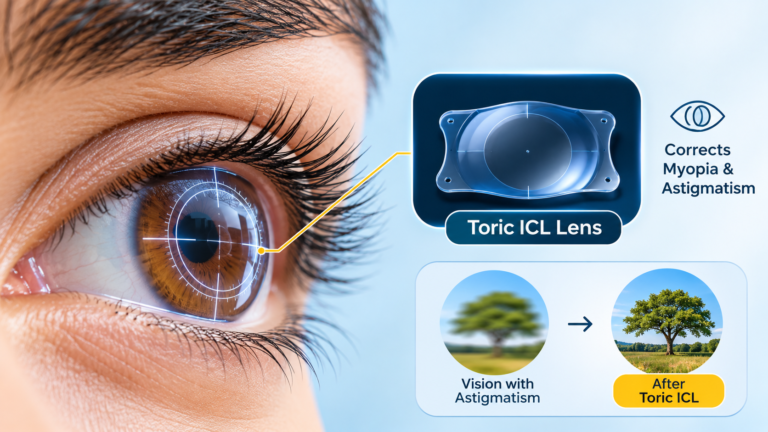
Choosing the right lens size is an important part of Implantable Collamer Lens (ICL) surgery. Patients often assume that their spectacle power alone determines which lens will be implanted. However, doctors also need to assess the internal dimensions and structure of the eye. The ICL lens sizing test in JP Nagar helps the ophthalmologist evaluate …

Choosing the right lens size is an important part of Implantable Collamer Lens (ICL) surgery. Patients often assume that their spectacle power alone determines which lens will be implanted. However, doctors also need to assess the internal dimensions and structure of the eye. The ICL lens sizing test in JP Nagar helps the ophthalmologist evaluate these measurements and select an appropriate lens size for the individual eye. At Kiran Eye Hospital, this assessment forms part of the preoperative evaluation for patients considering ICL/IPCL vision correction.
Why Does ICL Lens Size Matter Before Surgery?
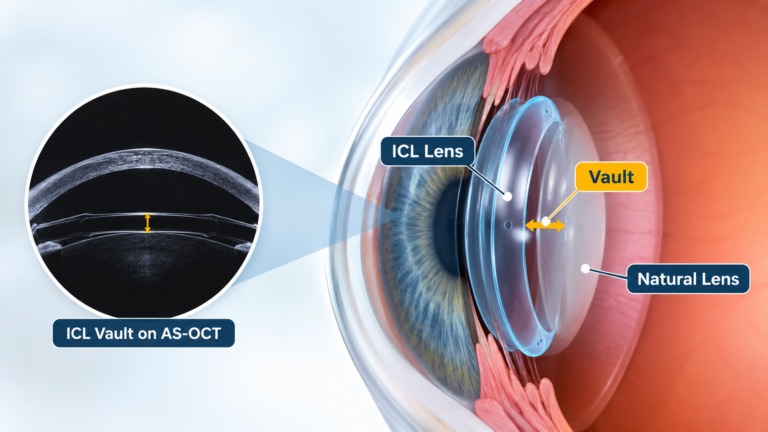
An ICL is a thin artificial lens implanted inside the eye, behind the iris and in front of the natural crystalline lens. Unlike contact lenses, it remains inside the eye after surgery.
Selecting an appropriate size is important because the implanted lens must fit the available space within the eye.
If the lens is too small or too large, it may affect its position and the space between the implanted lens and the natural lens. This can increase the risk of complications.
For example, inadequate clearance may increase the possibility of contact with the natural lens and cataract formation. Excessive vault may contribute to increased eye pressure or other complications in some patients.
Therefore, doctors consider several measurements rather than selecting a lens based only on the spectacle prescription.
How Is the ICL Lens Sizing Test in JP Nagar Performed?
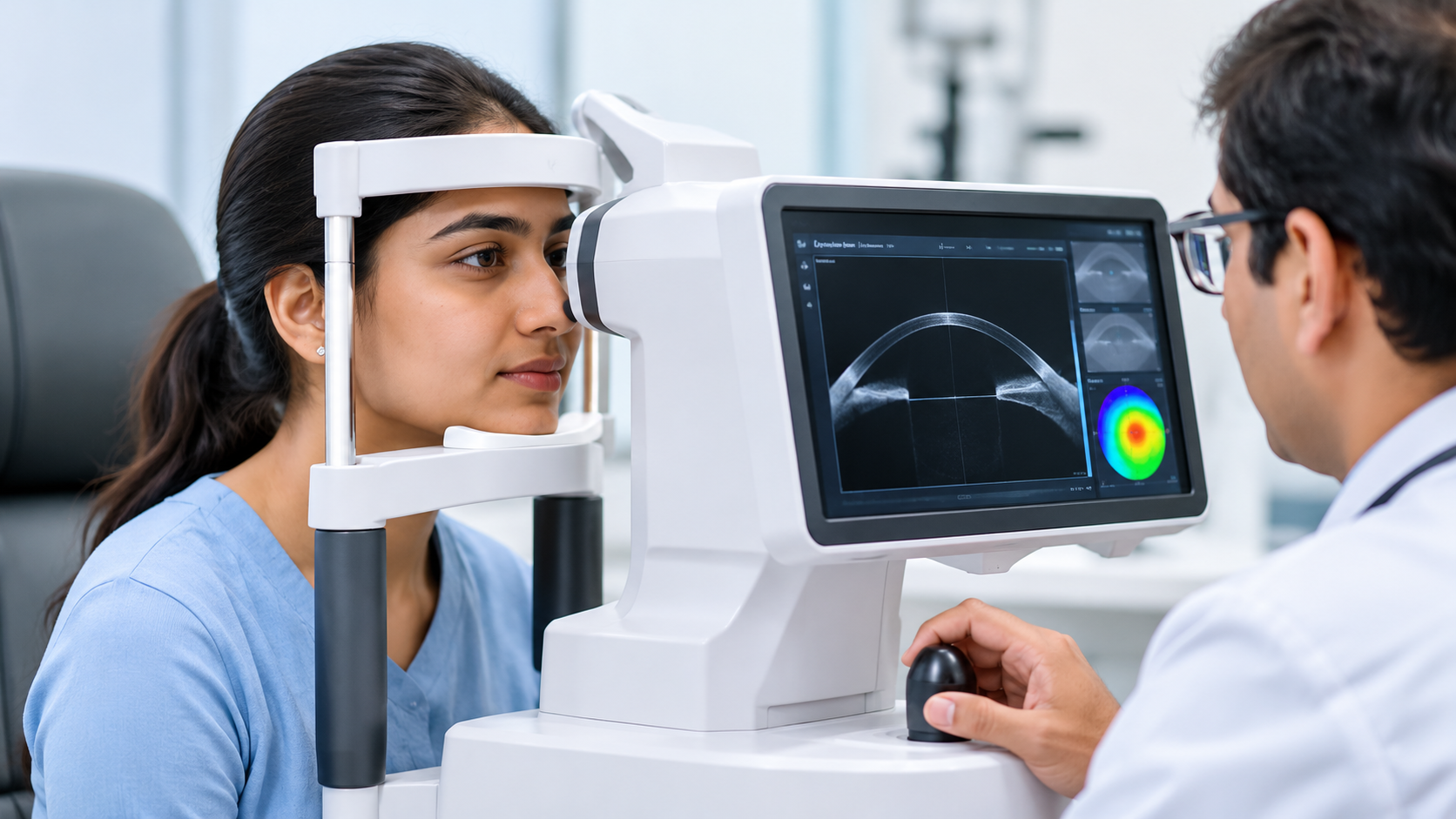
The ICL lens sizing test in JP Nagar involves detailed measurements of the front portion of the eye. These measurements help the ophthalmologist understand the available space for the implanted lens.
Depending on the patient’s eye anatomy and the diagnostic equipment available, the assessment may include:
- White-to-white (WTW) measurement
- Anterior chamber depth (ACD)
- Anterior chamber angle assessment
- Sulcus-to-sulcus measurement, when indicated
- Anterior segment imaging
These measurements are interpreted together with the patient’s eye condition and the lens manufacturer’s sizing recommendations.
The doctor then determines which available ICL size is appropriate for the individual eye.
What Is White-to-White Measurement, and Why Is It Important?
White-to-white measurement refers to the horizontal visible diameter of the cornea, measured from one limbus to the opposite limbus.
It provides an estimate of the horizontal dimensions of the front of the eye.
This measurement may be used in certain ICL sizing methods to help estimate the internal dimensions of the eye. However, it does not directly measure the ciliary sulcus, where the ICL is supported.
Doctors therefore avoid relying on this measurement alone when determining lens size.
Why Is Anterior Chamber Depth Tested Before ICL Surgery?
Anterior chamber depth (ACD) refers to the distance between the back surface of the cornea and the front surface of the natural crystalline lens.
This measurement helps doctors evaluate whether there is sufficient space in the front portion of the eye for ICL implantation.
A shallow anterior chamber may increase surgical risks and may make a patient unsuitable for certain ICL procedures.
The ophthalmologist also evaluates the angle of the anterior chamber and other anatomical features before deciding whether surgery is appropriate.
Does Ultrasound Biomicroscopy Help Determine ICL Lens Size?
Ultrasound biomicroscopy (UBM) is an imaging technique that uses high-frequency ultrasound to examine structures inside the anterior segment of the eye.
It can help doctors assess internal measurements such as sulcus-to-sulcus distance in selected patients.
This can be useful because the external corneal diameter does not always accurately represent the internal dimensions of the eye.
UBM may be recommended when additional anatomical information is needed for lens sizing or surgical planning.
Not every patient requires every available imaging test. The ophthalmologist decides which investigations are appropriate based on the initial examination and clinical findings.
Can Two People With the Same Spectacle Power Need Different ICL Lens Sizes?
Yes. Two people with similar spectacle prescriptions may have different eye dimensions.
For example, two patients may both have -8.00 dioptres of myopia. However, their anterior chamber depth, corneal diameter and internal eye anatomy may differ.
These differences can influence the selection of an appropriate ICL size.
This is why the ICL lens selection process involves both refractive measurements and anatomical assessment.
The purpose is not simply to correct the spectacle power but also to ensure that the selected implant is suitable for the individual eye.
What Happens After the ICL Lens Measurements Are Completed?
Once the diagnostic tests are completed, the ophthalmologist reviews the findings and evaluates the patient’s suitability for surgery.
The assessment may include:
- Refractive assessment: Determines the spectacle power and type of refractive error.
- Corneal examination: Evaluates corneal shape, thickness and overall health.
- Anterior segment evaluation: Measures the available space and examines relevant internal structures.
- Lens power calculation: Determines the optical power required to correct the refractive error.
- Lens size selection: Uses the available anatomical measurements and the relevant manufacturer’s sizing guidelines.
The doctor also considers factors such as age, eye health, previous eye conditions and individual surgical requirements.
If the measurements are unclear or inconsistent, additional imaging or repeat measurements may be recommended before proceeding.
Is ICL Lens Sizing Different From ICL Lens Power Calculation?
Yes. These are two separate parts of surgical planning.
ICL lens power calculation determines the optical power required to correct the patient’s refractive error.
ICL lens sizing determines the physical dimensions of the implant needed to achieve an appropriate fit within the eye.
Both are important. Selecting the correct optical power does not automatically mean that the physical lens size is suitable.
An ophthalmologist evaluates these factors together before finalising the surgical plan.
When Should You Consult an Eye Specialist for ICL Evaluation?
If you have moderate or high myopia, depend heavily on glasses or contact lenses, or have been advised that LASIK may not be suitable, you may discuss ICL surgery with an ophthalmologist.
However, ICL is not suitable for everyone. Certain corneal conditions, insufficient anterior chamber depth, glaucoma, cataract or other eye conditions may affect eligibility.
Seek prompt medical attention if you experience sudden blurred vision, significant eye pain, redness, severe headache, halos around lights with pain, or sudden vision loss. These symptoms should not be treated as routine refractive errors.
At Kiran Eye Hospital, JP Nagar, patients can discuss ICL/IPCL evaluation and the diagnostic tests required before surgery with the ophthalmology team.
Dr. Kiran Kumar, Medical Director and Chief Surgeon at Kiran Eye Hospital, has qualifications including MBBS, MD (AIIMS, New Delhi), DNB, FAICO (Cornea), FAICO (Refractive Surgery) and MNAMS. An individual consultation helps determine whether ICL evaluation is appropriate and which investigations may be required.
For patients considering vision correction, the ICL lens sizing test in JP Nagar is an important part of understanding whether the eye has suitable anatomy for the procedure. The final decision should always be based on a comprehensive examination rather than spectacle power alone.
Frequently Asked Questions
1. Is the ICL lens sizing test painful?
Most measurements are non-invasive and generally do not cause pain. Some tests may involve eye drops or brief contact with a diagnostic instrument, depending on the method used.
2. How long does ICL lens measurement take?
The duration depends on the number of investigations required. Several measurements may be completed during a preoperative assessment, while additional imaging may require a separate appointment.
3. Can an incorrect ICL lens size cause complications?
Yes. An inappropriate lens size may result in insufficient or excessive vault, potentially contributing to complications such as increased eye pressure, cataract formation or other anatomical problems. Proper assessment and postoperative monitoring are important.
4. Does every patient need an ultrasound biomicroscopy test before ICL surgery?
No. UBM is not mandatory for every patient. The ophthalmologist may recommend it when additional internal anatomical measurements are needed for surgical planning.
5. Can I undergo ICL surgery if my spectacle power is very high?
A high spectacle power does not automatically make someone suitable or unsuitable for ICL surgery. Eligibility depends on refractive stability, eye anatomy, anterior chamber depth, corneal health and other clinical factors. A comprehensive examination is necessary before making a decision.
Book a Consultation
It’s easy and free!