Can I Wear Contact Lenses Again After SMILE Surgery? SMILE surgery is commonly chosen by people who want to reduce their dependence on glasses and contact lenses. However, some patients wonder whether they can wear contact lenses again after the procedure, especially for sports, special occasions or situations where they prefer them. In most cases, …

Can I Wear Contact Lenses Again After SMILE Surgery?
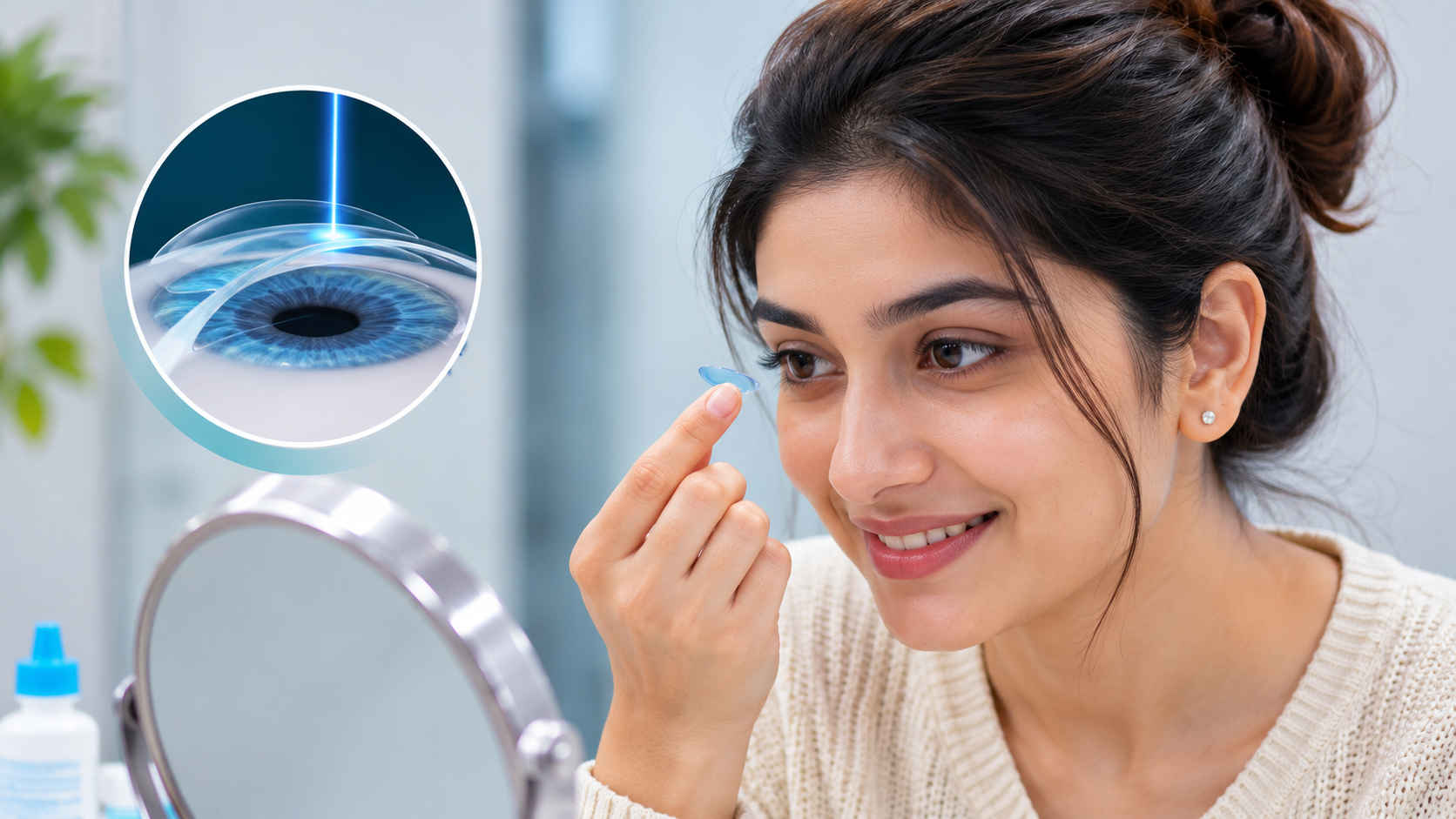
SMILE surgery is commonly chosen by people who want to reduce their dependence on glasses and contact lenses. However, some patients wonder whether they can wear contact lenses again after the procedure, especially for sports, special occasions or situations where they prefer them. In most cases, contact lenses may be considered after the eyes have healed, but they should not be restarted without the ophthalmologist’s approval. Patients considering SMILE surgery in Jayanagar can discuss their visual requirements and postoperative care with the ophthalmology team at Kiran Eye Hospital.
Can I Wear Contact Lenses After SMILE Surgery?
Yes, some patients can wear contact lenses after SMILE surgery if their eyes have healed adequately and an ophthalmologist confirms that they are suitable.
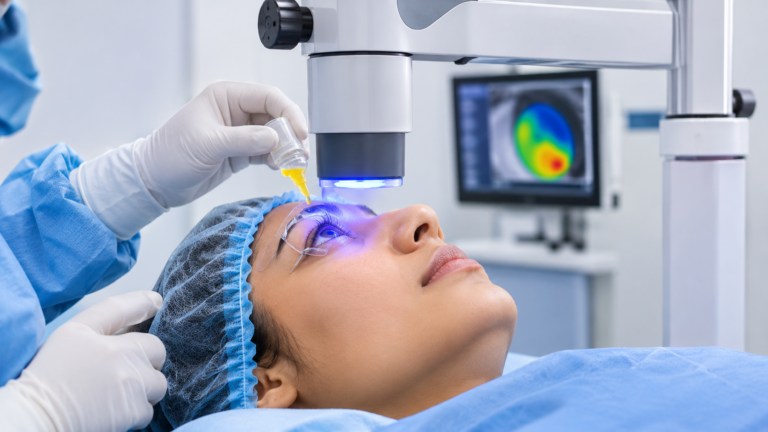
SMILE (Small Incision Lenticule Extraction) reshapes the cornea using a femtosecond laser. A small piece of corneal tissue, called a lenticule, is removed through a small incision to correct refractive errors such as myopia and certain types of astigmatism.
After surgery, the cornea needs time to recover. During this period, contact lenses may cause unnecessary irritation or interfere with the healing process.
Most patients do not need contact lenses after successful vision correction. However, some may have residual refractive error or specific visual requirements that lead their doctor to consider contact lens use later.
How Long Should I Wait Before Wearing Contact Lenses Again?
There is no single waiting period that applies to every patient.
The appropriate timing depends on factors such as:
- How well the cornea has healed
- Whether there is any postoperative inflammation
- Tear film stability and dry eye symptoms
- The presence of residual refractive error
- Overall corneal health
During the initial recovery period, patients should avoid wearing regular contact lenses unless specifically instructed otherwise by their surgeon.
At follow-up appointments, the ophthalmologist examines the cornea and evaluates the healing process. Contact lenses should only be considered once the doctor confirms that wearing them is appropriate.
Do not use the recovery timeline of another patient as a guide for your own eyes.
Why Do Some Patients Still Need Contact Lenses After SMILE Surgery?
Although SMILE aims to reduce dependence on corrective eyewear, it does not guarantee that every patient will have completely spectacle-free vision.
Some patients may still require additional vision correction because of:
Residual refractive error: A small amount of myopia or astigmatism may remain after surgery.
Regression: In some patients, the refractive correction may change over time.
Irregular corneal optics: Certain corneal conditions can affect visual quality even after refractive surgery.
Age-related vision changes: Presbyopia can develop with age, affecting near vision even when distance vision has been corrected.
Depending on the examination findings, the doctor may recommend glasses, specialised contact lenses or another appropriate treatment option.
Can Contact Lenses Cause Dryness After SMILE Surgery?
Dryness is one of the concerns patients may experience during recovery from refractive surgery.
SMILE involves a small corneal incision, but temporary changes in corneal nerve function and tear film stability can still occur.
Common symptoms include:
- Burning or stinging sensations
- A feeling of something inside the eye
- Intermittent blurred vision
- Redness or irritation
- Increased discomfort while using screens
Contact lenses may worsen these symptoms in some patients by increasing friction or reducing comfort on an already dry ocular surface.
An ophthalmologist may recommend lubricating eye drops or other dry eye management depending on the examination.
If dryness persists, contact lens use may need to be postponed until the ocular surface is stable.
Which Type of Contact Lenses Can Be Used After SMILE Surgery?
If contact lenses are required after recovery, the ophthalmologist will consider the patient’s corneal condition, prescription and tear film before recommending a suitable type.
Possible options include:
Soft contact lenses: These may be considered for patients with suitable corneal health and a stable prescription.
Rigid gas permeable lenses: These may be useful in selected cases where additional optical correction is required.
Scleral contact lenses: These larger lenses may be considered for certain patients with irregular corneal surfaces or specific visual needs.
The appropriate lens depends on the individual examination. Patients should not reuse old contact lenses or independently purchase a new prescription after surgery.
What Eye Tests Are Needed Before Restarting Contact Lenses?
Before approving contact lens use, the ophthalmologist may perform several examinations.
Visual acuity testing: Checks how clearly you can see at different distances.
Refraction testing: Determines whether any residual spectacle power remains.
Slit-lamp examination: Allows the doctor to examine the cornea, incision area and other front structures of the eye.
Corneal topography: Evaluates corneal curvature and identifies irregularities.
Tear film assessment: Helps identify dry eye symptoms and determine whether the ocular surface can tolerate contact lenses.
These tests help the doctor decide whether contact lenses are appropriate and which type may be suitable.
What Should I Avoid During Recovery After SMILE Surgery?
Following postoperative instructions is important for proper healing.
Patients are generally advised to:
- Avoid rubbing or pressing the eyes.
- Use prescribed eye drops according to instructions.
- Avoid contact lenses until cleared by the surgeon.
- Avoid swimming until the doctor permits it.
- Keep the eyes protected from dust and accidental injury.
- Attend scheduled follow-up examinations.
- Take breaks during prolonged screen use if the eyes feel uncomfortable.
If you experience sudden blurred vision, increasing eye pain, marked redness, discharge or sudden deterioration in eyesight, contact your ophthalmologist promptly. Severe or sudden vision loss requires urgent medical attention.
Where Can I Get SMILE Surgery Evaluation in Jayanagar?
Patients exploring laser vision correction should undergo a comprehensive eye examination before deciding on a procedure.
At Kiran Eye Hospital, JP Nagar, Bengaluru, the ophthalmology team evaluates patients for refractive procedures, including SMILE surgery.
Dr. Kiran Kumar, Medical Director and Chief Surgeon, holds MBBS, MD (AIIMS, New Delhi), DNB, FAICO (Cornea), FAICO (Refractive Surgery) and MNAMS qualifications. His published professional profile includes expertise in refractive procedures such as SMILE, LASIK and PRK.
The consultation helps assess corneal thickness, corneal shape, spectacle power, tear film and overall eye health. Patients can also discuss their expectations regarding glasses and contact lens use after surgery.
If you are considering SMILE surgery in Jayanagar, remember that contact lens use after the procedure depends on healing, visual requirements and professional assessment. The aim is to maintain eye health while choosing an appropriate method of vision correction.
Frequently Asked Questions
1. Can I wear coloured contact lenses after SMILE surgery?
Coloured contact lenses may be considered after complete healing if the ophthalmologist confirms that they are suitable. Cosmetic lenses also require proper fitting and hygiene. Avoid wearing them during the initial recovery period.
2. Will I need contact lenses after SMILE surgery?
Most patients undergo SMILE to reduce their dependence on glasses or contact lenses. However, some may still require corrective eyewear for residual refractive errors or other visual conditions.
3. Can I wear contact lenses if my eyes feel dry after SMILE?
It is better to avoid contact lenses while experiencing significant dryness or irritation. Consult your ophthalmologist for treatment and confirmation that your eyes are ready for lens use.
4. Can I use my old contact lens prescription after SMILE?
No. Your refractive power and corneal shape may have changed after surgery. A fresh eye examination and appropriate lens fitting are necessary before restarting contact lenses.
5. Are contact lenses safe for sports after SMILE surgery?
Some patients may use suitable contact lenses for sports after recovery, subject to medical approval. Protective sports eyewear is still important, especially during activities involving physical contact or possible eye injury.
Book a Consultation
It’s easy and free!