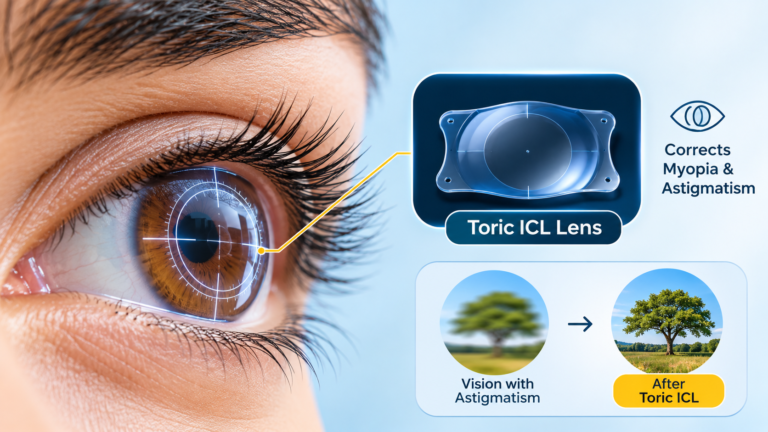
After ICL (Implantable Collamer Lens) surgery, patients often focus on how clearly they can see. However, another important measurement helps doctors assess the position of the implanted lens: the ICL vault. It refers to the space between the back surface of the implanted ICL and the front surface of the eye's natural lens. ICL vault …

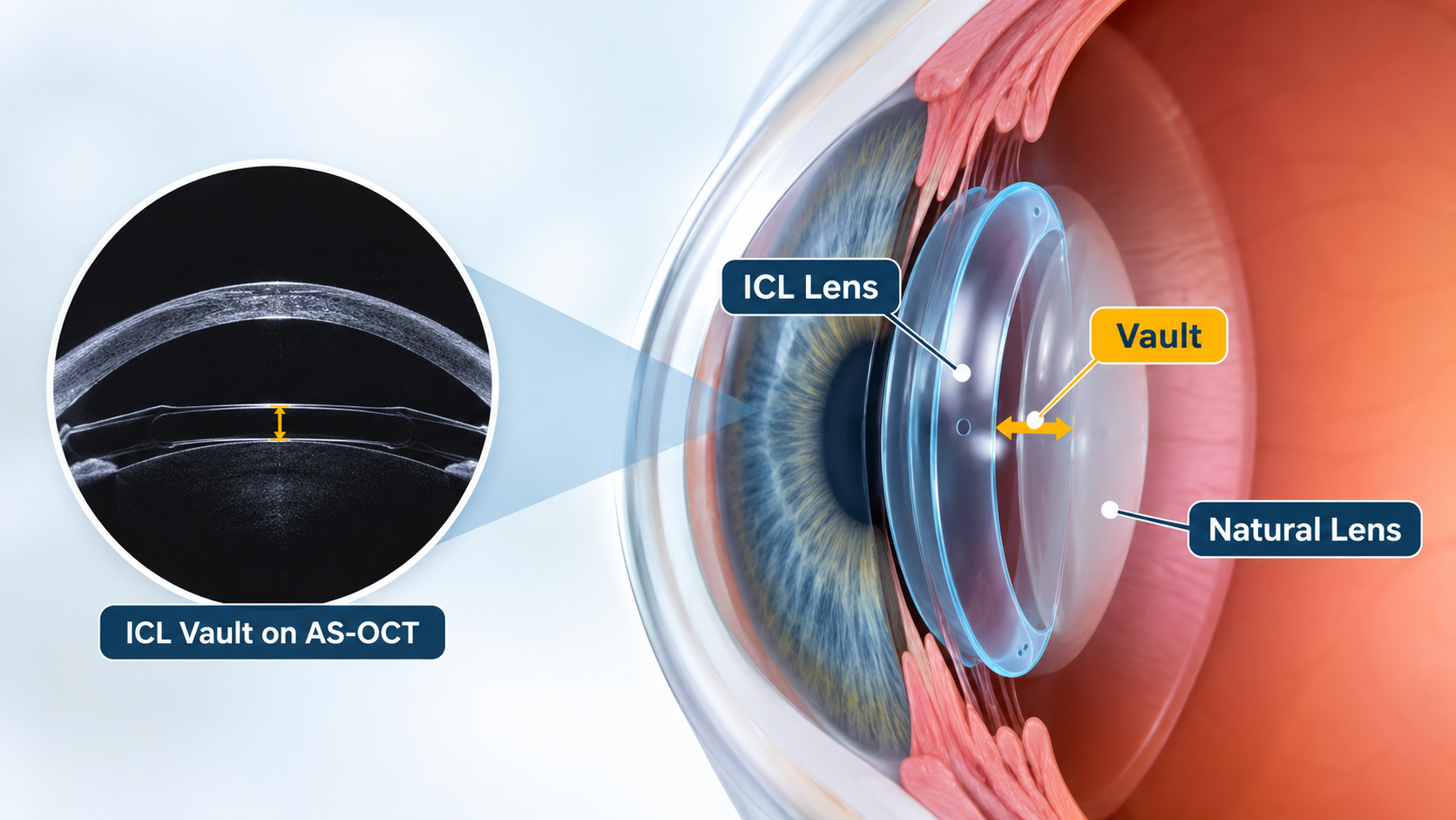
After ICL (Implantable Collamer Lens) surgery, patients often focus on how clearly they can see. However, another important measurement helps doctors assess the position of the implanted lens: the ICL vault. It refers to the space between the back surface of the implanted ICL and the front surface of the eye’s natural lens. ICL vault measurement in JP Nagar helps ophthalmologists monitor this space and identify whether the implanted lens is positioned appropriately. At Kiran Eye Hospital, postoperative examinations help assess lens position and overall eye health.
What Exactly Is ICL Vault After Surgery?
ICL vault is the central distance between the posterior surface of the implanted lens and the anterior surface of the natural crystalline lens.
In simple terms, it is the gap between the artificial lens and your own natural lens.
This space is important because the ICL should sit in an appropriate position without putting excessive pressure on nearby structures.
A suitable vault allows adequate separation between the two lenses while maintaining sufficient space in the front portion of the eye.
Doctors assess this measurement as part of postoperative monitoring because both unusually low and unusually high vault measurements may require further evaluation.
What Is the Normal ICL Vault Range?
A vault measurement of approximately 250–750 micrometres is commonly used as a reference range for many ICL models.
However, this should not be treated as a universal target for every patient. The appropriate range depends on the specific lens model, manufacturer recommendations, measurement method and individual eye anatomy.
Doctors interpret the measurement along with other findings, including eye pressure, anterior chamber depth and the position of the implanted lens.
A measurement outside a commonly quoted range does not automatically mean that surgery has failed or another procedure is required.
The ophthalmologist considers the complete clinical picture before recommending observation or further management.
Why Is ICL Vault Measurement in JP Nagar Important?
The ICL vault measurement in JP Nagar is important because it helps doctors evaluate whether the implanted lens maintains an appropriate distance from the natural crystalline lens.
The measurement can help identify two concerns:
Low vault: When the gap is smaller than desired, the implanted lens may come too close to the natural lens. This can increase the risk of anterior subcapsular cataract formation in some patients.
High vault: When the gap is excessive, the ICL may push the iris forward or contribute to narrowing of the drainage angle. This can increase the risk of elevated eye pressure.
Monitoring the vault helps doctors identify these concerns before significant complications develop.
What Happens If the ICL Vault Is Too Low?
A low vault means that the implanted lens is positioned relatively close to the natural crystalline lens.
In some cases, this may increase the likelihood of contact between the lenses or interfere with the normal environment around the natural lens.
Possible concerns include:
- Increased risk of anterior subcapsular cataract
- Changes in the position of the implanted lens
- Reduced clearance between the two lenses
A low vault does not always cause immediate symptoms. Some patients continue to experience clear vision, which is why scheduled examinations remain important.
If the doctor identifies an excessively low vault or associated complications, further assessment is required. Depending on the findings, observation, additional imaging or ICL repositioning or exchange may be considered.
Can a High ICL Vault Cause Eye Pressure Problems?
Yes. An excessively high vault may push the iris forward and reduce the space available for fluid drainage through the anterior chamber angle.
This may contribute to increased intraocular pressure in certain patients.
Possible warning signs include:
- Eye pain or discomfort
- Blurred vision
- Halos around lights
- Redness
- Headache associated with eye discomfort
However, high vault does not automatically mean that eye pressure will increase. Some patients may have a high measurement without developing pressure-related complications.
Doctors therefore evaluate the angle, eye pressure and overall lens position rather than relying on vault measurement alone.
Which Tests Are Used to Measure ICL Vault?
Several diagnostic examinations can help assess ICL position after surgery.
- Anterior Segment OCT
Anterior segment optical coherence tomography (AS-OCT) uses light-based imaging to capture detailed views of the front structures of the eye. It helps measure the central vault and examine the relationship between the implanted lens and natural lens.
- Ultrasound Biomicroscopy (UBM)
UBM uses high-frequency ultrasound to examine internal anterior segment structures. It can provide information about the position of the ICL and surrounding anatomy, including areas that may not be clearly visualised with optical imaging.
- Slit-Lamp Examination
This examination allows the ophthalmologist to inspect the front portion of the eye and assess the position of the implanted lens.
- Intraocular Pressure Measurement
Eye pressure is checked to identify possible pressure-related complications.
- Gonioscopy
When indicated, gonioscopy helps doctors examine the drainage angle and determine whether it has become narrow or blocked.
The ophthalmologist decides which tests are required based on the patient’s symptoms, surgical history and examination findings.
Can ICL Vault Change Months or Years After Surgery?
Yes. ICL vault is not necessarily a fixed measurement throughout life.
It may change over time because of factors such as:
- Natural changes in the crystalline lens with ageing
- Changes in the position of the implanted lens
- Individual anatomical differences
- Changes in the eye’s internal structures
For example, the natural crystalline lens gradually increases in thickness with age. This can reduce the available space between the natural lens and the implanted ICL.
This is one reason why postoperative monitoring remains important even when vision appears stable.
What Happens If My ICL Vault Is Not Within the Expected Range?
The treatment depends on the actual measurement, eye pressure, lens position and whether any complications are present.
If the vault is slightly outside the preferred range but the eye is otherwise healthy, the doctor may recommend regular observation.
If the measurement is associated with a significant anatomical concern, the ophthalmologist may consider additional investigations and treatment options.
These may include:
- More frequent postoperative monitoring
- Repeat imaging to confirm the measurement
- ICL repositioning in selected cases
- ICL exchange with a different lens size when indicated
Treatment decisions should be individualised. A single vault reading should not be the only reason to recommend another surgery.
When Should You Visit an Eye Specialist After ICL Surgery?
Attend all scheduled postoperative appointments, even if your vision is clear and comfortable.
Arrange an ophthalmic examination if you notice persistent blurred vision, increasing glare, discomfort or changes in your visual quality.
Seek urgent medical attention if you experience sudden vision loss, severe eye pain, significant redness, halos with headache or nausea, or sudden deterioration in vision. These symptoms may indicate increased eye pressure or another postoperative complication.
At Kiran Eye Hospital, JP Nagar, patients can discuss ICL surgery follow-up and postoperative eye examinations with the ophthalmology team.
Dr. Kiran Kumar, Medical Director and Chief Surgeon, holds MBBS, MD (AIIMS, New Delhi), DNB, FAICO (Cornea), FAICO (Refractive Surgery) and MNAMS qualifications. His published profile identifies refractive surgery among his areas of clinical expertise.
If you have undergone ICL surgery, regular examinations help doctors assess lens positioning, eye pressure and overall anterior segment health. ICL vault measurement in JP Nagar is an important part of this monitoring process, helping the ophthalmologist decide whether the eye requires routine observation or additional evaluation.
Frequently Asked Questions
1. Is ICL vault measurement painful?
No. AS-OCT is a non-invasive imaging test and is generally painless. UBM and other examinations may involve different procedures depending on the equipment used.
2. Can I have clear vision even if my ICL vault is low?
Yes. Visual clarity and vault measurement assess different aspects of the eye. A patient may see clearly despite having a low vault, which is why clinical follow-up is important.
3. How often should I check my ICL vault after surgery?
The schedule depends on your surgeon’s postoperative protocol, initial vault measurement and eye condition. Attend the recommended follow-up appointments and undergo additional imaging when advised.
4. Does a high ICL vault always require another surgery?
No. A high measurement does not automatically mean that surgery is necessary. The doctor evaluates eye pressure, drainage angle, lens position and other findings before deciding on management.
5. Can ICL vault decrease with age?
Yes. Age-related thickening of the natural crystalline lens can reduce the space between the natural lens and the implanted ICL. Regular postoperative monitoring helps identify relevant changes.
Book a Consultation
It’s easy and free!