When I first noticed changes in my eyesight, I wondered whether I could manage them naturally. I had heard that certain foods, eye exercises, warm compresses and home remedies could improve eye health. I also wanted to avoid surgery if possible. If you have similar concerns about cataracts or dry eyes, the important thing to …


When I first noticed changes in my eyesight, I wondered whether I could manage them naturally. I had heard that certain foods, eye exercises, warm compresses and home remedies could improve eye health. I also wanted to avoid surgery if possible.
If you have similar concerns about cataracts or dry eyes, the important thing to understand is that cataracts and dry eye are two very different conditions. Some dry eye symptoms can improve with simple lifestyle changes and appropriate home care. A cataract, however, is a clouding of the eye’s natural lens and cannot be removed through home remedies or exercises.
Knowing the difference can help you avoid unnecessary treatments and understand when it is time to consult a Best Eye Specialist in Bangalore.
Can Cataracts Be Treated Naturally?
The short answer is no, an established cataract cannot currently be reversed naturally.
A cataract develops when the natural lens inside the eye becomes cloudy. This can cause blurred vision, glare, difficulty seeing at night and faded colours.
Eating a healthy diet and protecting your eyes from ultraviolet exposure can support overall eye health, but these measures cannot make an already cloudy lens clear again.
Can Eye Exercises Remove Cataracts?
Eye exercises may help with certain aspects of visual comfort, but they cannot remove a cataract.
If someone promises that specific eye exercises can dissolve a cataract, it is important to be cautious.
Can Vitamins or Supplements Cure Cataracts?
A balanced diet is important for overall health, but there is no established supplement that can reliably remove an existing cataract.
Foods containing antioxidants and nutrients can be part of a healthy diet, but they should not be considered a replacement for an eye examination or medically recommended treatment.
What Happens If I Leave a Cataract Untreated?
I may be able to live with a mild cataract for some time without needing surgery. If my vision is still good enough for reading, working and other daily activities, an ophthalmologist may recommend monitoring it.
As the cataract progresses, however, I may start noticing:
- Cloudy or hazy vision
- Difficulty reading
- Trouble seeing at night
- Glare from headlights
- Halos around lights
- Faded colours
- Frequent changes in glasses
- Difficulty recognizing faces
When the cataract begins interfering with everyday life, Cataract Treatment in Bangalore may need to be considered.
Is Cataract Surgery the Only Effective Treatment?
For a significant cataract that is affecting vision, surgery is the established treatment.
During cataract surgery, the cloudy natural lens is removed and replaced with an artificial intraocular lens.
At Kiran Eye Hospital, cataract surgery is one of the hospital’s core ophthalmic services, with advanced cataract procedures and artificial lens options available.
The decision to undergo surgery is not based only on age. What matters is how much the cataract is affecting your vision and daily life, along with the overall health of your eyes.
What About Dry Eyes? Can They Improve Naturally?
This is where the answer is different.
Dry eye symptoms can sometimes improve with simple lifestyle and environmental changes, particularly when they are mild.
Dry eye occurs when the eyes do not produce enough tears or when tears evaporate too quickly.
I might experience:
- Burning or stinging
- Gritty sensation
- Redness
- Watery eyes
- Sensitivity to light
- Blurred or fluctuating vision
- Eye fatigue
- Difficulty wearing contact lenses
Interestingly, excessive watering can also occur with dry eyes because irritation can trigger reflex tearing.
What Can I Do at Home for Dry Eye Relief?
If my symptoms are mild, there are several habits that may help.
Take Breaks From Screens
When I concentrate on a phone or computer screen, I tend to blink less. Following the 20 20 20 approach can help reduce digital eye strain: every 20 minutes, look at something around 20 feet away for about 20 seconds.
Blink More Often
Consciously blinking while working on a computer can help spread the tear film over the surface of the eye.
Stay Hydrated
Drinking enough fluids supports general health and may help maintain normal tear production.
Avoid Direct Airflow
Fans, air conditioners and car vents blowing directly toward the eyes can increase tear evaporation.
Use a Humidifier if Needed
In dry indoor environments, adding moisture to the air may make the eyes more comfortable.
Warm Compresses
A warm compress may provide relief for some people, particularly when eyelid gland dysfunction contributes to dry eye symptoms. Your eye specialist can advise whether this is appropriate for you.
Can Artificial Tears Help Dry Eyes?
Yes. Lubricating eye drops, commonly called artificial tears, can provide temporary relief for many people with dry eye symptoms.
However, not every eye drop is suitable for every patient. If I find myself using drops frequently or my symptoms keep returning, it is better to have my eyes examined rather than continuously self treating.
Some patients may require additional treatment depending on the cause and severity of dry eye.
Kiran Eye Hospital lists Advanced Dry Eye Clinic and Dry Eye Treatment among its eye care services.
When Should I See an Eye Specialist?
This is probably the most important question I would ask if my eyes were becoming uncomfortable.
I should see an eye specialist if:
- Dry eye symptoms continue despite basic care
- My vision becomes persistently blurry
- Eye redness does not improve
- I have recurring eye irritation
- Cataract symptoms interfere with daily activities
- I have increasing glare or difficulty driving at night
- I have sudden changes in vision
- I develop significant eye pain
- I notice flashes, sudden floaters or a curtain like shadow in my vision
Sudden vision loss or severe eye pain requires urgent eye care, rather than waiting for a routine appointment.
How Is the Cause of My Eye Problem Diagnosed?
One thing I learned is that symptoms alone do not always tell the complete story.
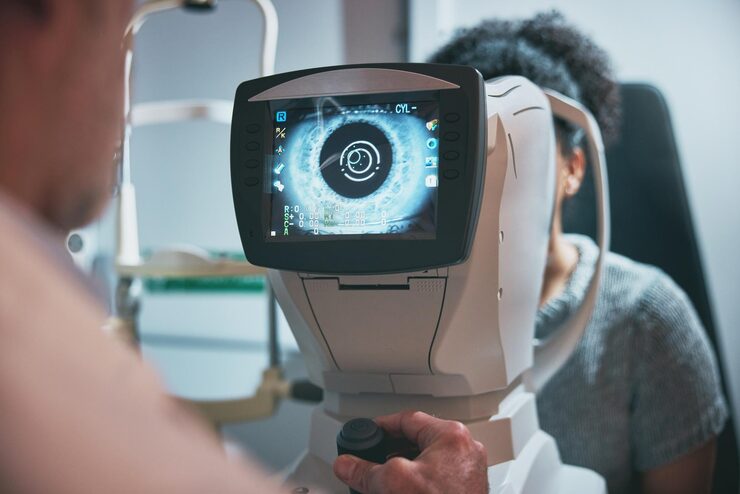
During an eye examination, the specialist may assess:
Vision
Visual acuity helps determine how clearly I can see.
Lens
The doctor checks whether a cataract is present and how much it is affecting the lens.
Tear Film and Eye Surface
For dry eye symptoms, the doctor may assess the tear film, eyelids and ocular surface.
Retina
A detailed examination of the back of the eye can identify retinal problems that may also affect vision.
This is why a proper examination is more useful than simply assuming that blurry vision is caused by cataracts or dry eyes.
Can Cataract and Dry Eye Happen Together?
Yes.
It is possible for me to have both cataracts and dry eye at the same time. This can sometimes make it difficult to understand which condition is responsible for my symptoms.
For example, cataracts may cause cloudy vision and glare, while dry eye may cause fluctuating vision, burning and irritation.
Treating the dry eye first may sometimes improve the quality of vision and comfort, while the cataract may still require monitoring or surgery depending on its severity.
Is There a Natural Way to Prevent Cataracts From Getting Worse?
There is no guaranteed natural method to stop cataract progression.
However, I can support my overall eye health by:
- Protecting my eyes from excessive UV exposure
- Avoiding smoking
- Managing diabetes and other health conditions
- Eating a balanced diet
- Attending regular eye examinations
- Avoiding unnecessary steroid use unless medically prescribed
These habits support eye health, but they should not be presented as a cure for cataracts.
What Does Cataract Treatment in Bangalore Involve?
If a cataract begins affecting my everyday life, the ophthalmologist first evaluates my eyes and discusses whether surgery is appropriate.
Modern cataract surgery involves removing the cloudy lens and replacing it with an artificial intraocular lens. The type of lens can be selected according to my eye measurements, visual requirements and overall eye health.
Kiran Eye Hospital states that it provides advanced cataract surgery and uses artificial lenses to restore clearer vision.
The right treatment is therefore not about finding a “natural cure” at any cost. It is about understanding what is actually causing my vision problem and choosing an appropriate treatment.
Why See a Best Eye Specialist in Bangalore?
When I have both cataract concerns and dry eye symptoms, I want someone to look at the whole picture rather than treating just one symptom.
Kiran Eye Hospital provides comprehensive eye care, including cataract surgery, dry eye treatment, retina services, glaucoma care, corneal care and other ophthalmic services.
Dr. Kiran Kumar K, Medical Director and Chief Surgeon, is an AIIMS New Delhi alumnus with qualifications including MBBS, MD, DNB, FAICO in Cornea, FAICO in Refractive Surgery and MNAMS. The hospital lists 14+ years of experience and expertise in cataract, cornea and refractive surgery.
Dr. Vandana M Kiran, Managing Director, is qualified in MBBS, MS, DNB, FMR and MNAMS, with expertise in retina, uvea and cataract care. The hospital lists 7+ years of experience.
Frequently Asked Questions
1. Can cataracts be cured naturally without surgery?
No. Healthy food, eye exercises and supplements can support general eye health but cannot remove an established cataract. When a cataract significantly affects vision, cataract surgery is the definitive treatment.
2. Can dry eyes be treated naturally?
Mild dry eye symptoms may improve with regular blinking, screen breaks, adequate hydration, avoiding direct airflow and other lifestyle measures. Persistent symptoms may require lubricating drops or other treatments recommended after an eye examination.
3. Can I have cataracts and dry eyes at the same time?
Yes. Both conditions can occur together. Cataracts primarily affect the eye’s natural lens, while dry eye affects the tear film and ocular surface. A comprehensive eye examination can help identify how much each condition is contributing to your symptoms.
4. When should I consider Cataract Treatment in Bangalore?
If cloudy vision, glare, night driving difficulties, reading problems or other cataract symptoms are interfering with your daily activities, it is appropriate to consult an ophthalmologist and discuss whether treatment is needed.
5. When should I see a Best Eye Specialist in Bangalore for dry eyes?
See an eye specialist if your symptoms are persistent, recurrent, affecting your vision, or not improving with basic measures. Sudden vision loss, severe eye pain, flashes, or a sudden increase in floaters require prompt medical attention.
Book an Appointment
If I am experiencing cloudy vision, glare, persistent dryness or changing eyesight, I would rather get my eyes examined than rely on home remedies alone.
Kiran Eye Hospital
Ground Floor, Vishnu Towers, 20, ITI Layout, 1st Phase, J.P. Nagar, Bengaluru, Karnataka 560078
Phone: +91 8105681057
Email: [email protected]
Hours: Monday to Saturday, 10:30 AM to 8:00 PM
Book an Appointment at Kiran Eye Hospital
Final Takeaway
If I have dry eyes, some simple lifestyle changes may genuinely make my eyes more comfortable. But if I have an established cataract, natural remedies cannot make the cloudy lens clear again.
The safest approach is to understand what is actually causing my symptoms. A proper examination can distinguish cataract related vision changes from dry eye and other eye conditions and help create an appropriate treatment plan.
If you are looking for Cataract Treatment in Bangalore or Dry Eyes Treatment in Bangalore, seeing an eye specialist before trying new treatments can save time, prevent unnecessary self medication and help protect your vision.
Book a Consultation
It’s easy and free!