Have you undergone cataract surgery and noticed that your vision is becoming cloudy or blurred again after initially seeing clearly? This can happen due to a condition called posterior capsular opacification (PCO), commonly known as secondary cataract. Posterior capsular opacification symptoms may include blurred vision, glare, difficulty reading and reduced clarity in bright or dim …

Have you undergone cataract surgery and noticed that your vision is becoming cloudy or blurred again after initially seeing clearly? This can happen due to a condition called posterior capsular opacification (PCO), commonly known as secondary cataract. Posterior capsular opacification symptoms may include blurred vision, glare, difficulty reading and reduced clarity in bright or dim lighting. Although PCO can develop months or years after cataract surgery, it can often be treated with a procedure called Nd:YAG laser capsulotomy. An eye examination helps determine whether PCO or another eye condition is responsible for the vision changes.
What Is Posterior Capsular Opacification and Why Does It Develop?
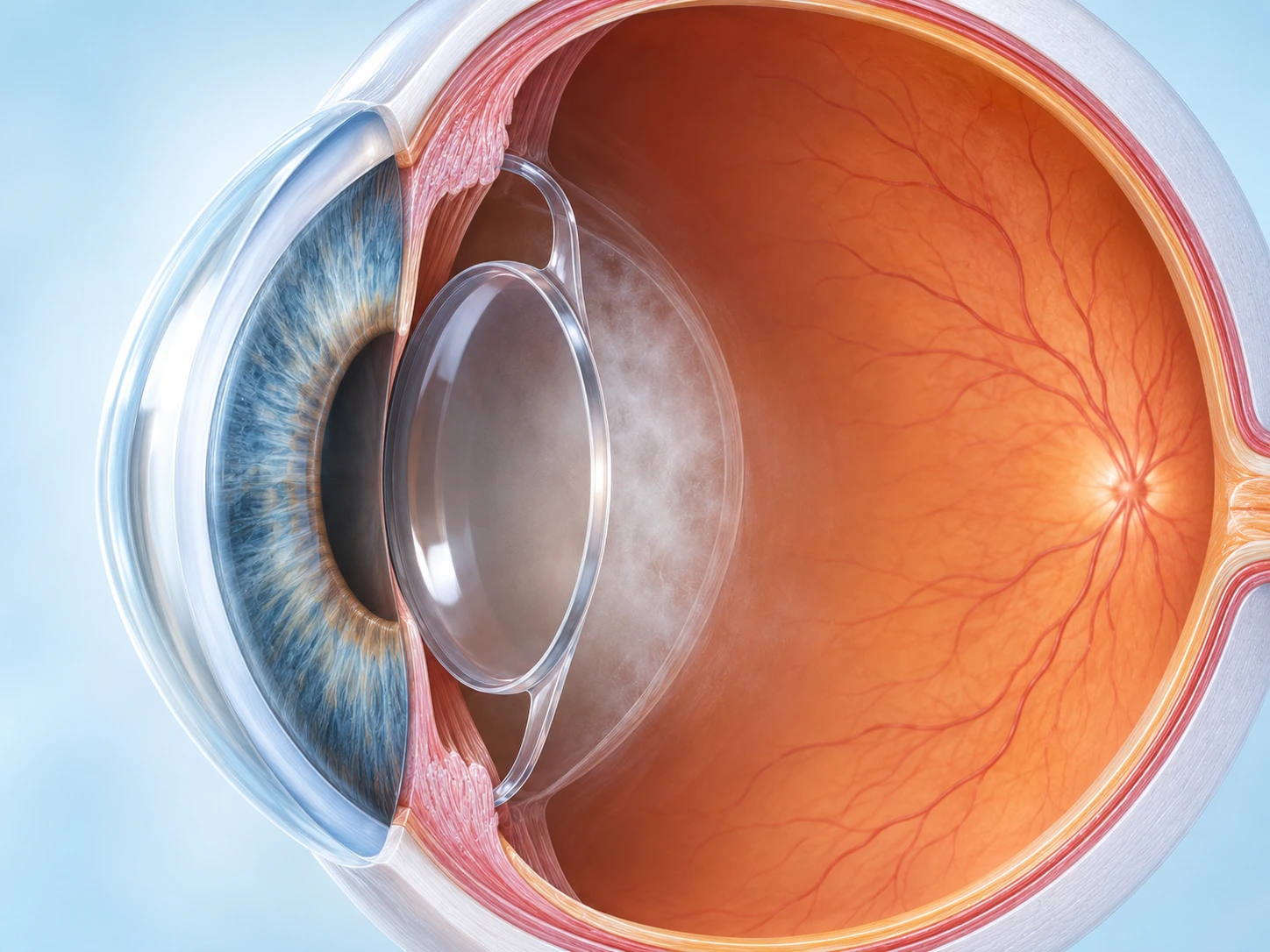
Posterior capsular opacification is a condition that can develop after cataract surgery. During cataract surgery, the cloudy natural lens is removed and replaced with an artificial intraocular lens (IOL). A thin, transparent membrane called the posterior capsule is usually preserved to support the artificial lens.
In some patients, residual lens epithelial cells may multiply and grow over the posterior capsule. This can gradually make the membrane cloudy, affecting how light reaches the retina and resulting in blurred vision.
PCO is sometimes called a secondary cataract. However, it is not the original cataract returning. The natural cloudy lens has already been removed; the cloudiness develops in the capsule behind the artificial lens.
What Are the Common Posterior Capsular Opacification Symptoms?
The symptoms may develop gradually, making it difficult for patients to identify the reason for their changing vision.
Common posterior capsular opacification symptoms include:
- Blurred vision: Objects may appear less clear than they did immediately after cataract surgery.
- Cloudy vision: Patients may feel as though they are looking through a hazy or foggy window.
- Glare sensitivity: Bright sunlight, vehicle headlights and indoor lighting may become uncomfortable.
- Difficulty reading: Small letters may become harder to recognise.
- Reduced contrast: Differences between objects and their backgrounds may become less noticeable.
- Halos around lights: Some patients notice rings or glare around light sources.
The severity of symptoms varies. Some people experience mild changes, while others may notice significant difficulty with everyday activities.
If these changes occur, an ophthalmologist can examine the eyes to identify the underlying cause.
Why Does Vision Become Cloudy Again After Cataract Surgery?
Many patients expect their vision to remain clear after cataract surgery. Therefore, experiencing blurred vision again can be confusing.
PCO is one possible explanation. As cells grow over the posterior capsule, the membrane may become cloudy and interfere with the passage of light.
However, not every case of blurred vision after cataract surgery is caused by PCO.
Other possible causes include:
- Dry eye disease.
- Changes in spectacle power.
- Macular oedema (swelling in the central retina).
- Diabetic retinal changes.
- Glaucoma.
- Age-related retinal conditions.
The timing of symptoms, previous eye surgery and examination findings help an ophthalmologist determine the possible cause.
How Is Posterior Capsular Opacification Diagnosed?
An eye examination is important to confirm whether posterior capsular opacification is responsible for the vision changes.
The ophthalmologist may recommend:
Visual acuity assessment: This checks how clearly the patient can see letters, numbers and objects at different distances.
Slit-lamp examination: A specialised microscope helps examine the cornea, artificial lens and posterior capsule to identify cloudiness.
Dilated retinal examination: Eye drops may be used to widen the pupils so the ophthalmologist can examine the retina and other internal structures.
Additional investigations: Depending on the findings, tests such as optical coherence tomography (OCT) may be recommended to evaluate the macula.
These examinations help distinguish PCO from other conditions that can cause similar symptoms.
What Are the Treatment Options for Posterior Capsular Opacification in Bannerghatta Road?
Treatment depends on the severity of the cloudiness and its effect on daily activities.
For patients diagnosed with visually significant PCO, an ophthalmologist may recommend Nd:YAG laser posterior capsulotomy.
This is a laser procedure that creates a small opening in the cloudy posterior capsule, allowing light to pass through more clearly towards the retina.
The procedure generally involves:
- Eye drops to prepare the eye for treatment.
- Positioning the patient in front of a specialised laser instrument.
- Using focused laser energy to create an opening in the cloudy capsule.
- Checking the eye after the procedure and providing further instructions.
The artificial intraocular lens usually remains in place.
Patients considering posterior capsular opacification treatment in Bannerghatta Road should undergo an eye examination before deciding on treatment.
Not everyone with PCO requires immediate laser treatment. The decision depends on symptoms, examination findings and the effect on vision.
Possible complications of YAG laser capsulotomy include temporary inflammation, increased eye pressure, floaters, intraocular lens damage and retinal complications. The ophthalmologist will explain the potential risks and benefits before treatment.
Is YAG Laser Capsulotomy Painful, and What Happens After Treatment?
Nd:YAG laser capsulotomy is generally performed as an outpatient procedure. Anaesthetic eye drops are commonly used to numb the eye’s surface.
Patients usually remain awake during the procedure. They may notice flashes of light or clicking sounds while the laser is being used.
After treatment, some patients experience:
- Temporary blurred vision.
- Small floating spots in their vision.
- Mild discomfort.
- Temporary changes in eye pressure.
Follow-up examinations may be recommended to monitor eye pressure and check the response to treatment.
The improvement in vision depends on whether PCO was the main cause of the visual disturbance and whether other eye conditions are present. Patients should follow their ophthalmologist’s instructions regarding eye drops and follow-up visits.
When Should You Consult an Eye Specialist?
Gradually developing cloudy vision after cataract surgery should be evaluated by an eye specialist, particularly when it starts affecting reading, driving or other daily activities.
Seek urgent medical attention if you experience:
- Sudden loss or significant reduction of vision.
- New flashes of light.
- A sudden increase in floaters.
- A dark curtain or shadow across your vision.
- Severe eye pain or significant redness.
These symptoms may indicate conditions other than PCO, including potentially serious retinal problems. Do not assume that every change in vision after cataract surgery is secondary cataract.
Where Can You Get an Eye Evaluation Near Bannerghatta Road?
Patients experiencing blurred vision after cataract surgery can consult an ophthalmologist for an appropriate examination and treatment assessment.
Kiran Eye Hospital, located in JP Nagar, Bengaluru, provides eye care services for patients seeking evaluation of cataract-related and other eye conditions.
Patients from Bannerghatta Road and surrounding areas can seek an ophthalmic consultation to understand the reason for cloudy vision, undergo appropriate diagnostic examinations and discuss suitable treatment options.
The choice of treatment depends on the individual’s eye condition and clinical findings.
Frequently Asked Questions
1. Can cataracts come back after cataract surgery?
The original cataract does not grow back because the cloudy natural lens has been removed. However, posterior capsular opacification can develop behind the artificial lens, causing similar symptoms.
2. How long after cataract surgery can PCO develop?
PCO can develop several months or even years after cataract surgery. The timing and severity vary between individuals.
3. Is YAG laser capsulotomy necessary for every PCO patient?
No. Mild PCO without significant visual disturbance may only require monitoring. Laser treatment may be considered when the cloudiness affects vision or daily activities.
4. Can posterior capsular opacification cause permanent vision loss?
PCO generally affects visual clarity rather than directly damaging the retina. However, other eye conditions may cause similar symptoms. An examination is necessary to identify the cause and determine appropriate treatment.
5. Can PCO develop again after YAG laser capsulotomy?
Once an adequate opening is created in the posterior capsule, the same area generally does not become cloudy again. However, other eye conditions can still affect vision over time.
Conclusion
Experiencing cloudy vision after cataract surgery does not necessarily mean that the original cataract has returned. Posterior capsular opacification is one possible cause and may develop months or years after the procedure.
Recognising posterior capsular opacification symptoms and arranging an eye examination can help identify the reason for changing vision. Dr. Kiran Kumar K and Kiran Eye Hospital, Bengaluru, can be considered for an ophthalmic evaluation to understand the available assessment and treatment options. Patients from Bannerghatta Road experiencing renewed blurred vision should seek an appropriate eye examination rather than ignore persistent changes in vision.
Book a Consultation
It’s easy and free!