Can I undergo LASIK if I previously had a herpes infection in my eye? LASIK may be considered in carefully selected patients with a previous herpes simplex eye infection, but a history of ocular herpes is an important precaution. The infection can reactivate after eye surgery, and previous episodes may leave corneal scars or other …

Can I undergo LASIK if I previously had a herpes infection in my eye?
LASIK may be considered in carefully selected patients with a previous herpes simplex eye infection, but a history of ocular herpes is an important precaution. The infection can reactivate after eye surgery, and previous episodes may leave corneal scars or other changes that make LASIK unsuitable.
Patients researching LASIK with herpes eye infection Treatment Bangalore should understand that being symptom-free does not automatically establish surgical eligibility.
At Kiran Eye Hospital, JP Nagar, Bengaluru, Dr. Kiran Kumar K and the ophthalmology team can evaluate corneal health and previous infection history before discussing refractive surgery.
What is eye herpes, and why can it return?
Eye herpes is commonly caused by herpes simplex virus (HSV), which can infect the cornea and surrounding eye tissues.
When the cornea is affected, the condition is called herpes simplex keratitis.
After an initial infection, the virus can remain inactive within nerve cells and reactivate later.
A person may therefore experience another episode despite having recovered completely from an earlier infection.
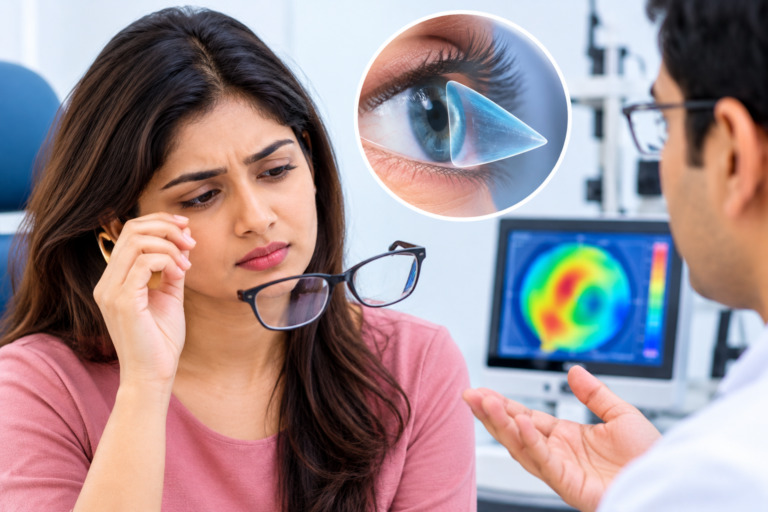
Recurrent infections can cause inflammation, scarring and changes in corneal sensitivity.
This is particularly relevant to LASIK because the procedure involves reshaping corneal tissue.
Does having cold sores mean I cannot undergo LASIK?
Not necessarily.
A history of cold sores around the lips is different from a confirmed history of herpes simplex keratitis.
Cold sores indicate previous herpes simplex infection, but they do not automatically establish that the cornea has been affected.
Nevertheless, patients should disclose previous cold sores, eyelid blisters and suspected herpes-related eye symptoms during their refractive surgery assessment.
The ophthalmologist will consider the complete medical history and examination findings.
Patients should not conceal previous herpes infections because they believe these automatically disqualify them.
Why can LASIK trigger another episode of eye herpes?
LASIK uses laser energy to reshape the cornea.
Surgical trauma and changes in corneal nerves may contribute to viral reactivation in susceptible patients.
Postoperative corticosteroid eye drops, which are commonly used to control inflammation, may also influence herpes-related disease.
This does not mean everyone with previous ocular herpes will experience recurrence.
However, reactivation can produce new corneal inflammation and potentially affect visual outcomes.
The concern is greater when previous episodes involved deeper corneal layers or caused persistent structural damage.
Does the type of previous herpes infection affect LASIK eligibility?
Yes. Not all herpes-related eye infections have the same implications.
Epithelial keratitis affects the outer corneal layer and may produce characteristic branching lesions.
Stromal keratitis involves deeper corneal tissue and can cause significant inflammation, scarring or reduced vision.
Some patients also develop inflammation involving other eye structures.
A history of recurrent stromal disease is particularly concerning because the cornea may already have reduced transparency or structural abnormalities.
LASIK may be inadvisable in these circumstances.
The ophthalmologist must review the infection’s location, severity, frequency and long-term effects.
How long must my eye remain free from herpes infection before LASIK?
There is no universally accepted interval that guarantees LASIK safety after ocular herpes.
Some published expert recommendations suggest considering refractive surgery only after at least one year without ocular herpes activity in carefully selected cases.
However, this is not a universal clearance rule.
A patient with repeated infections or residual stromal scarring may remain unsuitable despite a prolonged symptom-free period.
The surgeon must evaluate the complete history rather than relying on the date of the last episode alone.
Which LASIK tests are important after previous eye herpes?
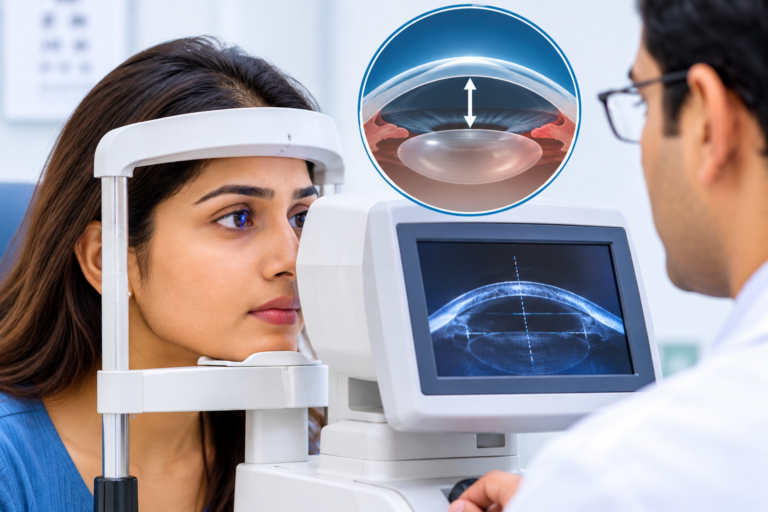
Patients considering a LASIK Test in Bangalore should undergo comprehensive refractive and corneal evaluation.
Important examinations include:
Slit-lamp examination: Checks for residual scars, inflammation and corneal surface abnormalities.
Corneal topography: Maps the corneal surface to detect irregular curvature.
Corneal tomography: Evaluates corneal structure and shape.
Pachymetry: Measures corneal thickness.
Tear film assessment: Identifies ocular surface dryness.
Visual acuity and refraction testing: Assess spectacle power and prescription stability.
The ophthalmologist may also evaluate corneal sensation when previous herpes infection has affected nerve function.
If an active or unusual infection is suspected, additional diagnostic tests may be recommended.
Can a previous herpes infection leave permanent corneal damage?
Yes. Some herpes infections heal without major visual consequences.
Others may leave corneal scars, irregular astigmatism or reduced corneal sensation.
These changes can affect both vision and healing.
Even when the eye appears comfortable, microscopic or structural abnormalities may remain.
If a scar interferes with corneal transparency or the cornea is irregular, LASIK may not be appropriate.
The ophthalmologist must determine whether vision is primarily affected by spectacle power or by existing corneal damage.
Can antiviral medicines reduce the risk of herpes recurrence?
In selected cases, an ophthalmologist may consider preventive antiviral medication around the time of surgery.
Medicines such as acyclovir or valacyclovir may be used under specialist supervision.
However, preventive medication cannot guarantee that reactivation will not occur.
The decision depends on the patient’s infection history, corneal findings and planned procedure.
Patients should never begin antiviral medication or use steroid eye drops without medical guidance.
Individuals with significant previous ocular herpes disease may be advised to avoid elective refractive surgery.
Is PRK or SMILE automatically safer if LASIK is unsuitable?
No.
PRK and SMILE involve different surgical techniques, but both alter corneal tissue.
A previous herpes infection may remain relevant because corneal surgery and postoperative medications can potentially contribute to reactivation.
PRK also involves surface healing, which requires careful consideration in patients with previous corneal disease.
The surgeon may recommend avoiding laser surgery altogether.
Spectacles or appropriately fitted contact lenses may be preferable when the risks of elective surgery outweigh the potential benefits.
What symptoms suggest that eye herpes may have returned?
Patients with previous herpes-related eye disease should recognise possible warning signs.
These include:
- Redness affecting one eye.
- Increasing eye pain or irritation.
- Sensitivity to bright light.
- Excessive watering.
- Blurred or reduced vision.
- New eyelid blisters.
Seek urgent ophthalmic assessment if these symptoms develop, particularly when pain, light sensitivity or visual changes are present.
Do not use leftover steroid eye drops without medical advice, as inappropriate steroid treatment can worsen certain active herpetic corneal infections.
Where can I discuss LASIK eligibility after eye herpes in Bangalore?
Patients exploring LASIK with herpes eye infection Treatment Bangalore can seek an ophthalmic evaluation at Kiran Eye Hospital, Vishnu Towers, ITI Layout, 1st Phase, JP Nagar, Bengaluru.
Dr. Kiran Kumar K, Medical Director and Chief Surgeon, holds MBBS, MD (AIIMS, New Delhi), DNB, FAICO (Cornea), FAICO (Refractive Surgery) and MNAMS qualifications. His documented expertise includes corneal conditions, keratoplasty and refractive procedures.
A consultation with Dr. Kiran Kumar K or the ophthalmology team can help determine whether previous herpes-related disease has affected the cornea and whether LASIK should be considered or avoided.
Further information is available through the hospital’s LASIK surgery and PRK surgery pages.
Frequently Asked Questions About LASIK After Eye Herpes
1. Can LASIK be performed after herpes simplex keratitis?
LASIK may be considered in selected patients with a previous herpes simplex eye infection, but recurrence risk and corneal health require careful assessment. Some patients may be advised against surgery.
2. Does a history of cold sores automatically disqualify me from LASIK?
No. Cold sores do not necessarily indicate previous corneal infection. However, all herpes-related symptoms should be disclosed before refractive surgery.
3. Can eye herpes reactivate after LASIK surgery?
Yes. Herpes simplex keratitis can reactivate following corneal surgery. The risk varies, and preventive measures do not eliminate the possibility of recurrence.
4. How long should I wait after an ocular herpes infection before LASIK?
There is no universally safe waiting period. Some expert recommendations suggest at least one year without active infection in carefully selected patients, but individual medical history and corneal findings determine suitability.
5. Is SMILE or PRK safer than LASIK for patients with previous eye herpes?
Neither procedure is automatically safer. Previous ocular herpes disease may affect eligibility for any corneal refractive surgery. An ophthalmologist should evaluate the risks and discuss non-surgical alternatives.
Book a Consultation
It’s easy and free!