When can I start exercising again after SMILE surgery? Light activities such as walking may be possible within the first few days after SMILE surgery, depending on your surgeon's instructions. Gentle gym workouts are often considered after approximately one week, while heavy weightlifting, swimming, contact sports and strenuous exercise may require several weeks of restriction. …

When can I start exercising again after SMILE surgery?
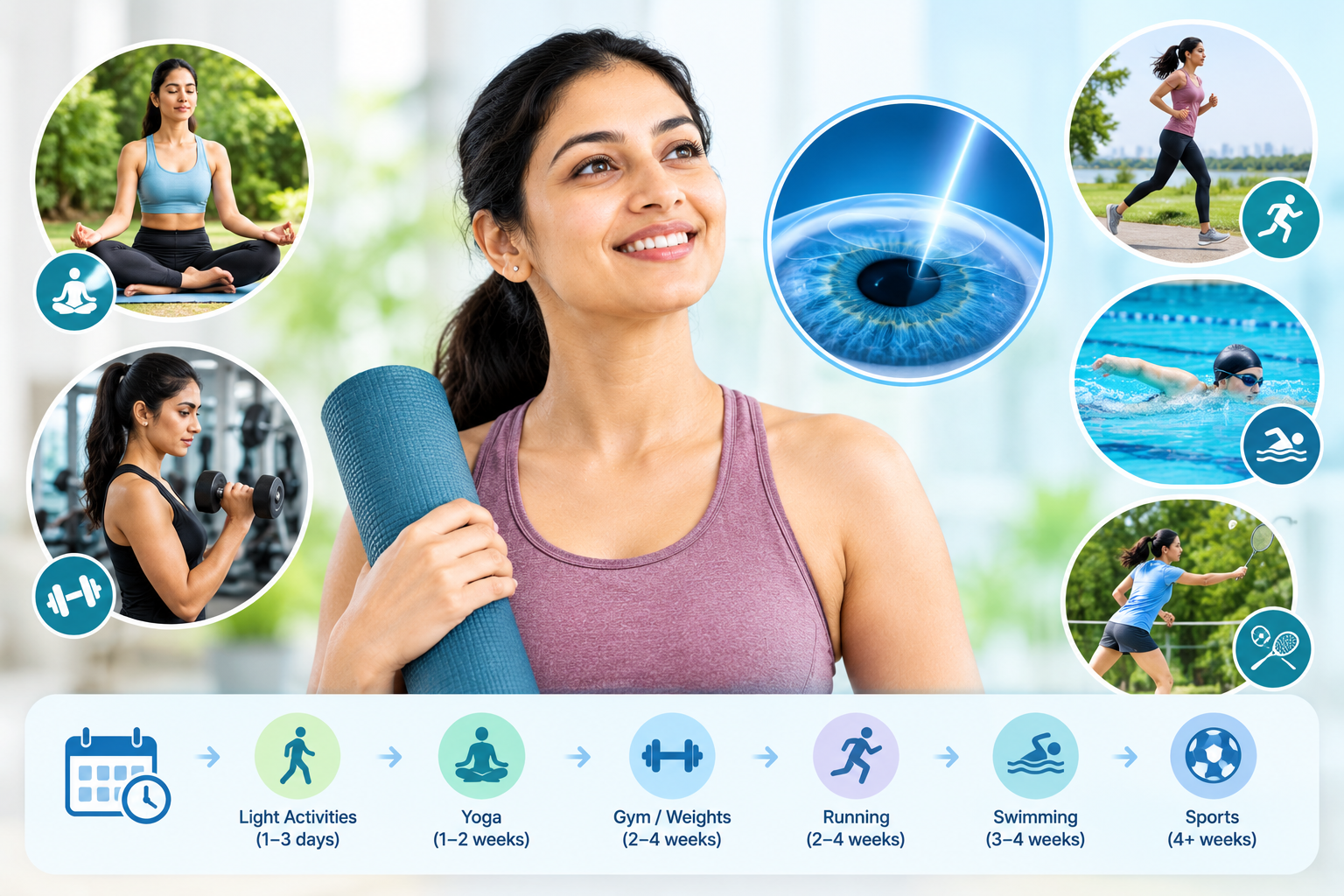
Light activities such as walking may be possible within the first few days after SMILE surgery, depending on your surgeon’s instructions. Gentle gym workouts are often considered after approximately one week, while heavy weightlifting, swimming, contact sports and strenuous exercise may require several weeks of restriction.
For patients searching for SMILE surgery near me, understanding exercise restrictions is important before returning to an active lifestyle. At Kiran Eye Hospital, JP Nagar, Bengaluru, Dr. Kiran Kumar K and the ophthalmology team can advise patients based on corneal healing, vision stability and postoperative examination findings.
Why should I avoid strenuous exercise immediately after SMILE surgery?
SMILE (Small Incision Lenticule Extraction) is a laser vision correction procedure that reshapes the cornea through a small incision without creating a large corneal flap.
Although many patients experience relatively quick visual improvement, the cornea still requires time to heal.
During strenuous activities, sweat, dust or accidental contact may irritate the recovering eyes.
Heavy lifting and breath-holding can temporarily increase pressure inside the eyes. Certain sports also carry a risk of accidental eye injury.
These concerns explain why surgeons recommend different recovery timelines for different activities.
The absence of a LASIK-style flap does not mean that every physical activity is immediately safe.
Can I practise yoga a few days after SMILE surgery?
Yoga enthusiasts often wonder whether they can resume their regular routine shortly after laser eye treatment.
Gentle breathing exercises, meditation and relaxed movements may be considered earlier than physically demanding yoga sessions.
However, certain postures require additional caution.
Downward-facing dog, headstands, shoulder stands and prolonged forward bends place the head below the heart and may temporarily influence intraocular pressure.
Hot yoga also introduces sweat, heat and possible dehydration-related discomfort.
Patients should avoid demanding poses during early recovery and discuss their preferred yoga routine with the surgeon.
Once cleared, restarting with gentle, upright movements and avoiding pressure around the eyes may be preferable.
When can I return to the gym and lift weights after SMILE?
The timing of returning to gym workouts depends on exercise intensity.
Light stationary cycling, gentle treadmill walking or low-impact activities may be permitted when the surgeon confirms satisfactory healing.
Exercise after SMILE surgery should initially avoid heavy straining, intense exertion and activities where sweat may enter the eyes.
Patients who regularly perform deadlifts, squats, bench presses or high-intensity strength training should request specific medical clearance.
Holding the breath during heavy lifting, known as the Valsalva manoeuvre, can temporarily increase intraocular pressure.
It may be appropriate to restart with lighter weights, controlled breathing and shorter sessions before gradually increasing intensity.
Patients should not assume that feeling comfortable means the corneal healing process is complete.
Is jogging or outdoor running safe after SMILE surgery?
Running introduces different concerns from indoor workouts.
Outdoor environments may expose recovering eyes to wind, dust, sunlight and airborne particles.
Some patients may be allowed to resume gentle jogging after an early postoperative review, while others may need additional recovery time.
Protective sunglasses can help reduce exposure to bright light and environmental irritants.
Running on uneven surfaces should be approached cautiously if vision remains blurry or fluctuating.
Patients experiencing dryness, irritation or unstable vision should discuss these symptoms before returning to outdoor exercise.
When can I resume swimming, football or other sports?
Swimming and contact sports generally require more caution than walking or light exercise.
Swimming pools, lakes and other water environments can expose the eyes to microorganisms and chemical irritants.
Depending on the surgeon’s protocol, swimming may be restricted for approximately two to four weeks.
Contact sports such as football, basketball, boxing and martial arts involve possible eye impact.
These activities may require restrictions lasting approximately one month or longer.
Protective sports eyewear may be recommended when returning to activities involving accidental contact.
Individual instructions take priority over general recovery timelines.
Can sweating or rubbing my eyes affect SMILE recovery?
Sweat entering the eyes may cause irritation, particularly when the ocular surface remains sensitive.
Some patients instinctively rub their eyes after sweating or exercising.
Eye rubbing should be avoided during postoperative healing because it may irritate the cornea or introduce contamination.
When returning to exercise, consider using a clean sweatband, keeping towels hygienic and washing your hands before touching the area around the eyes.
Continue prescribed lubricating or medicated eye drops as directed.
Do not use unprescribed eye medication to manage exercise-related discomfort.
What if I experience blurry vision during a workout?
Temporary dryness and fluctuating vision can occur during SMILE recovery.
However, blurred vision during exercise should not automatically be attributed to normal healing.
Possible causes include tear film instability, ocular surface irritation or postoperative inflammation.
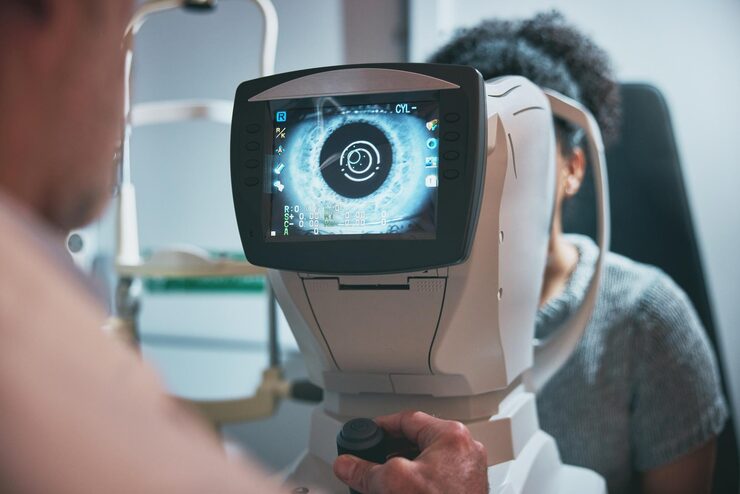
An ophthalmologist may assess visual acuity, refraction, the corneal surface and tear film quality.
Additional investigations, such as corneal topography, may be considered if persistent visual changes require evaluation.
Treatment depends on the findings and may involve lubrication, medication, temporary exercise restrictions or further monitoring.
Stop exercising and contact your surgeon if symptoms develop.
When should I seek urgent medical attention after exercising?
Patients should promptly contact their ophthalmologist if they develop increasing eye redness, persistent irritation, pain or worsening blurred vision after physical activity.
Seek urgent medical attention for sudden vision loss, severe eye pain, new flashes, a sudden increase in floaters or a dark shadow across the vision.
Any direct eye injury during sports should also be assessed promptly, even if discomfort initially appears mild.
Attend scheduled postoperative appointments before returning to activities involving significant physical exertion.
Where can I discuss returning to sports after SMILE surgery in JP Nagar?
Patients searching for SMILE surgery near me can seek refractive surgery consultations and postoperative guidance at Kiran Eye Hospital, situated at Vishnu Towers, ITI Layout, 1st Phase, JP Nagar, Bengaluru.
Dr. Kiran Kumar K, Medical Director and Chief Surgeon, has specialist expertise in corneal and refractive surgery, including SMILE, LASIK and PRK.
Patients may review the hospital’s SMILE surgery service to understand the procedure and recovery considerations.
A follow-up consultation with Dr. Kiran Kumar K or the ophthalmology team can help determine when yoga, gym training and sports may be resumed based on individual healing.
Frequently Asked Questions About Exercise After SMILE Surgery
1. Can I go to the gym three days after SMILE surgery?
Strenuous gym workouts are generally avoided during the first few days. Gentle activities may be permitted depending on recovery, but heavier exercise should only resume after the surgeon provides clearance.
2. Is downward-facing dog yoga safe after SMILE surgery?
Head-down yoga positions may temporarily affect intraocular pressure. Avoid demanding or inverted poses during early recovery and ask your ophthalmologist when they can be resumed.
3. When can I start lifting heavy weights after SMILE surgery?
Heavy lifting may need to be postponed for several weeks, depending on the surgeon’s instructions and healing progress. Start gradually after clearance and avoid excessive straining or breath-holding.
4. Can I swim two weeks after SMILE surgery?
Some patients may receive permission to swim after approximately two weeks, while others are advised to wait longer. The decision depends on healing, the swimming environment and the surgeon’s instructions.
5. Can I play football or badminton after SMILE surgery?
Non-contact sports may be resumed earlier than activities involving possible eye injury. Football, competitive badminton and other sports should be restarted only when the ophthalmologist confirms that recovery is satisfactory.
Book a Consultation
It’s easy and free!