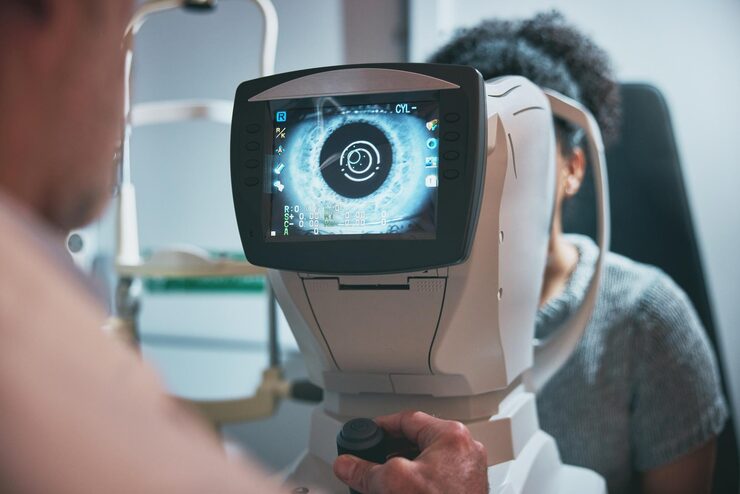
What eye tests are necessary before ICL surgery? Before Implantable Collamer Lens (ICL) surgery, patients generally undergo refraction testing, anterior chamber depth measurement, corneal endothelial cell assessment, eye pressure testing and retinal examination. Additional scans help determine the correct implant size and whether the eye can safely accommodate the lens. For patients searching for ICL …

What eye tests are necessary before ICL surgery?
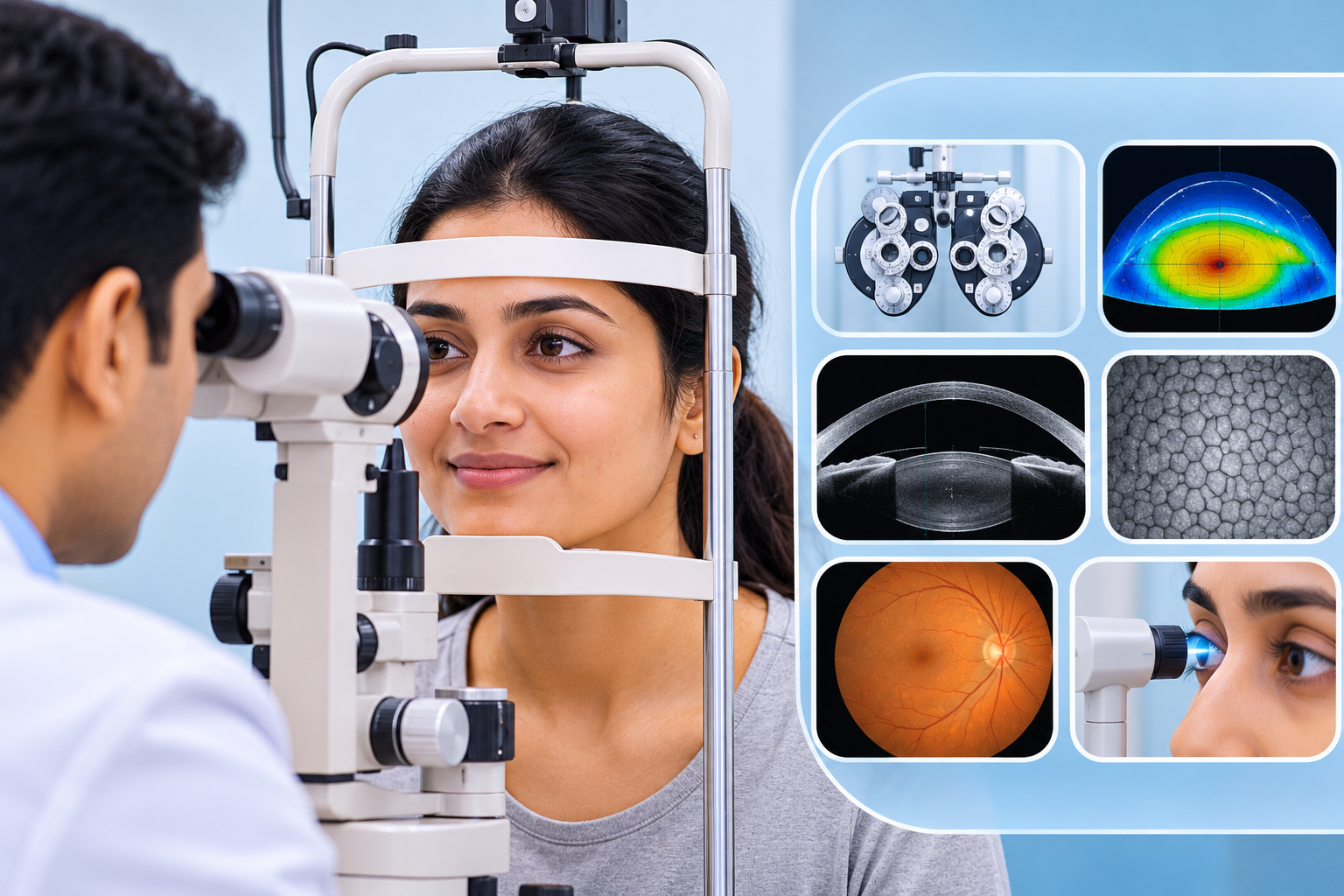
Before Implantable Collamer Lens (ICL) surgery, patients generally undergo refraction testing, anterior chamber depth measurement, corneal endothelial cell assessment, eye pressure testing and retinal examination. Additional scans help determine the correct implant size and whether the eye can safely accommodate the lens.
For patients searching for ICL surgery near me Bannerghatta Road, these investigations are essential because a suitable spectacle prescription alone does not establish eligibility. At Kiran Eye Hospital, located in nearby JP Nagar, Dr. Kiran Kumar K and the ophthalmology team provide refractive surgery consultations to assess individual treatment options.
Why do I need several tests if I already know my spectacle power?
Many patients expect that their existing spectacle prescription will be sufficient to plan ICL surgery.
However, ICL involves placing a specially designed lens inside the eye, behind the iris and in front of the natural crystalline lens.
The surgeon must determine whether the eye has adequate internal space, healthy corneal cells and a suitable anatomical structure for implantation.
High myopia may also be associated with retinal abnormalities that require examination.
These assessments help identify potential surgical risks and determine whether an implantable lens is medically appropriate.
Why is refraction testing repeated before ICL surgery?
Refraction testing measures the amount of myopia, hyperopia or astigmatism present in the eyes.
Patients may notice symptoms such as blurred distance vision, difficulty reading road signs or dependence on high-power spectacles.
The ophthalmologist may perform both standard refraction and cycloplegic refraction when necessary.
Previous prescriptions are reviewed to determine whether the eye power has remained stable.
Significant prescription changes may indicate that surgery should be postponed until the refractive error stabilises.
Accurate measurements also help determine the lens power required for the planned correction.
What is anterior chamber depth, and why does it matter?
Anterior chamber depth is one of the most important measurements in the tests before ICL surgery.
It assesses the space between the cornea’s inner surface and the natural crystalline lens.
An implantable lens requires sufficient internal space to maintain appropriate separation from surrounding eye structures.
If the chamber is too shallow, implantation can increase the risk of complications.
For example, certain FDA-approved EVO ICL models require an anterior chamber depth of at least 3.0 mm, measured using a specified anatomical reference.
This figure should not be treated as a universal threshold for every lens model or regulatory setting.
The surgeon considers the selected implant’s requirements alongside other measurements.
What does an endothelial cell count reveal before surgery?
The cornea contains a specialised inner layer of endothelial cells that helps maintain transparency by regulating fluid.
These cells have limited regenerative capacity.
Specular microscopy measures endothelial cell density and may provide information about cell shape and size.
If the cell count is too low, intraocular surgery may increase the risk of corneal swelling or long-term clarity problems.
Acceptable endothelial cell density varies according to age, anterior chamber depth and the selected implant’s requirements.
A low result may lead the ophthalmologist to recommend against ICL implantation.
How is the correct ICL lens size determined?
ICL lenses are available in different sizes, and accurate sizing is important for their position inside the eye.
The surgeon may use measurements such as white-to-white corneal diameter, anterior chamber depth and, when indicated, anterior segment imaging.
Ultrasound biomicroscopy or anterior segment optical coherence tomography may provide additional anatomical information.
These measurements help estimate the space between the implanted lens and natural crystalline lens, known as the vault.
An inappropriate vault can increase the risk of complications involving the natural lens, iris or eye pressure.
Therefore, lens selection involves more than choosing the correct optical power.
Why are eye pressure and retinal examinations necessary?
Intraocular pressure testing helps assess whether elevated eye pressure or glaucoma-related concerns are present.
Depending on the findings, the surgeon may also evaluate the drainage angle through gonioscopy or anterior segment imaging.
A dilated retinal examination is particularly important for patients with high myopia.
Elongated eyes can have peripheral retinal thinning, lattice degeneration or retinal tears.
ICL surgery corrects refractive error but does not eliminate the underlying retinal risks associated with high myopia.
Significant retinal findings may require additional evaluation or treatment before elective surgery.
Do I need corneal topography if ICL does not reshape the cornea?
Yes, corneal topography or tomography may still be useful.
Although ICL does not remove corneal tissue like LASIK, the surgeon needs to understand the eye’s optical and structural condition.
Corneal mapping helps identify irregular astigmatism and abnormalities that may influence the overall treatment plan.
A slit-lamp examination can also identify cataracts, inflammation or other conditions that could affect eligibility.
The ophthalmologist may recommend further testing based on individual findings.
What happens if one of my ICL screening tests is abnormal?
An abnormal test does not always indicate a serious eye condition, but it may change the recommended treatment.
For example, insufficient anterior chamber depth or low endothelial cell density may make implantation unsuitable.
Elevated eye pressure, cataracts or retinal abnormalities may require additional management.
Treatment alternatives may include spectacles, contact lenses or another refractive procedure where clinically appropriate.
Patients can review Kiran Eye Hospital’s ICL/IPCL surgery service and LASIK surgery service to understand different correction approaches.
The priority is to identify a suitable treatment rather than proceed with surgery despite concerning findings.
When should I seek an eye examination?
Patients with high spectacle power, changing prescriptions or difficulty tolerating contact lenses should consider a comprehensive ophthalmic evaluation.
Sudden flashes of light, a sudden increase in floaters, a dark curtain across vision or sudden visual loss require urgent medical attention.
These symptoms may indicate retinal complications and should not be delayed until a routine refractive surgery consultation.
Where can patients near Bannerghatta Road undergo ICL suitability evaluation?
Patients searching for ICL surgery near me Bannerghatta Road can seek a refractive surgery consultation at Kiran Eye Hospital, located at Vishnu Towers, ITI Layout, 1st Phase, JP Nagar, Bengaluru.
Dr. Kiran Kumar K, Medical Director and Chief Surgeon, holds MBBS, MD (AIIMS, New Delhi), DNB, FAICO (Cornea), FAICO (Refractive Surgery) and MNAMS qualifications. His clinical areas include corneal and refractive surgery.
A consultation with Dr. Kiran Kumar K or the ophthalmology team can help patients understand their examination results and whether an implantable lens is a suitable option.
Frequently Asked Questions About Tests Before ICL Surgery
1. How long does ICL preoperative eye testing take?
The duration varies depending on the investigations required. A comprehensive assessment may involve several tests, pupil dilation and additional imaging. Some patients may require more than one appointment.
2. Is corneal thickness testing necessary before ICL surgery?
Corneal thickness may be measured as part of a comprehensive refractive evaluation. However, anterior chamber depth, endothelial cell density and other internal eye measurements are particularly important for ICL eligibility.
3. Why is an endothelial cell count important before ICL surgery?
Endothelial cells help maintain corneal clarity. A low cell count can increase the risk of corneal swelling or other complications following intraocular surgery. The surgeon must assess whether the count meets appropriate safety criteria.
4. Can I undergo ICL surgery if my anterior chamber depth is low?
A shallow anterior chamber may make ICL implantation unsuitable. Eligibility depends on the actual measurement, the selected lens model and other anatomical findings.
5. Can ICL surgery be planned without a retinal examination?
A retinal examination is an important part of preoperative assessment, especially for patients with high myopia. It helps identify retinal abnormalities that may require monitoring or treatment before surgery.
Book a Consultation
It’s easy and free!