PRESBYOND Laser Blended Vision is a customised laser eye procedure designed to reduce dependence on reading glasses in selected people with presbyopia. It adjusts the corneas so that one eye primarily supports distance vision and the other supports near vision, while extending the range of focus in both eyes. Adults experiencing age-related reading difficulties may …


PRESBYOND Laser Blended Vision is a customised laser eye procedure designed to reduce dependence on reading glasses in selected people with presbyopia. It adjusts the corneas so that one eye primarily supports distance vision and the other supports near vision, while extending the range of focus in both eyes.
Adults experiencing age-related reading difficulties may be considered if their corneas are healthy and they can comfortably adapt to blended vision.
For patients searching for Presbyond surgery near me JP Nagar, Kiran Eye Hospital provides refractive eye care consultations. Dr. Kiran Kumar K lists PRESBYOND among his professional areas of expertise.
Why am I suddenly struggling to read small print after turning 40?
Many people first notice presbyopia when they begin holding their phone farther away, increasing screen brightness or struggling to read restaurant menus.
Common symptoms include:
- Difficulty reading small print at a comfortable distance.
- Eye strain during prolonged reading.
- Headaches after close-up activities.
- Needing brighter lighting for near work.
- Blurred vision while switching between near and distant objects.
Presbyopia occurs because the natural crystalline lens gradually becomes less flexible with age. This reduces the eye’s ability to focus on nearby objects.
It commonly becomes noticeable during the forties and progresses over time.
Presbyopia is different from myopia, which primarily affects distance vision.
How does PRESBYOND help with reading and distance vision?
PRESBYOND uses a technique called Laser Blended Vision.
The procedure combines small differences in the focusing power of both eyes with customised corneal reshaping.
Typically, the dominant eye is optimised primarily for distance vision, while the non-dominant eye is adjusted to support near tasks.
The treatment also modifies the cornea’s optical characteristics to increase depth of focus.
The brain combines information from both eyes to support functional vision across different distances.
Unlike traditional monovision, PRESBYOND is designed to create an overlapping intermediate viewing range.
However, the resulting vision depends on individual anatomy, treatment planning and the patient’s ability to adapt.
Who may be a suitable candidate for PRESBYOND surgery?
Presbyond surgery for presbyopia may be considered for adults experiencing difficulty with near vision who want to explore alternatives to reading glasses.
Potential candidates generally require:
- A sufficiently stable spectacle prescription.
- Healthy corneas with adequate thickness.
- Acceptable corneal topography findings.
- Suitable tear film and ocular surface health.
- Good binocular visual function.
- Tolerance of a small focusing difference between the eyes.
- Realistic expectations regarding postoperative vision.
Patients with myopia, hyperopia or little distance prescription may be considered within applicable treatment limits.
Age alone does not establish eligibility. A comprehensive examination is necessary before recommending treatment.
Can PRESBYOND work if I already wear distance glasses?
Some patients with presbyopia also have myopia, hyperopia or astigmatism.
PRESBYOND treatment planning may address selected existing refractive errors while aiming to improve functional vision across near, intermediate and distant ranges.
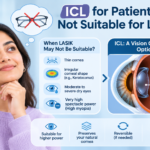
However, very high spectacle prescriptions, irregular corneas or other eye conditions can limit suitability.
The ophthalmologist must evaluate the required tissue removal, expected optical correction and individual visual requirements.
Patients who are unsuitable for corneal laser surgery may need an alternative approach.
Which tests determine whether PRESBYOND is suitable for my eyes?
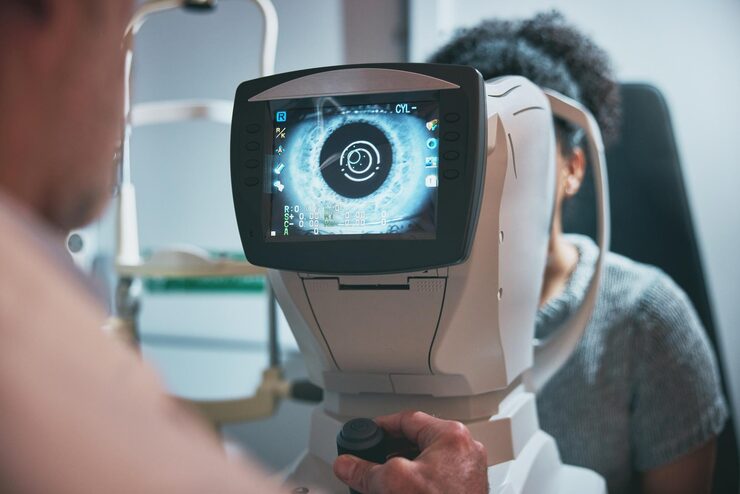
A detailed refractive examination helps determine whether blended vision is appropriate.
Refraction testing: Measures distance and near vision prescriptions.
Corneal topography and pachymetry: Assess corneal shape and thickness before laser treatment.
Tear film examination: Identifies dryness or ocular surface problems that may affect healing.
Slit-lamp examination: Evaluates the cornea, natural lens and other anterior eye structures.
Eye dominance testing: Identifies which eye primarily supports distance vision.
Blended vision tolerance testing: Uses trial lenses to assess whether the patient can comfortably manage different focusing powers between the eyes.
A dilated retinal examination may also be recommended.
These investigations help identify patients who may benefit from treatment and those for whom another option would be safer.
Is PRESBYOND different from ordinary LASIK surgery?
Both procedures reshape the cornea using laser technology, but their treatment objectives differ.
Conventional LASIK primarily corrects refractive errors such as myopia, hyperopia and astigmatism.
PRESBYOND is a LASIK-based blended vision approach specifically designed to manage presbyopia.
It combines customised corneal profiles and a controlled difference in focusing power between the eyes.
Patients should understand that PRESBYOND does not restore the natural lens’s youthful flexibility or stop age-related changes.
Those interested in conventional refractive correction can also review Kiran Eye Hospital’s LASIK surgery service.
What happens if PRESBYOND is not suitable for me?
Not everyone adapts comfortably to blended vision.
Patients with significant dry eyes, unsuitable corneal measurements, cataracts, retinal disease or poor tolerance of different focusing powers may not qualify.
Alternative management options include reading glasses, progressive spectacles, multifocal contact lenses or other treatments when clinically appropriate.
For patients with cataracts, lens-based surgery may be considered following a separate assessment.
The appropriate treatment depends on eye health, occupation, reading habits and visual expectations.
How long does recovery take after PRESBYOND surgery?
Visual recovery varies between patients.
Some individuals notice functional visual improvement within the first few days, while others require additional time for healing and adaptation.
Temporary dryness, fluctuating vision, glare or halos may occur.
Potential complications include infection, inflammation, residual refractive error and difficulty adapting to blended vision.
Some patients may continue needing glasses for particular tasks, especially very small print or demanding low-light activities.
Prescribed medication and follow-up examinations are important.
When should I consult an ophthalmologist about reading difficulties?
Arrange an eye examination if near vision problems persist, interfere with work or require frequent prescription changes.
Not every change in reading vision is caused by presbyopia. Cataracts, dry eye disease and other conditions may produce overlapping symptoms.
Sudden vision loss, severe eye pain, new flashes or floaters, or a dark shadow across vision require urgent medical assessment.
Where can I discuss PRESBYOND treatment in JP Nagar?
Patients searching for Presbyond surgery near me JP Nagar can seek a refractive surgery assessment at Kiran Eye Hospital, Vishnu Towers, ITI Layout, 1st Phase, JP Nagar, Bengaluru.
Dr. Kiran Kumar K, Medical Director and Chief Surgeon, holds MBBS, MD (AIIMS, New Delhi), DNB, FAICO (Cornea), FAICO (Refractive Surgery) and MNAMS qualifications. His published profile includes PRESBYOND, LASIK, PRK and SMILE among his clinical expertise.
A consultation can help determine whether blended vision treatment is appropriate or whether another approach would better meet the patient’s needs.
Frequently Asked Questions About PRESBYOND Laser Treatment
1. Can PRESBYOND permanently eliminate reading glasses?
PRESBYOND may reduce dependence on reading glasses in suitable patients, but complete freedom from spectacles cannot be guaranteed. Age-related visual changes may continue.
2. Is PRESBYOND suitable for everyone above 40?
No. Suitability depends on corneal health, prescription, binocular vision, ocular conditions and tolerance of blended vision. Age alone is insufficient.
3. Can PRESBYOND correct both near and distance vision?
It is designed to improve functional vision across near, intermediate and far distances. Individual results vary, and glasses may still be necessary for certain activities.
4. Is PRESBYOND the same as monovision LASIK?
Not exactly. PRESBYOND combines a small difference in focusing power between the eyes with customised corneal reshaping to extend depth of focus and create an overlapping visual range.
5. Can PRESBYOND be performed if I have early cataracts?
Cataracts may affect treatment suitability. Depending on their significance, the ophthalmologist may recommend monitoring, spectacles or lens-based treatment instead of corneal laser surgery.
Book a Consultation
It’s easy and free!