An eye surgeon may recommend PRK instead of LASIK when a patient has relatively thin corneas, certain corneal surface concerns or a lifestyle where avoiding a corneal flap could be beneficial. Both procedures correct refractive errors, but they use different surgical approaches. For patients comparing PRK vs LASIK Surgery in JP Nagar, the important question …

An eye surgeon may recommend PRK instead of LASIK when a patient has relatively thin corneas, certain corneal surface concerns or a lifestyle where avoiding a corneal flap could be beneficial. Both procedures correct refractive errors, but they use different surgical approaches.
For patients comparing PRK vs LASIK Surgery in JP Nagar, the important question is not which procedure is newer or faster. It is which approach is medically appropriate after examining corneal thickness, corneal shape, tear film quality and overall eye health.
American Academy of Ophthalmology+1
Why was I advised PRK when I wanted LASIK?
Many patients attend an eye consultation expecting LASIK because they have heard about its relatively quick recovery. Being advised to consider PRK can therefore raise concerns.
However, recommending PRK does not necessarily mean that something is seriously wrong with the eyes.
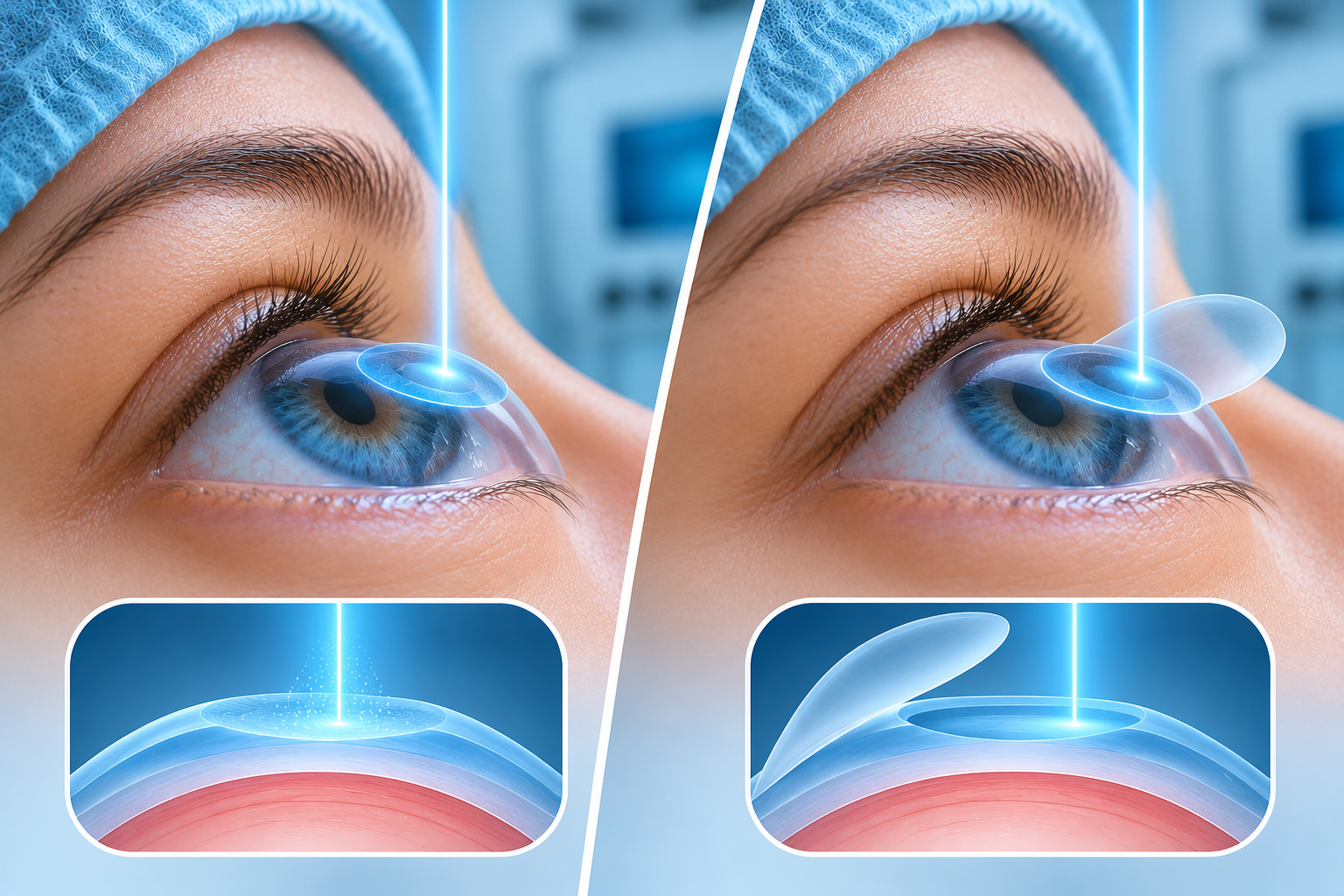
LASIK involves creating a thin corneal flap before laser reshaping. PRK removes the surface epithelial layer and reshapes the underlying cornea without creating a flap.
An ophthalmologist may favour PRK when preserving more of the cornea’s structural tissue or avoiding flap-related complications is important.
The recommendation should be based on individual examination findings rather than patient preference alone.
Can thin corneas make LASIK unsuitable?
Corneal thickness is an important consideration during refractive surgery screening.
Both LASIK and PRK remove some corneal tissue to correct spectacle power. However, LASIK additionally requires flap creation.
For patients with relatively thin but otherwise healthy corneas, PRK for thin corneas may be considered when the calculated treatment depth and remaining tissue are acceptable.
Thin corneas do not automatically mean that PRK is safe. If the cornea is excessively thin, structurally weak or shows signs of keratoconus, laser vision correction may be unsuitable.
This is why the surgeon evaluates more than corneal thickness alone.
FDA+1
Can dry eyes, blurred vision or contact lens discomfort affect my surgery choice?
Patients considering laser vision correction may report symptoms such as:
- Blurred distance vision despite an old spectacle prescription
- Burning, itching or a gritty sensation
- Intermittent blurring after prolonged screen use
- Contact lens discomfort
- Fluctuating vision or sensitivity to light
Blurred distance vision may result from myopia or astigmatism, while burning and fluctuating vision can indicate dry eye disease.
A patient already experiencing dry eyes may need additional evaluation before undergoing LASIK.
PRK may be considered for selected patients with dry eye concerns, but PRK can also cause or worsen dry eye symptoms. Neither procedure eliminates this risk.
Conditions such as meibomian gland dysfunction, inadequate tear production and eyelid inflammation may require treatment before refractive surgery is considered.
PubMed+1
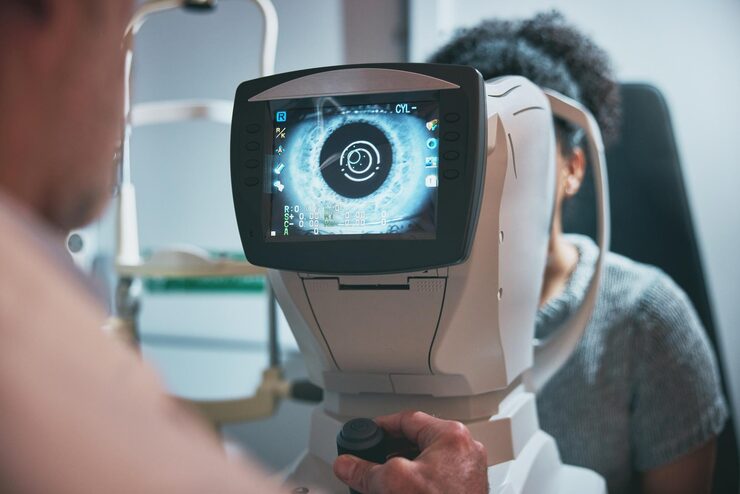
Which eye tests help the surgeon decide between PRK and LASIK?
Before recommending surgery, an ophthalmologist performs a detailed refractive assessment.
Important investigations may include:
- Refraction testing: Measures spectacle power and checks prescription stability.
- Corneal pachymetry: Measures corneal thickness.
- Corneal topography or tomography: Maps corneal shape and helps identify irregularities or possible ectasia risk.
- Tear film evaluation: Assesses dry eye symptoms and ocular surface health.
- Pupil examination: Helps assess factors associated with glare and night-vision complaints.
- Eye health examination: Checks for conditions that could affect surgical suitability or healing.
Patients should also disclose previous eye infections, contact lens use, medications and relevant medical conditions.
These findings help determine whether PRK, LASIK, another procedure or continued use of glasses would be appropriate.
Is PRK preferable for people who play contact sports?
Some patients participate in activities where accidental eye injuries are possible, including boxing, martial arts and contact sports.
Because PRK does not create a corneal flap, an eye surgeon may prefer it when avoiding future flap-related trauma is an important consideration.
However, this does not mean that the cornea becomes immune to injury after PRK.
Patients should discuss their sport, occupational requirements and expected recovery schedule with their surgeon before choosing a procedure.
American Academy of Ophthalmology+1
How is PRK recovery different from LASIK recovery?
One important difference between the procedures is the recovery experience.
After LASIK, some patients experience useful visual improvement within the first day or two, although complete healing and visual stability take longer.
After PRK, the corneal surface must regenerate. Patients may experience discomfort, tearing, light sensitivity and blurred vision during the initial healing period.
A protective bandage contact lens is generally used while the surface heals.
Vision improves gradually over subsequent weeks, and stabilisation may take several months.
Both procedures require prescribed medication, eye protection and follow-up examinations. Risks can include infection, corneal haze, persistent dry eye, glare and undercorrection or overcorrection.
American Academy of Ophthalmology+1
What happens if neither PRK nor LASIK is suitable?
Not every patient is eligible for corneal laser vision correction.
If investigations show an unsuitable corneal shape, significant ocular surface disease, an unstable prescription or inadequate tissue thickness, the surgeon may recommend postponing or avoiding laser treatment.
Depending on the diagnosis, treatment pathways may include:
- Managing dry eye disease before reassessment
- Continuing glasses or appropriate contact lenses
- Monitoring changes in corneal shape or prescription
- Considering implantable lens procedures in carefully selected patients
Patients can learn more about the available options through Kiran Eye Hospital’s PRK surgery service, LASIK surgery service and ICL/IPCL treatment information.
When should I seek medical attention for eye symptoms?
Patients experiencing persistent blurred vision, recurrent dry eyes, increasing light sensitivity or difficulty tolerating contact lenses should arrange an ophthalmic examination before considering elective surgery.
Sudden vision loss, severe eye pain or significant redness accompanied by reduced vision requires urgent medical evaluation.
Following refractive surgery, increasing pain, worsening vision, discharge or unusual symptoms should be reported promptly to the treating surgeon.
Who can assess whether PRK or LASIK is suitable in JP Nagar?
At Kiran Eye Hospital, JP Nagar, Bengaluru, refractive surgery evaluation is available under the ophthalmology team, including Dr. Kiran Kumar K, Medical Director and Chief Surgeon.
His official professional profile lists qualifications including MBBS, MD (AIIMS, New Delhi), DNB and FAICO fellowships in Cornea and Refractive Surgery. It also identifies PRK, LASIK and SMILE among his clinical areas of expertise.
Kiran Eye Hospital+1
For patients researching PRK vs LASIK Surgery in JP Nagar, consultation should focus on understanding individual risk factors, available alternatives and realistic recovery expectations.
The decision should ultimately be guided by clinical suitability rather than assumptions about which surgery provides faster or better results.
Frequently Asked Questions About PRK and LASIK
1. If my corneas are thin, can I still undergo laser eye surgery?
Possibly. PRK may be considered for selected patients with thin but healthy corneas. The surgeon must assess corneal shape, thickness, prescription and the expected remaining tissue before making a recommendation.
2. Is PRK safer than LASIK for everyone?
No. PRK avoids flap-related complications but has different healing requirements and potential risks. Neither procedure is universally safer for every patient.
3. Can PRK cause dry eyes after surgery?
Yes. Temporary dry eye symptoms may occur after PRK. Some patients can experience prolonged symptoms, so pre-existing dry eye conditions should be evaluated and managed.
4. Will I need more time off work after PRK than LASIK?
Often, yes. PRK typically involves slower early visual recovery and greater discomfort during the first few days. The amount of leave needed depends on healing, job requirements and the surgeon’s advice.
5. Can I choose LASIK even if my surgeon recommends PRK?
You can discuss your preferences and request clarification or a second opinion. However, LASIK should not be performed if examination findings indicate unacceptable risks. The final decision must consider medical suitability and informed consent.
Book a Consultation
It’s easy and free!