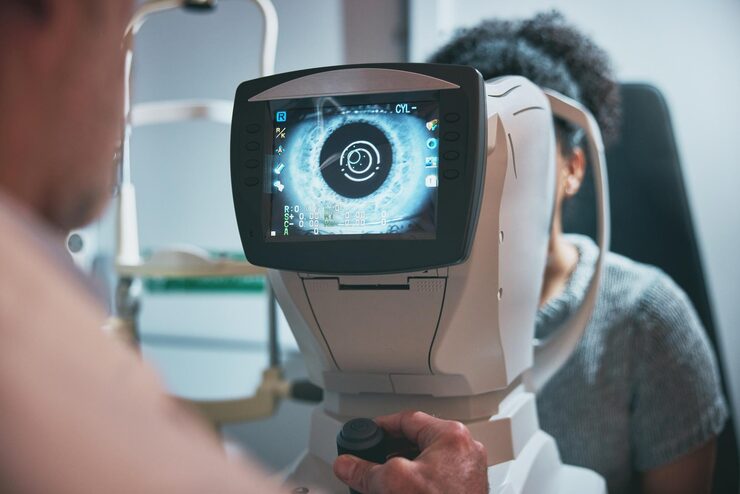
Choosing vision correction surgery can be confusing, particularly when an eye specialist mentions two options: ICL and IPCL. Both procedures involve placing a specially designed lens inside the eye to correct refractive errors, but they differ in lens material, design and available specifications. Understanding these differences can help patients make informed decisions during consultation. If …

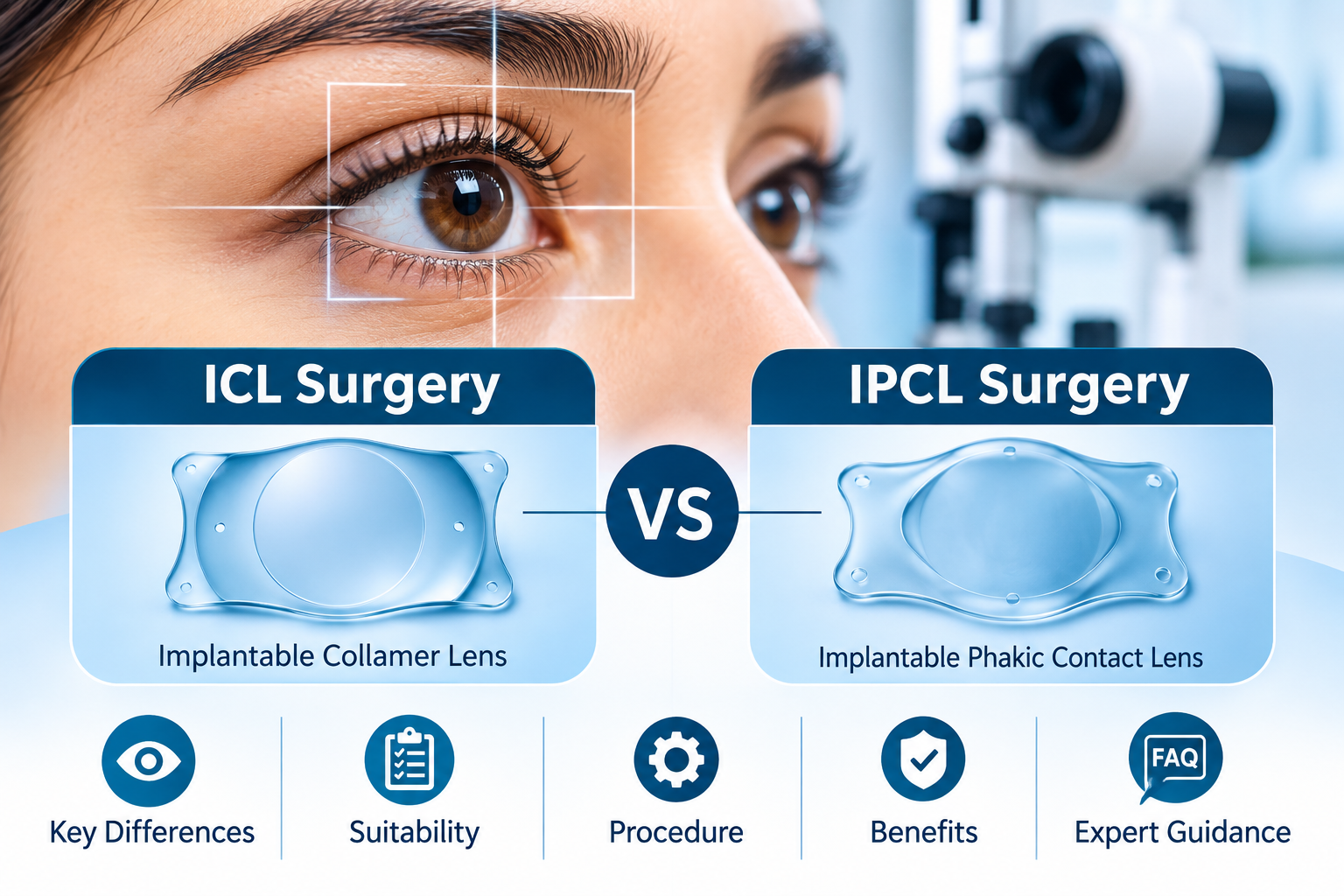
Choosing vision correction surgery can be confusing, particularly when an eye specialist mentions two options: ICL and IPCL. Both procedures involve placing a specially designed lens inside the eye to correct refractive errors, but they differ in lens material, design and available specifications. Understanding these differences can help patients make informed decisions during consultation. If you are researching ICL vs IPCL surgery in Kanakapura Road, understanding your eye measurements and individual vision requirements is more important than choosing a procedure based on its name.
Why Are ICL and IPCL Suggested Instead of LASIK?
LASIK changes the shape of the cornea using a laser to correct refractive errors. However, it may not be suitable for everyone.
People with high myopia (short-sightedness), certain corneal thickness measurements or other corneal conditions may need alternative options.
ICL and IPCL are types of phakic intraocular lenses. These lenses are implanted inside the eye while preserving the natural crystalline lens. They work with the natural lens to correct refractive errors.
An ophthalmologist may evaluate these procedures when:
- The spectacle prescription is relatively high.
- Corneal thickness or shape makes laser correction unsuitable.
- The patient has myopia with or without astigmatism.
- The patient wants to explore alternatives to wearing glasses or contact lenses.
However, not everyone with high spectacle power is automatically suitable for these procedures.
What Is ICL Eye Surgery?
ICL stands for Implantable Collamer Lens. It is a type of phakic intraocular lens made from a specialised biocompatible material called Collamer.
The lens is placed behind the iris and in front of the natural crystalline lens. It corrects refractive errors without removing the natural lens.
ICL surgery is commonly considered for selected patients with moderate to high myopia and myopic astigmatism.
Modern ICL designs include a central opening that allows aqueous fluid to circulate through the eye.
The suitability of ICL depends on factors such as anterior chamber depth, eye size, corneal health, endothelial cell count and the patient’s prescription.
What Is IPCL Eye Surgery?
IPCL stands for Implantable Phakic Contact Lens. It is another type of phakic intraocular lens designed to correct refractive errors.
Unlike ICL, which uses Collamer, IPCL lenses are made using a specialised reinforced acrylic material.
IPCL lenses are available in different specifications and may be considered for selected patients with myopia, hyperopia and astigmatism, depending on the lens model.
Certain IPCL models also offer multifocal options for specific vision requirements.
Like ICL, IPCL is implanted inside the eye while retaining the natural crystalline lens.
The surgeon must assess the patient’s eye anatomy and determine whether the selected IPCL model is appropriate.
What Is the Difference Between ICL and IPCL Lenses?
Although both procedures use an implanted lens to correct vision, there are some important differences.
| Comparison | ICL | IPCL |
| Full form | Implantable Collamer Lens | Implantable Phakic Contact Lens |
| Material | Collamer | Reinforced acrylic |
| Lens design | Phakic intraocular lens | Phakic intraocular lens |
| Manufacturer | STAAR Surgical | Care Group |
| Available powers | Depends on model | Depends on model |
| Astigmatism correction | Available in toric models | Available in toric models |
| Multifocal options | Depends on product range | Available in selected models |
| Suitability | Depends on eye measurements | Depends on eye measurements |
Both lenses are designed to correct refractive errors while preserving the natural lens.
Clinical studies have reported comparable visual and refractive outcomes between certain ICL and IPCL models. However, results from individual studies cannot guarantee the same outcome for every patient.
The final choice should consider lens availability, eye measurements, the specific lens model and the surgeon’s clinical assessment.
Is ICL or IPCL Better for High Myopia?
This is one of the most common questions patients ask when considering vision correction.
There is no universal answer because both options may be appropriate for selected patients with high myopia.
The decision depends on:
- The exact spectacle prescription.
- Anterior chamber depth.
- Corneal thickness and shape.
- Endothelial cell count.
- Available lens power and size.
- Overall eye health.
For example, two patients with the same spectacle power may have different corneal measurements and anterior chamber dimensions. Therefore, the same lens may not be suitable for both.
An ophthalmologist should compare the available lens specifications against the patient’s individual measurements before recommending surgery.
What Tests Are Required Before ICL or IPCL Surgery?
A detailed preoperative examination is essential before either procedure.
The tests may include:
- Refraction test: Measures the spectacle power and identifies myopia, hyperopia and astigmatism.
- Corneal topography and tomography: Evaluates corneal shape, thickness and possible irregularities.
- Anterior chamber measurement: Determines whether there is sufficient space for lens implantation.
- Endothelial cell count: Checks the health and density of the cells lining the inner surface of the cornea.
- Optical biometry: Measures important eye dimensions to help determine the appropriate lens size and power.
- Retinal examination: Checks the back of the eye, particularly in patients with high myopia who may have an increased risk of retinal complications.
These investigations help the surgeon assess eligibility, select the appropriate lens and discuss potential risks.
What Happens During ICL and IPCL Lens Implantation?
Both procedures involve placing a folded lens through a small corneal incision.
The surgery is generally performed using local anaesthesia, often with eye drops.
The surgeon creates a small incision, inserts the selected lens and positions it behind the iris, in front of the natural lens.
After implantation, the surgeon checks the lens position and other relevant eye parameters.
The procedure is usually performed as day-care surgery, depending on the patient’s condition and the hospital’s protocol.
Patients should follow their prescribed eye-drop schedule, avoid rubbing the eyes and attend all postoperative appointments.
What Are the Possible Risks After ICL or IPCL Surgery?
Like other intraocular procedures, ICL and IPCL surgery carry potential risks.
These may include:
- Increased intraocular pressure.
- Infection or inflammation.
- Cataract formation.
- Incorrect lens positioning or sizing.
- Changes in corneal endothelial cell count.
- Glare, halos or visual disturbances.
- Need for additional treatment or lens repositioning.
Some complications may require medical or surgical intervention. Regular follow-up is important to monitor eye pressure, lens position and overall eye health.
When Should You Consult an Eye Specialist?
Consider an ophthalmology consultation if you have high spectacle power, difficulty tolerating contact lenses, or have been advised that LASIK may not be suitable.
Sudden blurred vision, severe eye pain, sudden flashes or floaters, or a curtain-like shadow in your vision require urgent eye assessment rather than a routine refractive surgery appointment.
If you are exploring ICL vs IPCL surgery in Kanakapura Road, you can consult Dr. Kiran Kumar at Kiran Eye Hospital to understand the available options and whether your eye measurements support either procedure.
The hospital is located in JP Nagar, Bengaluru, and patients travelling from Kanakapura Road can enquire about a consultation.
Frequently Asked Questions
1. Is ICL surgery reversible?
ICL is designed to preserve the natural lens and can be surgically removed or exchanged when medically indicated. However, reversibility does not mean that the procedure is risk-free or that the eye will necessarily return to its original condition.
2. Is IPCL suitable for patients with thin corneas?
IPCL may be considered in selected patients with thin corneas because it does not reshape or remove corneal tissue like LASIK. However, other eye measurements and health factors must also be satisfactory.
3. Which is more expensive, ICL or IPCL?
The cost depends on the lens model, prescription, diagnostic investigations, surgical requirements and hospital charges. Patients should request an individualised cost estimate rather than assuming that one option is always more expensive.
4. How long does recovery take after ICL or IPCL surgery?
Recovery varies between individuals. Some patients notice visual improvement early, but complete healing and visual stabilisation take time. Follow-up examinations are necessary to monitor recovery.
5. Can both eyes undergo ICL or IPCL surgery?
Both eyes may be treated when clinically appropriate. The surgeon determines the timing of each procedure based on the patient’s eye health, surgical plan and recovery.
Book a Consultation
It’s easy and free!