PRK surgery in Bangalore is an option for people considering laser vision correction, particularly those who may not be suitable candidates for LASIK. However, one common concern is what happens after the procedure, especially during the first seven days. The first week after PRK surgery involves corneal surface healing, temporary discomfort, light sensitivity and fluctuating …

PRK surgery in Bangalore is an option for people considering laser vision correction, particularly those who may not be suitable candidates for LASIK. However, one common concern is what happens after the procedure, especially during the first seven days. The first week after PRK surgery involves corneal surface healing, temporary discomfort, light sensitivity and fluctuating vision. These changes are part of the recovery process, but the experience varies between patients. Understanding what to expect each day can help patients prepare for recovery and recognise symptoms that require medical attention.
What Happens During the First 24 Hours After PRK Surgery?
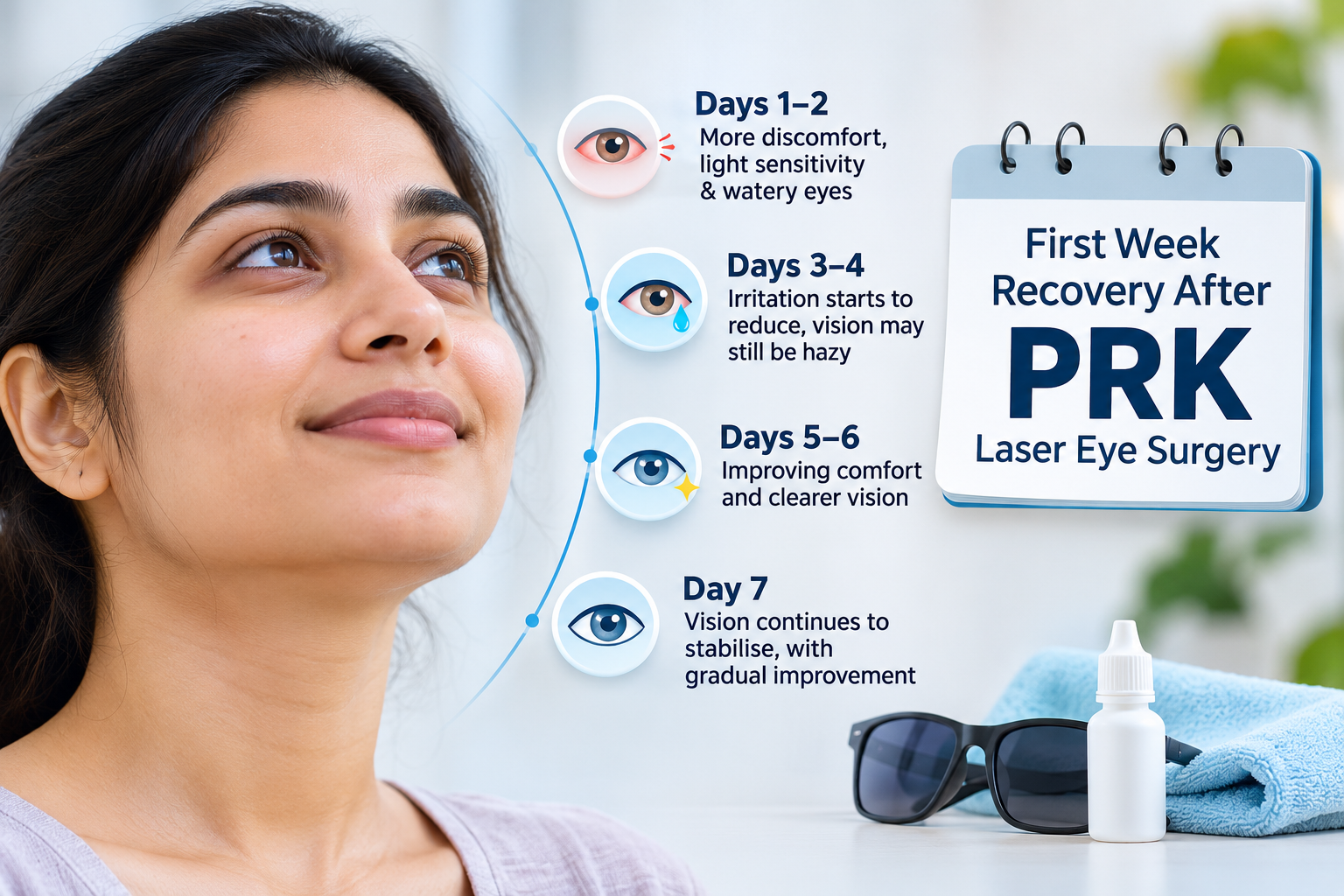
The first 24 hours are mainly focused on protecting the cornea while its outer surface begins healing. During PRK (Photorefractive Keratectomy), the thin outer layer of the cornea, called the epithelium, is removed before an excimer laser reshapes the underlying corneal tissue. A protective bandage contact lens is usually placed over the eye to support epithelial healing. Patients may experience:- Mild to moderate eye discomfort.
- Watering and irritation.
- Blurred or hazy vision.
- Increased sensitivity to light.
- A foreign-body sensation, similar to having something in the eye.
Why Does Eye Pain Increase During the Second and Third Days After PRK?
An unexpected concern for many patients is that discomfort may become more noticeable on the second or third day rather than immediately after surgery. This happens because the corneal surface is still healing. The exposed nerve endings and ongoing epithelial regeneration can contribute to irritation, watering and sensitivity. Common symptoms during these days include:- Burning or stinging sensations.
- Eye watering.
- Difficulty keeping the eyes open in bright surroundings.
- Fluctuating or blurry vision.
- Mild discomfort when blinking.
What Changes Should I Notice on Days Four and Five After PRK?
By the fourth and fifth days, the corneal epithelium may be approaching completion of its healing process. However, the exact timeline varies. Some patients begin experiencing reduced irritation and improved comfort, while others may continue to have watering, light sensitivity or fluctuating vision. During this stage:- Vision may gradually become clearer but can remain hazy.
- Eye discomfort may begin decreasing.
- Light sensitivity may continue.
- The eyes may feel dry or irritated.
- Reading and screen use may still be uncomfortable.
When Does Vision Become Clear After PRK Surgery?
Unlike LASIK, where many patients notice visual improvement relatively quickly, PRK involves healing of the corneal surface before vision becomes more stable. During the first week, vision may fluctuate throughout the day. Some patients notice improvement, while others continue experiencing haziness or difficulty focusing. Several factors can influence visual recovery:- Corneal epithelial healing: The outer corneal layer needs time to regenerate.
- Tear film stability: Temporary dryness can affect visual clarity.
- Individual healing response: Each patient’s cornea may recover at a different rate.
- Refractive correction: The amount of correction and individual corneal characteristics can influence recovery.
Can I Use My Mobile Phone or Laptop After PRK Surgery?
Many patients want to know when they can return to work, attend online meetings or use their mobile phones. Screen use does not directly reverse the laser correction, but prolonged viewing can reduce blinking frequency and increase dryness or eye discomfort. During the first week, patients should:- Take frequent breaks from screens.
- Reduce screen brightness if it causes discomfort.
- Avoid prolonged reading when the eyes feel irritated.
- Rest whenever vision becomes uncomfortable.
- Follow the surgeon’s advice regarding returning to work.
What Precautions Should I Follow During the First Week After PRK?
Following postoperative instructions is important for protecting the healing cornea and reducing the risk of complications. Consider these precautions: Avoid rubbing your eyes: Rubbing may disturb the healing surface and protective contact lens. Use prescribed eye drops: Follow the recommended dosage and schedule. Maintain proper hygiene while applying drops. Wear protective sunglasses: Sunglasses can help reduce discomfort caused by bright sunlight and outdoor glare. Avoid swimming: Swimming pools, lakes and other potentially contaminated water sources should be avoided until your surgeon permits them. Avoid eye makeup: Cosmetics around the eyes may introduce particles or bacteria during early recovery. Avoid dusty environments: Limit exposure to dust, smoke and other irritants. Attend follow-up appointments: These examinations help the ophthalmologist monitor epithelial healing and assess visual recovery.When Should I Contact an Eye Doctor After PRK Surgery?
Some discomfort and temporary blurred vision are expected during early recovery. However, certain symptoms should not be considered routine. Contact your ophthalmologist promptly if you experience:- Severe or increasing eye pain.
- Sudden reduction in vision.
- Increasing redness or swelling.
- Yellow or unusual eye discharge.
- Significant light sensitivity that is worsening.
- A displaced or accidentally removed bandage contact lens.
Where Can I Get PRK Surgery in Bangalore?
Patients considering laser vision correction should undergo a comprehensive eye examination before selecting a procedure. At Kiran Eye Hospital, JP Nagar, Bangalore, patients can consult Dr. Kiran Kumar K, Medical Director and Chief Surgeon, whose listed qualifications include MBBS, MD (AIIMS, New Delhi), DNB, FAICO (Cornea), FAICO (Refractive Surgery) and MNAMS. His professional profile lists expertise in refractive procedures, including PRK, LASIK and SMILE surgery. A preoperative evaluation helps assess corneal thickness, corneal shape, refractive stability, tear film health and overall eye condition. These findings help determine whether PRK is appropriate or whether another vision correction option should be considered. Patients looking for PRK surgery in Bangalore can discuss the expected recovery timeline, postoperative precautions and follow-up requirements with the ophthalmologist before making a treatment decision. For further information, visit the hospital’s PRK Surgery service page.Frequently Asked Questions
1. Is the first week after PRK surgery painful?
Some patients experience discomfort, burning, watering and light sensitivity, particularly during the first few days. The intensity varies. Prescribed medications can help manage these symptoms.2. Can I go to work three days after PRK surgery?
It depends on your comfort, vision and job requirements. Patients who work extensively on computers may need additional recovery time. Follow your surgeon’s advice before returning to work.3. When is the bandage contact lens removed after PRK?
The protective contact lens is commonly removed around the fourth to seventh day, depending on epithelial healing. The ophthalmologist should confirm that the corneal surface has healed adequately.4. Is blurry vision normal one week after PRK surgery?
Some blurriness and fluctuating vision can continue during the first week because the cornea is still healing. However, sudden or worsening vision changes should be evaluated promptly.5. When can I resume normal activities after PRK surgery?
Light daily activities can often be resumed gradually as comfort improves. Swimming, strenuous exercise, eye makeup and contact sports may need to be avoided for longer, depending on the surgeon’s instructions. Medical disclaimer: This article is for educational purposes and does not replace an individual ophthalmic examination or postoperative instructions from your surgeon.Book a Consultation
It’s easy and free!