If your eyes stay dry and irritated even after regular use of eye drops, the cause may be blocked oil glands in your eyelids, known as Meibomian Gland Dysfunction (MGD). It is a common cause of evaporative dry eye and can be managed once it is correctly identified. At Kiran Eye Hospital, JP Nagar, Dr. …

If your eyes stay dry and irritated even after regular use of eye drops, the cause may be blocked oil glands in your eyelids, known as Meibomian Gland Dysfunction (MGD). It is a common cause of evaporative dry eye and can be managed once it is correctly identified. At Kiran Eye Hospital, JP Nagar, Dr. Kiran Kumar K (MBBS, MD (AIIMS, New Delhi), DNB, FAICO (Cornea), FAICO (Refractive Surgery), MNAMS) evaluates patients for Meibomian Gland Dysfunction Treatment in Bangalore through a detailed eye examination.
What Is Meibomian Gland Dysfunction?
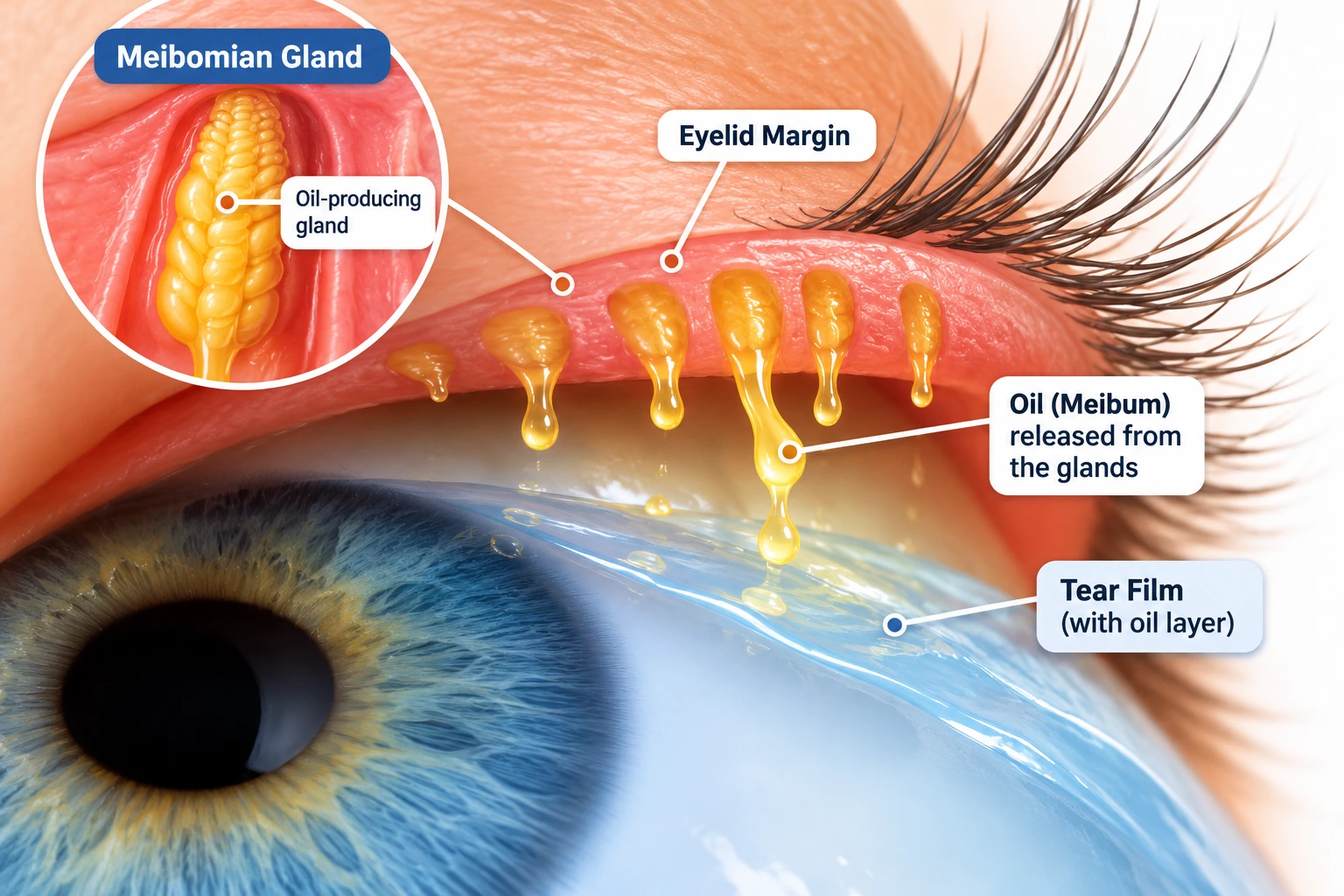
Meibomian glands are tiny oil glands lining the edges of your upper and lower eyelids. With every blink, they release oil that forms the outer layer of the tear film and slows evaporation. In MGD, these glands become blocked or release thick, poor-quality oil, so tears dry up quickly even when your eyes make enough of them.Why Do My Eyes Feel Dry Even When I Use Eye Drops?
Artificial tears add watery moisture, but they cannot replace a missing oil layer, so relief often lasts only a short while. This is the key difference between ordinary dry eyes, where tear production is low, and MGD, where tear quality is poor. Many people have both, which is why an examination is more useful than switching drops repeatedly.Why Do Meibomian Glands Become Blocked?
Blocked oil glands in eyelids usually result from thickened oil, debris on the lid margin or eyelid inflammation (blepharitis). Factors that raise the risk include:- Ageing and hormonal changes
- Long hours on screens, which reduce blinking
- Contact lens wear
- Eye makeup applied close to the lash line
- Air-conditioned, dusty or polluted surroundings
- Diabetes, skin conditions such as rosacea, and some long-term medicines
What Are the Common Dry Eye Symptoms in MGD?
Early dry eye symptoms include burning, grittiness, redness, watering and tired eyes, sometimes with sticky or crusted lids on waking. Many patients notice blurry vision that clears after blinking, especially during computer use, because an unstable tear film disturbs the clarity of the eye’s surface. Later signs may include persistent discomfort, light sensitivity, recurrent styes or eyelid lumps, and swollen lids. MGD is usually a long-term condition and can progress, as glands may eventually shrink permanently. Early evaluation helps protect the glands that are still working.How Does MGD Cause Evaporative Dry Eye Disease?
Without enough oil, the tear film becomes unstable and evaporates quickly. The eye surface turns dry and inflamed, and this inflammation can further damage the glands, creating a cycle. That is why evaporative dry eye disease tends to persist unless the gland problem itself is addressed.How Is Meibomian Gland Dysfunction Diagnosed?
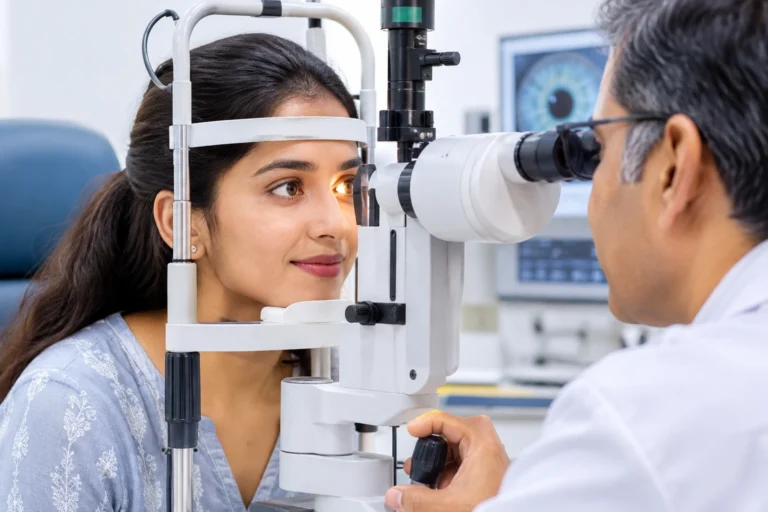
Symptoms overlap with allergies, infections and other types of dry eye, so self-diagnosis is not advisable. An ophthalmologist examines the eyelid margins under a slit lamp and may gently press the lids to check the quality of the oil. Tests may include tear break-up time (TBUT), Schirmer’s test and meibomian gland assessment, and meibography, which images the glands, may also be used.What Are the Treatment Options for Meibomian Gland Dysfunction?
Treatment is stepwise and depends on severity. Most patients begin with simple measures.Eyelid Hygiene and Warm Compresses
Warm compresses soften thickened oil, and gentle lid cleaning removes debris. They work best when done regularly as your doctor advises. Water that is too hot can injure delicate eyelid skin.Lubricating Eye Drops and Medical Management
Preservative-free lubricating drops support comfort. Depending on the findings, your doctor may add anti-inflammatory or cyclosporine-based drops, punctal plugs, or dietary advice such as omega-3 sources. Prescription drops should not be started without an examination.LipiFlow Treatment in Bangalore
LipiFlow is a thermal pulsation procedure for evaporative dry eye caused by MGD. It applies controlled heat and gentle massage to the eyelids to help release blocked oil. It is done in the clinic, and suitability depends on the condition of the glands and the health of the eye.IPL Treatment for Dry Eyes
Intense Pulsed Light (IPL) directs light pulses around the eyelids to reduce inflammation and support gland function. It is often planned as a series of sessions, after skin type and other factors are assessed. Neither procedure is necessary for everyone. Results vary, and symptoms may need ongoing care. Your ophthalmologist decides after clinical evaluation.How Can You Manage Dry Eye Symptoms Day to Day?
Blink fully while using screens, follow the 20-20-20 rule (every 20 minutes, look 20 feet away for 20 seconds), keep fans and AC vents away from your face, remove eye makeup thoroughly and stay hydrated. These habits support treatment but do not replace it.When Should You Consult a Dry Eye Specialist in Bangalore?
See an ophthalmologist if dryness lasts beyond two to three weeks despite using drops, if styes keep recurring, if contact lenses have become uncomfortable, or if you are planning eye surgery. Seek urgent medical attention for sudden loss of vision, severe eye pain, marked redness with light sensitivity, discharge or any eye injury.Where Can You Seek Meibomian Gland Dysfunction Treatment in Bangalore?
Kiran Eye Hospital offers dry eye treatment in Bangalore through its Advanced Dry Eye Clinic, where LipiFlow and IPL therapy are listed among the options. You can also read about dry eye treatment in JP Nagar. To consult Dr. Kiran Kumar K about Meibomian Gland Dysfunction Treatment in Bangalore suited to your eyes, book an appointment or call +91 8105681057.Frequently Asked Questions
What is the main cause of Meibomian Gland Dysfunction?
Blocked or poorly functioning oil glands, often from thickened oil, lid inflammation or debris. Ageing, screen use, contact lenses and some health conditions contribute.Can blocked oil glands in the eyelids cause dry eyes?
Yes. Without enough oil, tears evaporate quickly, leading to evaporative dry eye.Is Meibomian Gland Dysfunction a permanent condition?
It is usually chronic, and glands that have been lost may not regrow. Symptoms can often be controlled with regular care and follow-up, though outcomes vary between patients.What is the difference between LipiFlow and IPL treatment for dry eyes?
LipiFlow uses heat and gentle massage to release blocked oil from the glands, while IPL uses light pulses to reduce eyelid inflammation. Your doctor chooses based on examination findings.When should I consult a Dry Eye Specialist in Bangalore?
When dryness, burning or fluctuating vision persists despite eye drops, or when styes recur. Urgent symptoms need immediate care.Book a Consultation
It’s easy and free!