Can cataracts make familiar faces look blurry or difficult to recognise? Yes. Cataracts can make recognising familiar faces difficult by causing blurred vision, reduced contrast sensitivity and changes in how colours and fine details appear. As the eye's natural lens becomes cloudy, facial features such as the eyes, nose and mouth may become less distinct, …

Can cataracts make familiar faces look blurry or difficult to recognise?
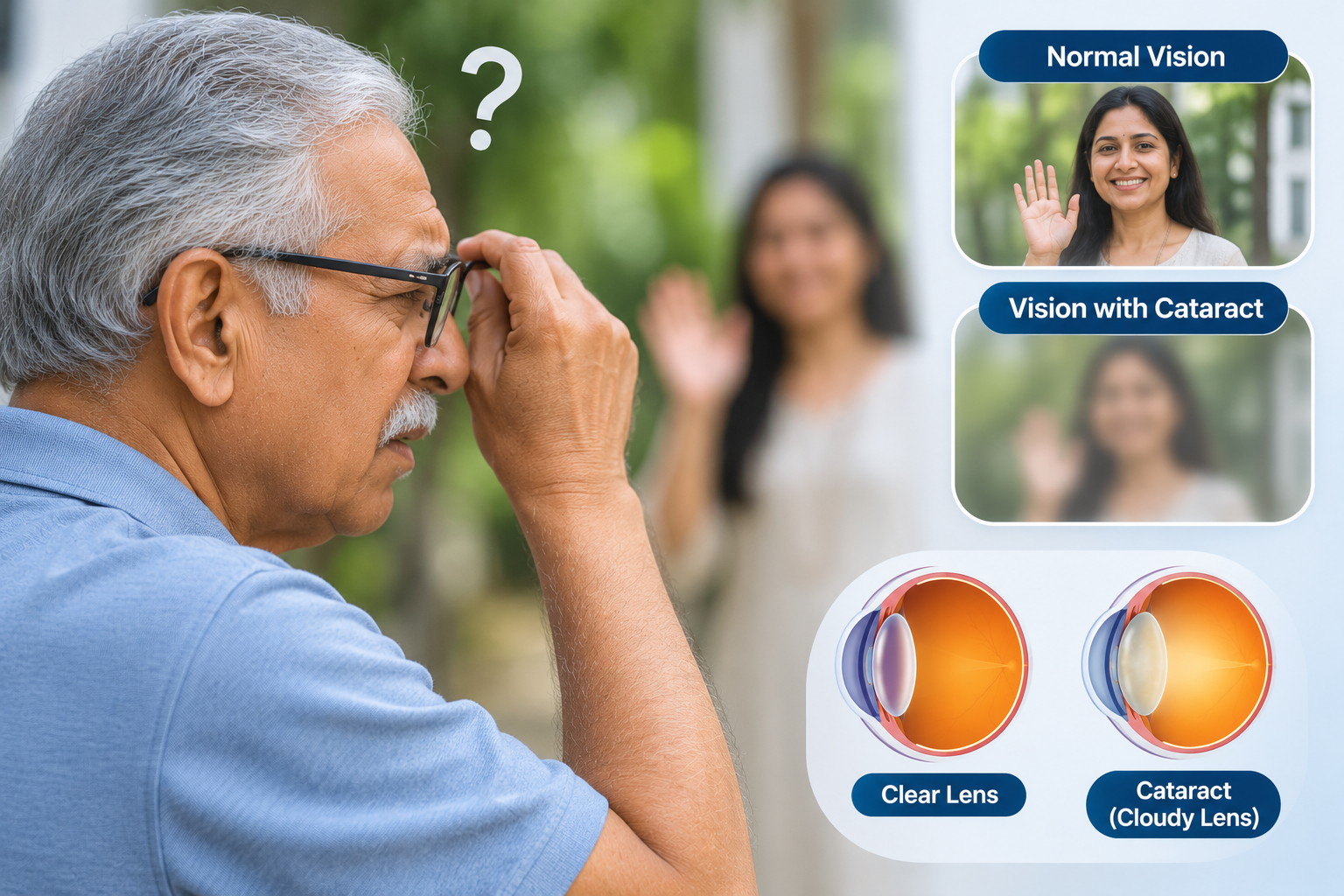
Yes. Cataracts can make recognising familiar faces difficult by causing blurred vision, reduced contrast sensitivity and changes in how colours and fine details appear. As the eye’s natural lens becomes cloudy, facial features such as the eyes, nose and mouth may become less distinct, especially from a distance or in poor lighting.
People experiencing difficulty recognising faces due to cataracts may mistake this for ordinary ageing or forgetfulness.
At Kiran Eye Hospital, JP Nagar, Bengaluru, Dr. Kiran Kumar K and the ophthalmology team can assess whether cataracts or another eye condition are responsible for the visual changes.
Why can I see someone standing nearby but cannot identify their face?
Recognising a person’s face involves seeing fine details and differences in brightness, shape and colour.
Cataracts develop when the natural crystalline lens becomes cloudy, interfering with the passage of light towards the retina.
This can reduce the clarity and contrast of the image reaching the back of the eye.
A patient may clearly notice that someone is standing nearby but struggle to distinguish their facial expression or identify them until they come closer.
This difficulty may become more noticeable in crowded places, poorly lit rooms or situations where a person’s face is backlit by bright sunlight.
The problem is not necessarily an inability to remember people. It may result from reduced visual information reaching the brain.
What other vision changes might occur alongside difficulty recognising faces?
Facial recognition problems caused by cataracts often occur alongside other visual symptoms.
These may include:
- Blurred or cloudy vision at different distances.
- Difficulty recognising people across a room.
- Reduced ability to distinguish facial expressions.
- Increased glare from sunlight or headlights.
- Poor vision in dimly lit environments.
- Colours appearing faded or yellowish.
- Frequent changes in spectacle prescription.
- Difficulty watching television or identifying objects.
Symptoms generally develop gradually and may affect one eye more than the other.
However, these changes are not exclusive to cataracts, so an eye examination is important.
Why are faces harder to recognise in dim lighting or crowded places?
People with cataracts may notice that recognising faces becomes more difficult during evening gatherings, family functions or social events.
Facial recognition relies partly on contrast sensitivity—the ability to distinguish subtle differences between lighter and darker areas.
Cataracts can reduce contrast sensitivity even when standard vision-chart results appear relatively satisfactory.
Low illumination can make these differences harder to detect.
Glare from windows, ceiling lights or vehicle headlights may further interfere with visual clarity.
As a result, someone may recognise a family member in bright daylight but struggle to identify the same person in a dim restaurant.
Could difficulty recognising faces indicate something other than cataracts?
Yes. Cataracts are one possible cause, but other eye and neurological conditions can produce similar complaints.
Possible causes include:
Uncorrected refractive errors: Myopia or astigmatism can make distant faces appear blurry.
Age-related macular degeneration: Changes affecting central vision may interfere with recognising faces and reading.
Diabetic retinal disease: Retinal damage may reduce visual clarity.
Glaucoma: Advanced disease can affect the visual field and make navigation or recognising people in complex environments difficult.
Neurological conditions: Some disorders affect the brain’s ability to recognise faces even when visual clarity is relatively preserved.
If a person can describe facial features clearly but cannot identify familiar individuals, the cause may require further neurological evaluation.
The symptoms and examination findings help distinguish visual blurring from a facial recognition disorder.
Which eye tests can identify whether cataracts are affecting my vision?
An ophthalmologist may recommend several investigations to understand the cause of visual difficulty.
Visual acuity testing: Measures how clearly each eye sees letters or symbols.
Refraction testing: Determines whether updated spectacles could improve visual clarity.
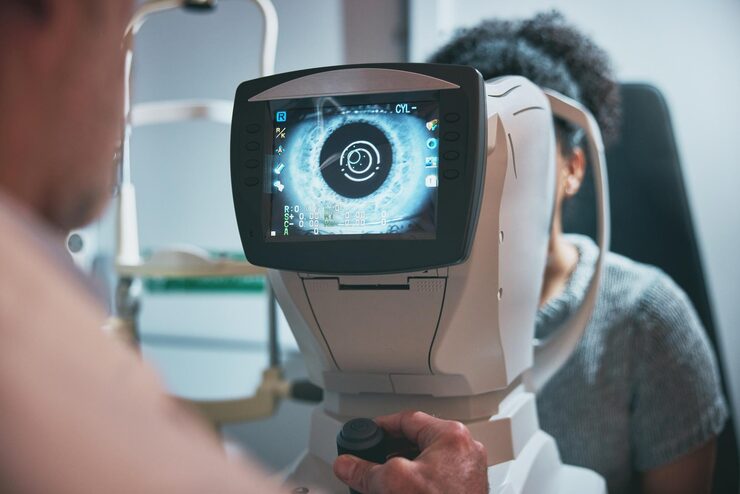
Slit-lamp examination: Allows the ophthalmologist to examine the natural lens and identify cataract-related clouding.
Contrast sensitivity assessment: May help evaluate difficulty distinguishing subtle visual details, particularly when standard visual acuity does not explain the symptoms.
Dilated retinal examination: Helps identify macular or retinal conditions that could also affect central vision.
Additional imaging, such as optical coherence tomography (OCT), may be recommended when retinal disease is suspected.
These investigations help establish whether cataracts are the main cause or whether another condition requires treatment.
Can glasses improve facial recognition if I have cataracts?
In the early stages, updated spectacles and improved lighting may help some patients see more comfortably.
Anti-glare measures and appropriate lighting may also reduce everyday visual difficulties.
However, spectacles cannot remove clouding from the natural lens.
As cataracts progress, changes in spectacle power may provide limited improvement.
If difficulty recognising faces begins affecting social interaction, mobility or everyday activities, the ophthalmologist may discuss cataract surgery.
Can cataract surgery improve my ability to recognise faces?
Cataract surgery removes the cloudy natural lens and replaces it with a clear artificial intraocular lens.
When cataracts are the main cause of reduced visual clarity, surgery may improve contrast, brightness and the ability to distinguish facial details.
However, outcomes depend on retinal health, optic nerve function and other existing eye conditions.
Cataract surgery does not directly treat neurological facial recognition disorders or vision loss caused by unrelated retinal disease.
Patients can learn more through Kiran Eye Hospital’s cataract surgery service page.
The decision to operate should consider examination findings and how significantly vision problems interfere with daily life.
When should I seek medical attention for difficulty recognising faces?
Arrange an eye examination if you increasingly struggle to identify familiar people, recognise facial expressions or see clearly in different lighting conditions.
These symptoms deserve evaluation even when there is no eye pain.
Seek urgent medical attention if difficulty recognising faces develops suddenly, particularly with sudden vision loss, facial weakness, speech difficulties, severe headache or confusion.
Sudden symptoms may indicate neurological or vascular emergencies rather than gradual cataract progression.
Where can I get evaluated for cataract-related vision problems in JP Nagar?
Patients experiencing difficulty recognising faces due to cataracts can seek an ophthalmic assessment at Kiran Eye Hospital, located at Vishnu Towers, ITI Layout, 1st Phase, JP Nagar, Bengaluru.
Dr. Kiran Kumar K, Medical Director and Chief Surgeon, holds MBBS, MD (AIIMS, New Delhi), DNB, FAICO (Cornea), FAICO (Refractive Surgery) and MNAMS qualifications. His verified clinical expertise includes cataract, cornea and refractive surgery.
An examination with Dr. Kiran Kumar K or the hospital’s ophthalmology team can help identify the cause of visual difficulties and determine whether spectacles, monitoring or cataract treatment may be appropriate.
Frequently Asked Questions About Cataracts and Facial Recognition
1. Can cataracts make it difficult to recognise family members?
Yes. Cataracts can reduce visual clarity and contrast, making facial features harder to distinguish, particularly from a distance or in dim lighting. An examination can determine whether cataracts are responsible.
2. Why can I recognise someone’s voice but not their face?
Cataracts may blur facial details while hearing remains unaffected. However, difficulty recognising familiar faces can also have neurological causes, so persistent symptoms should be evaluated.
3. Can early cataracts affect facial recognition even if I can read clearly?
Possibly. Some cataracts affect contrast sensitivity or cause glare before substantial changes appear on standard vision charts. A comprehensive eye examination can assess these problems.
4. Will cataract surgery help me recognise faces more clearly?
When cataracts are the main cause of blurred vision, surgery may improve the clarity of facial details. However, results depend on the health of the retina, optic nerve and other eye structures.
5. Is suddenly being unable to recognise faces a symptom of cataracts?
Sudden inability to recognise familiar faces is not typical of gradually developing cataracts. It may indicate a neurological or other urgent medical condition and requires immediate assessment.
Book a Consultation
It’s easy and free!