Cataract Symptoms and Treatment Bangalore is a concern worth understanding if you or an older family member has started misjudging steps, hesitating before walking on uneven surfaces or feeling less confident while moving around. Yes, cataracts can affect depth perception and make walking more difficult. A cloudy natural lens can reduce visual clarity and contrast, …


Cataract Symptoms and Treatment Bangalore is a concern worth understanding if you or an older family member has started misjudging steps, hesitating before walking on uneven surfaces or feeling less confident while moving around. Yes, cataracts can affect depth perception and make walking more difficult. A cloudy natural lens can reduce visual clarity and contrast, making it harder to judge distances, recognise changes in floor levels and notice obstacles. However, walking difficulties can also have other causes, so an eye examination is important before assuming cataracts are responsible.
Why do I find it difficult to judge steps and distances?
Depth perception helps you understand how far away objects are and how they relate to one another. It is particularly important when climbing stairs, stepping off a pavement, walking through doorways or reaching for objects.
Your brain uses information from both eyes, along with visual details such as size, shadows, perspective and contrast, to estimate distance.
When cataracts develop, the natural lens becomes cloudy. Light may scatter as it passes through the lens, reducing the sharpness and contrast of the images reaching the retina. This can make nearby steps, floor edges and obstacles harder to distinguish.
For example, you may find that:
-
You hesitate before stepping down from a staircase.
-
You misjudge the height of a kerb or doorstep.
-
Uneven surfaces appear less distinct.
-
You feel uncomfortable walking in unfamiliar places.
-
You have difficulty identifying objects in dimly lit areas.
These experiences do not confirm cataracts, but they are reasons to have your vision assessed.
Can cataracts affect my balance while walking?
Yes. Vision provides important information that helps the body maintain balance. When visual information becomes less reliable, a person may depend more on other systems, including the inner ear and sensory information from the feet and legs.
Cataracts can affect visual functions such as contrast sensitivity and clarity. This may make it harder to identify changes in the walking surface, particularly in low light or when there are shadows.
You might notice that walking feels less comfortable in situations such as:
-
Moving from a bright room into a darker corridor.
-
Walking down stairs with poorly visible edges.
-
Crossing roads or uneven pavements.
-
Walking on patterned floors or surfaces with similar colours.
-
Moving around unfamiliar surroundings.
Research has linked impaired visual functions, including depth perception and contrast sensitivity, with an increased risk of falls among older adults. However, falls are usually influenced by several factors, not eyesight alone.
What other cataract symptoms should I look for?
Walking difficulties may occur alongside other changes in vision. Cataracts usually develop gradually, and symptoms can differ depending on the type and severity of the cataract.
Watch for changes such as:
-
Blurred or cloudy vision.
-
Difficulty seeing clearly in dim lighting.
-
Glare from sunlight or vehicle headlights.
-
Halos around lights.
-
Reduced contrast between objects and their surroundings.
-
Colours appearing faded or yellowish.
-
Difficulty recognising faces from a distance.
-
Frequent changes in spectacle prescription.
Some people experience more difficulty in one eye than the other. This difference may affect how comfortably they judge distances using both eyes.
Does difficulty walking always mean I have cataracts?
No. Several eye and health conditions can affect balance, distance judgement and confidence while walking.
Glaucoma: Damage to the optic nerve can affect peripheral vision. Reduced awareness of objects around you may make moving through crowded or unfamiliar spaces more difficult.
Age-related macular degeneration: Changes in the central retina can affect the ability to see fine details, recognise objects and identify obstacles.
Diabetic eye disease: Diabetes can affect the retina and cause changes in vision. Diabetes-related nerve damage in the feet may also affect balance and walking.
Uncorrected spectacle power: An outdated prescription or a significant difference in vision between the two eyes may affect comfortable distance judgement.
Inner-ear and neurological conditions: Problems involving the vestibular system, nerves or brain can cause dizziness, imbalance or difficulty coordinating movement.
This is why an eye examination should form part of the assessment rather than treating every walking problem as a cataract symptom.
How does an eye doctor check whether cataracts are affecting my depth perception?
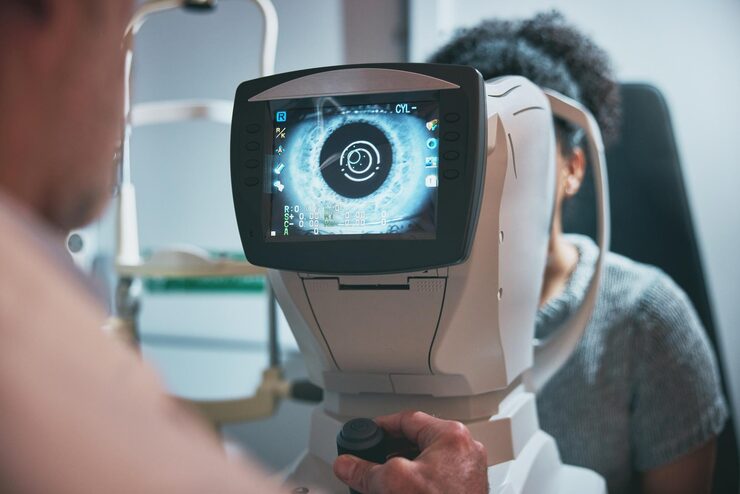
An ophthalmologist will ask about your vision changes, walking difficulties, medical history and any previous eye conditions. The examination may include:
Visual acuity test: This checks how clearly you can see letters or objects at different distances.
Slit-lamp examination: The doctor examines the natural lens under magnification to identify the presence, type and severity of cataracts.
Refraction test: This checks whether changes in spectacle power are contributing to blurred vision.
Retinal examination: After pupil dilation, the doctor examines the retina and optic nerve to identify other conditions that may affect vision.
Additional visual assessments: Depending on your symptoms, the doctor may assess contrast sensitivity, binocular vision, depth perception or visual fields.
If the examination suggests that the problem may involve the inner ear or nervous system, further medical assessment may be necessary.
Can cataract treatment improve walking confidence?
If cataracts are contributing to poor vision, treating them may improve visual clarity and certain visual functions that are important for everyday mobility.
In the early stages, an ophthalmologist may recommend monitoring the cataract and updating spectacles if necessary. Practical measures can also help reduce difficulties while walking:
-
Keep staircases and corridors well lit.
-
Use handrails when climbing or descending stairs.
-
Remove loose rugs and objects that could cause tripping.
-
Wear footwear with a secure fit and good grip.
-
Take extra care when walking on uneven or unfamiliar surfaces.
-
Avoid rushing when moving between different lighting conditions.
When cataracts significantly affect daily activities, the ophthalmologist may discuss surgery. During cataract surgery, the cloudy natural lens is removed and replaced with an artificial intraocular lens (IOL).
The decision depends on the cataract’s effect on daily life, examination findings, retinal health and other individual factors. Surgery may improve vision when cataracts are the main cause of impairment, but it cannot correct every cause of imbalance or eliminate all fall risks.
You can read more about the procedure and available options on the Cataract Surgery service page at Kiran Eye Hospital.
Where can I seek cataract evaluation in Bangalore?
If you are experiencing blurred vision, difficulty judging steps or reduced confidence while walking, a detailed eye examination can help identify whether cataracts or another eye condition is responsible.
At Kiran Eye Hospital, JP Nagar, Bengaluru, patients can consult ophthalmologists for cataract evaluation and other eye care needs. Dr. Kiran Kumar K, Medical Director and Chief Surgeon, holds an MD from AIIMS, New Delhi, along with DNB, FAICO qualifications in Cornea and Refractive Surgery, and MNAMS. His published hospital profile lists cataract surgery and corneal care among his areas of expertise.
The doctor can assess your eye health, explain the findings and discuss suitable treatment options based on your condition.
When should I seek medical attention?
Arrange an eye examination if you notice repeated difficulty judging distances, misjudging steps, increasing blurred vision or hesitation while walking because objects and surfaces are not clear.
Seek urgent medical attention if you experience sudden vision loss, new double vision, severe eye pain, sudden flashes or a sudden increase in floaters. Sudden dizziness, weakness on one side of the body, difficulty speaking or a sudden loss of coordination also requires emergency medical assessment. Do not assume these symptoms are caused by cataracts.
Frequently Asked Questions
1. Can cataracts make me afraid of walking down stairs?
They can contribute to this difficulty. Reduced clarity and contrast may make stair edges harder to identify, causing some people to become more cautious. An eye examination can help establish whether cataracts are involved.
2. Can cataracts affect depth perception in only one eye?
Cataracts can develop at different rates in each eye. If one eye has significantly poorer vision, the difference between the two eyes may affect comfortable distance judgement.
3. Will cataract surgery restore my balance completely?
Not necessarily. Surgery may improve vision when cataracts are contributing to the problem. However, balance can also be affected by inner-ear conditions, neurological problems, muscle weakness and other health conditions.
4. Can cataracts increase the risk of falling in older adults?
Poor vision can contribute to falls by making it harder to notice obstacles and judge changes in floor levels. Cataracts are one possible cause of visual impairment, but falls usually involve multiple risk factors.
5. Should I wait until my cataract becomes severe before seeking treatment?
No. You should have your eyes examined when vision changes begin affecting everyday activities. The doctor can monitor the cataract and discuss surgery when it becomes appropriate.
If you or an older family member is experiencing these problems, seek an eye examination rather than adjusting daily activities around worsening vision. Understanding the cause is the first step towards appropriate care for cataract symptoms and treatment Bangalore.
Book a Consultation
It’s easy and free!