What happens during my first SMILE surgery consultation? A SMILE surgery consultation involves reviewing your spectacle prescription, examining your eye health, measuring corneal thickness and shape, and discussing whether laser vision correction is appropriate. The ophthalmologist also evaluates prescription stability, dry eye symptoms and potential surgical risks. Patients searching for a Smile Surgery Specialist in …

What happens during my first SMILE surgery consultation?
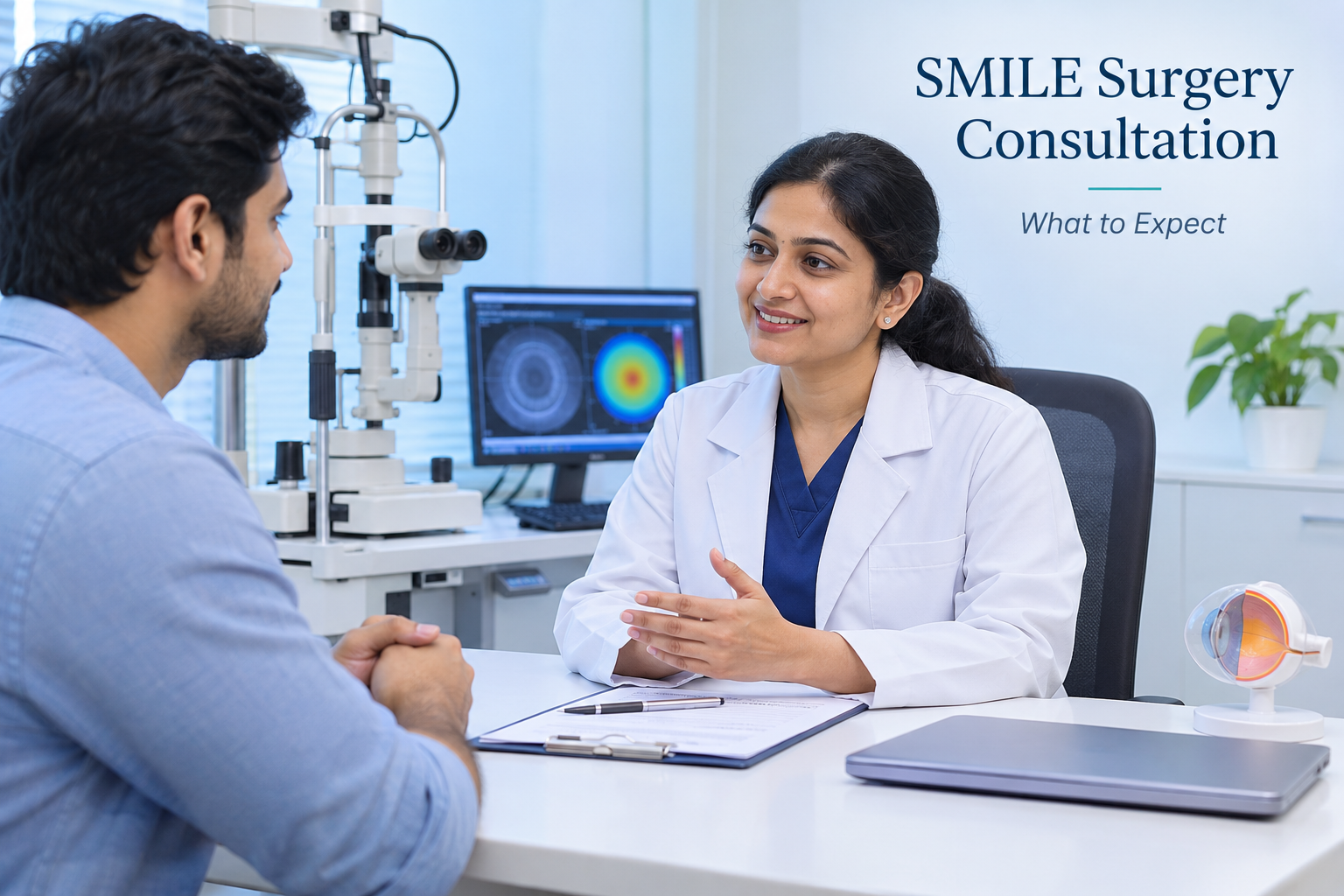
A SMILE surgery consultation involves reviewing your spectacle prescription, examining your eye health, measuring corneal thickness and shape, and discussing whether laser vision correction is appropriate. The ophthalmologist also evaluates prescription stability, dry eye symptoms and potential surgical risks.
Patients searching for a Smile Surgery Specialist in Kanakapura Road can consider an assessment at Kiran Eye Hospital, located in nearby JP Nagar, Bengaluru.
Dr. Kiran Kumar K and the hospital’s ophthalmology team can help patients understand whether SMILE is suitable, what the procedure involves and which alternatives may be considered.
What questions will the doctor ask before examining my eyes?
The consultation usually begins with a discussion about your vision and medical history.
The ophthalmologist may ask how long you have worn spectacles, whether your prescription has changed and why you are considering surgery.
You should mention:
- Previous spectacle and contact lens prescriptions.
- Difficulty seeing distant objects.
- Dryness, irritation or contact lens discomfort.
- Previous eye infections or surgery.
- Diabetes, autoimmune conditions or other medical problems.
- Current medications and relevant allergies.
- Work, driving and recreational visual requirements.
These details help the surgeon understand your expectations and identify factors that may affect eligibility.
What eye tests are performed during a SMILE surgery consultation?
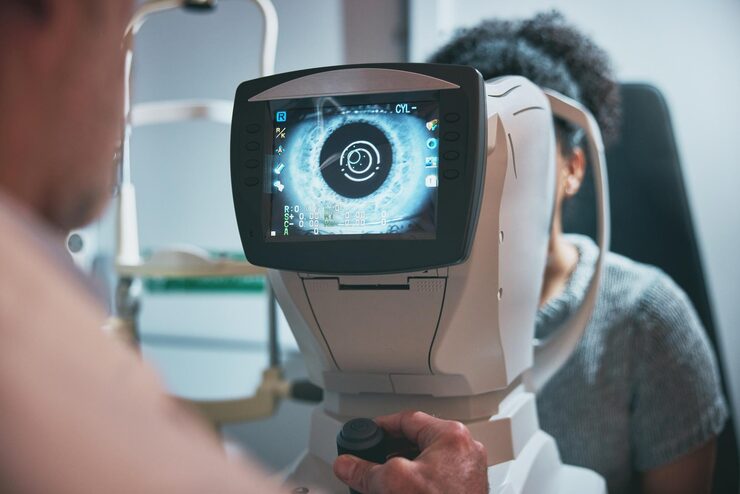
A SMILE Surgery Consultation in Bangalore generally includes several measurements before a treatment recommendation is made.
Visual acuity and refraction testing: Measures how clearly you see and determines your spectacle prescription.
Corneal topography and tomography: Create detailed maps of the cornea to identify unusual curvature or structural abnormalities.
Corneal pachymetry: Measures corneal thickness to help assess whether sufficient tissue would remain after treatment.
Tear film examination: Evaluates dry eye symptoms and ocular surface health.
Slit-lamp examination: Allows the ophthalmologist to examine the cornea, lens and surrounding structures.
Retinal examination: May be performed to assess the retina, particularly in patients with high myopia.
The investigations required vary according to individual eye health and the surgeon’s clinical findings.
How will the surgeon know whether my spectacle power is suitable?
SMILE is used to correct selected cases of myopia and astigmatism.
The ophthalmologist compares your current prescription with previous measurements to determine whether your refractive error has remained stable.
Age, corneal measurements and the degree of correction required are also considered.
Patients with unstable spectacle power, unsuitable corneal thickness or certain corneal abnormalities may not qualify.
Even when spectacle power falls within the available treatment range, surgery is not automatically recommended.
The final decision depends on comprehensive clinical assessment.
Should I stop wearing contact lenses before my appointment?
Contact lenses can temporarily influence corneal curvature and affect measurements used for surgery planning.
Patients may therefore be asked to discontinue contact lenses before detailed refractive testing.
The required break varies depending on whether you use regular soft lenses, toric lenses or rigid gas-permeable lenses.
Some patients require repeat measurements to confirm that the cornea has stabilised.
Contact the hospital before your appointment to confirm the recommended discontinuation period.
Bring your current spectacles and previous prescriptions, if available.
Will I find out during the consultation if SMILE is right for me?
The surgeon may be able to discuss suitability after reviewing your examination results.
However, some patients need additional investigations or treatment before a final decision.
For example, existing dry eye disease may require management before laser surgery is considered.
Irregular corneal findings may need further evaluation to rule out conditions such as keratoconus.
If results remain uncertain, the ophthalmologist may recommend postponing surgery and repeating selected tests.
The purpose of the consultation is to establish whether treatment is appropriate rather than automatically schedule surgery.
What should I ask the surgeon about risks and recovery?
Patients should use the consultation to understand the expected benefits, limitations and possible complications.
Useful questions include whether their prescription is suitable, how much visual improvement may reasonably be expected and whether glasses might still be required.
SMILE surgery can involve temporary dryness, fluctuating vision, glare, halos, inflammation and other complications.
Patients should also ask about postoperative medication, follow-up appointments and returning to work.
Those who spend long hours on computers or participate in sports may need individual advice about activity restrictions.
A clear discussion helps patients make an informed decision without unrealistic expectations.
What happens if the doctor says I am not suitable for SMILE?
Not being eligible for SMILE does not necessarily mean that vision correction is impossible.
Depending on the findings, the ophthalmologist may recommend spectacles, contact lenses, LASIK, PRK or an implantable lens procedure.
Each option has different indications, risks and limitations.
Patients can read about the hospital’s SMILE surgery, LASIK surgery and PRK surgery services.
The appropriate pathway depends on corneal health, refractive error and personal visual requirements.
How should I prepare for the day of my consultation?
Bring your current glasses, previous prescription records and a list of medications.
Allow additional time if pupil dilation or specialised investigations are needed. Dilating drops can temporarily blur near vision and cause light sensitivity, so you may need assistance travelling afterwards.
Avoid assuming that surgery will take place on the consultation day.
Write down questions about cost, expected recovery, follow-up visits and potential risks.
If you have active eye redness, significant irritation or contact lens discomfort, inform the clinic before attending.
When should I seek medical attention before considering SMILE?
Arrange an ophthalmic examination if you experience frequently changing spectacle power, persistent blurry vision, recurrent dryness or unusual visual symptoms.
Seek urgent medical attention for sudden vision loss, severe eye pain, flashes, a sudden increase in floaters or a dark curtain across vision.
These symptoms may indicate conditions requiring immediate assessment rather than routine refractive surgery screening.
Where can patients near Kanakapura Road seek a SMILE consultation?
Patients looking for a Smile Surgery Specialist in Kanakapura Road can consider Kiran Eye Hospital, located at Vishnu Towers, ITI Layout, 1st Phase, JP Nagar, Bengaluru.
Dr. Kiran Kumar K, Medical Director and Chief Surgeon, holds MBBS, MD (AIIMS, New Delhi), DNB, FAICO (Cornea), FAICO (Refractive Surgery) and MNAMS qualifications. His professional expertise includes SMILE, LASIK, PRK and corneal surgery.
A consultation with Dr. Kiran Kumar K or the hospital’s ophthalmology team can help patients understand examination results, treatment suitability and possible alternatives.
Frequently Asked Questions About SMILE Surgery Consultation
1. How long does a SMILE surgery consultation take?
The duration depends on the eye tests required. A detailed assessment may include refraction, corneal mapping, tear film testing and pupil dilation. Some patients may need additional visits.
2. Is a SMILE surgery consultation painful?
Most routine screening tests are non-invasive and generally cause little discomfort. Some examinations may involve eye drops or brief contact with the eye. The clinical team can explain each test beforehand.
3. Can I undergo SMILE surgery on the same day as my consultation?
Surgery is not automatically performed on the consultation day. The surgeon must review eligibility, confirm measurements and complete informed consent and treatment planning before scheduling the procedure.
4. Will the doctor tell me whether SMILE or LASIK is better for my eyes?
The ophthalmologist can compare suitable procedures based on your spectacle power, corneal thickness, ocular surface health and other examination findings. Neither procedure is universally preferable.
5. Should I bring my old spectacle prescriptions to the consultation?
Yes. Previous prescriptions can help the ophthalmologist assess whether your spectacle power has remained stable. Bring your current spectacles and available eye examination records.
Book a Consultation
It’s easy and free!