What is the minimum and maximum age for LASIK surgery? LASIK surgery is generally considered for adults aged 18 years and above, although many ophthalmologists prefer to wait until the early twenties, when spectacle power is more likely to stabilise. There is no fixed maximum age for LASIK, but older patients require careful assessment for …

What is the minimum and maximum age for LASIK surgery?
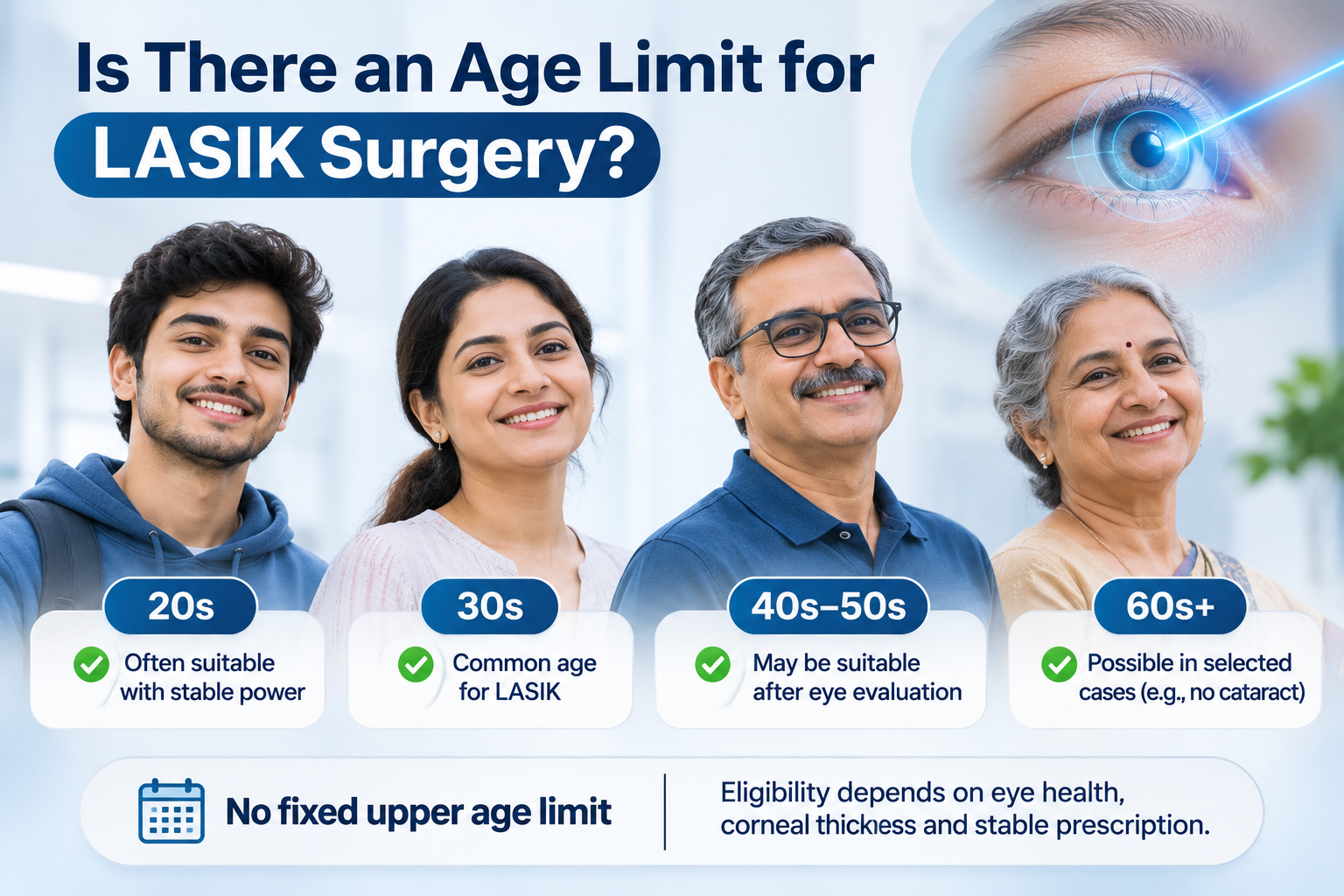
LASIK surgery is generally considered for adults aged 18 years and above, although many ophthalmologists prefer to wait until the early twenties, when spectacle power is more likely to stabilise. There is no fixed maximum age for LASIK, but older patients require careful assessment for presbyopia, cataracts and other age-related eye conditions.
Understanding the LASIK surgery age limit is important because reaching a particular age does not automatically make someone eligible.
At Kiran Eye Hospital, JP Nagar, Bengaluru, Dr. Kiran Kumar K and the ophthalmology team evaluate prescription stability, corneal health and individual visual requirements before recommending refractive surgery.
Can I undergo LASIK surgery immediately after turning 18?
Turning 18 does not necessarily mean your eyes are ready for laser vision correction.
During adolescence and early adulthood, myopia and other refractive errors may continue changing.
If LASIK is performed before the prescription stabilises, additional spectacle power may develop later.
Ophthalmologists therefore review previous prescriptions and assess whether significant changes have occurred during the preceding year or longer.
Some laser systems also have specific approved age requirements.
Patients aged 18–20 may be advised to postpone surgery if their prescription is still changing.
The decision should depend on clinical findings rather than age alone.
Is 25 to 35 a suitable age for LASIK surgery?
Adults in their mid-twenties and thirties often explore LASIK because they want to reduce dependence on spectacles or contact lenses.
By this stage, many people have relatively stable refractive errors.
However, a stable prescription does not guarantee surgical eligibility.
Patients must still have adequate corneal thickness, appropriate corneal shape and healthy ocular surfaces.
Lifestyle factors, including occupational requirements and participation in contact sports, may also influence the recommended procedure.
A detailed examination helps determine whether LASIK is appropriate or whether another form of vision correction should be considered.
Can I undergo LASIK surgery after turning 40?
Yes. Some adults above 40 may still qualify for LASIK if their eyes meet the necessary clinical requirements.
However, an important consideration at this age is presbyopia.
Presbyopia occurs when the natural eye lens gradually loses its ability to focus comfortably on nearby objects.
Common symptoms include:
- Difficulty reading small print.
- Holding mobile phones farther away.
- Eye strain during close-up activities.
- Needing brighter lighting for reading.
- Difficulty switching focus between near and distant objects.
Conventional LASIK can correct selected refractive errors but does not restore the natural lens’s youthful focusing ability.
Therefore, patients who undergo distance-vision LASIK may still require reading glasses.
Is LASIK surgery possible after 50 or 60?
There is no universal upper age limit, but cataracts and other ocular conditions become increasingly important considerations.
Patients in their fifties or sixties may experience changes in the natural lens, reduced tear production or other age-related eye conditions.
If a cataract is already affecting vision, LASIK may not be the appropriate treatment because it cannot remove lens clouding.
An ophthalmologist may instead recommend cataract assessment or another treatment pathway.
Patients without significant cataracts or other contraindications may still be evaluated for LASIK.
The final recommendation depends on eye health, prescription and expected benefits rather than chronological age.
Why is stable spectacle power more important than age alone?
A changing spectacle prescription is one of the main reasons an ophthalmologist may postpone refractive surgery.
Refractive instability can occur in younger adults, but it may also be associated with pregnancy, breastfeeding, certain medications or medical conditions.
For patients exploring LASIK Surgery in Bangalore, previous spectacle records can help establish whether their prescription has remained sufficiently stable.
LASIK reshapes the cornea to correct the existing refractive error.
It does not prevent future changes associated with ageing, underlying eye conditions or natural prescription progression.
Patients should therefore understand that LASIK does not guarantee permanent freedom from spectacles.
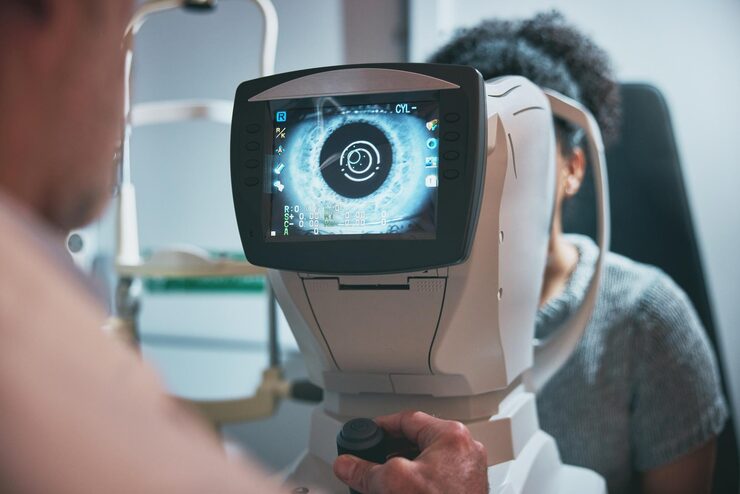
Which eye tests determine whether I am suitable for LASIK?
Before recommending surgery, an ophthalmologist performs a comprehensive assessment.
Refraction testing: Measures myopia, hyperopia and astigmatism while checking prescription stability.
Corneal topography and tomography: Assess corneal shape and identify irregularities or possible structural weakness.
Corneal pachymetry: Measures corneal thickness to help determine whether sufficient tissue can remain after treatment.
Tear film assessment: Identifies dry eye disease that could influence postoperative comfort.
Slit-lamp examination: Evaluates the cornea, natural lens and other anterior eye structures.
Retinal examination: Helps identify retinal conditions, particularly in patients with high myopia.
Additional investigations may be recommended depending on age, symptoms and medical history.
What happens if I am not eligible for LASIK at my age?
Being unsuitable for LASIK does not necessarily mean that no other vision correction options are available.
Depending on examination findings, alternatives may include spectacles, contact lenses, PRK, SMILE or implantable lens procedures.
Patients with significant cataracts may require a different treatment approach.
Those experiencing presbyopia may benefit from reading glasses, progressive spectacles or selected blended-vision treatments.
Patients can review Kiran Eye Hospital’s LASIK surgery, PRK surgery and ICL/IPCL surgery service information.
Every procedure has separate indications, risks and limitations.
When should I seek an eye examination before considering LASIK?
Arrange an ophthalmic examination if your spectacle power changes frequently, you experience persistent blurred vision or you are uncertain whether your age affects surgical suitability.
Dryness, glare, halos and difficulty reading may also require evaluation.
Seek urgent medical attention for sudden vision loss, severe eye pain, new flashes, a sudden increase in floaters or a dark shadow across your vision.
These symptoms should not be assumed to be normal age-related changes.
Where can I discuss LASIK eligibility in Bangalore?
Patients researching LASIK Surgery in Bangalore can seek a refractive surgery evaluation at Kiran Eye Hospital, located at Vishnu Towers, ITI Layout, 1st Phase, JP Nagar, Bengaluru.
Dr. Kiran Kumar K, Medical Director and Chief Surgeon, holds MBBS, MD (AIIMS, New Delhi), DNB, FAICO (Cornea), FAICO (Refractive Surgery) and MNAMS qualifications. His verified clinical expertise includes LASIK, PRK, SMILE and corneal surgery.
A consultation with Dr. Kiran Kumar K or the hospital’s ophthalmology team can help patients understand the LASIK surgery age limit, the importance of prescription stability and whether laser vision correction is appropriate for their individual circumstances.
Frequently Asked Questions About LASIK Surgery Age Limits
1. Can I undergo LASIK surgery at 18 years old?
LASIK may be considered from age 18 with certain approved laser systems. However, the prescription must be stable, and the cornea and overall eye health must meet eligibility requirements. Some patients are advised to wait until their early twenties.
2. Is 40 too old for LASIK surgery?
No. LASIK may be suitable for selected patients over 40. However, presbyopia can affect near vision, and patients may still require reading glasses after surgery.
3. Can a 55-year-old undergo LASIK surgery?
Possibly. There is no fixed universal upper age limit. The ophthalmologist must assess cataracts, corneal health, dry eyes and other age-related conditions before recommending treatment.
4. Why is LASIK sometimes postponed in young adults?
Myopia and other refractive errors can continue changing during early adulthood. Surgery may be postponed until the spectacle prescription becomes sufficiently stable to support appropriate treatment planning.
5. Will LASIK prevent the need for glasses as I grow older?
No. LASIK corrects selected existing refractive errors but does not prevent presbyopia, cataracts or future prescription changes. Some patients may require glasses later in life.
Book a Consultation
It’s easy and free!